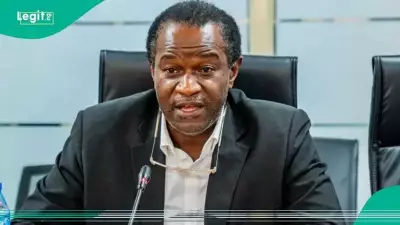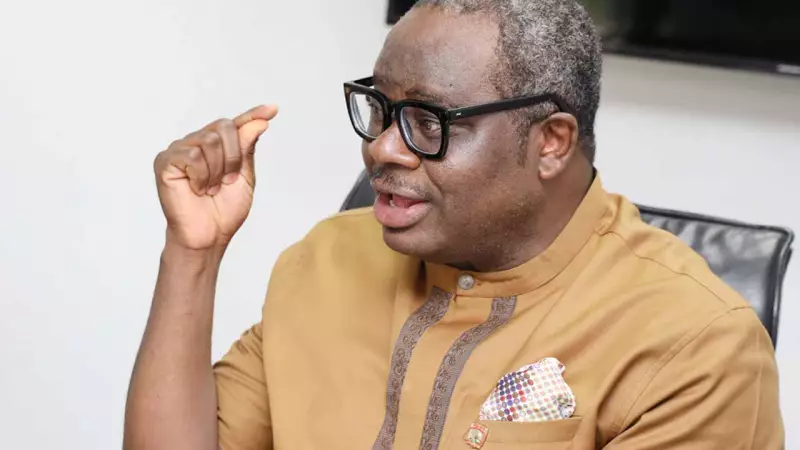
Kola Adesina, the Group Managing Director of Sahara Power Group, has projected a transformative year ahead for Nigeria's electricity industry, identifying it as the core of the nation's economic and industrial advancement.
Unprecedented Collaboration and Reform Momentum
In a recent interview assessing the state of the power sector, Adesina highlighted that unprecedented collaboration among the Federal Government, Ministry of Power, regulatory bodies, power companies, the Central Bank of Nigeria (CBN), banks, and multilateral agencies is setting the stage for significant progress in 2026. He emphasized that this trend is expected to continue, spurring sector-wide growth that will lead to greater efficiency, sustainability, and increased power supply for Nigerians.
Adesina commended the Federal Government for tackling the sector's liquidity crisis through the settlement of legacy debts, a move he said will undoubtedly attract new investments and stabilize the industry for unhindered expansion. He noted that resolving these debts clears a major bottleneck for investor confidence.

Sahara Power's Expansion and Strategic Investments
Adesina detailed Sahara Power Group's ambitious plans, which are central to the sector's growth. The group, responsible for roughly 19% of Nigeria's total power generation, is on course to increase its dispatched generation capacity to between 6,500MW and 7,000MW. Its subsidiaries include Egbin Power Plc, First Independent Power Limited, and Ikeja Electric.
The company is pioneering the launch of a Data Centre to foster expansion and innovative operations. This centre will leverage real-time data analytics, predictive maintenance, and cybersecurity to enhance overall sector efficiency and transparency in collaboration with the government.
Looking forward, Adesina stated that Sahara Power will invest heavily in both gas and renewable energy sources over the next three to five years. The goal is to achieve additional generation capacity for sustainable, affordable, and reliable power for both households and industries.
Infrastructure, Metering, and Financial Discipline
On sector-wide improvements, Adesina pointed to "decent progress" in metering and service delivery. He referenced NERC figures showing that over 2.3 million new meters have been deployed under the National Mass Metering Programme (NMMP) since 2020, which is expected to significantly reduce the metering gap and improve revenue for operators.
He also outlined upcoming "Distribution Network Reforms" aimed at driving massive infrastructure rehabilitation, deploying Advanced Metering Infrastructure (AMI), and implementing robust Customer Relationship Management (CRM) systems. These initiatives are designed to enhance service delivery and reduce technical and commercial losses.
Regarding financial obligations, Adesina provided a clear update on power loans. He confirmed that promising conversations with the consortium of banks are ongoing, with a positive resolution in sight. The loans, contractually due for full payment in 2034, are being "serviced diligently."
To date, Sahara has paid the naira equivalent of $438 million, representing 73% of the original $600 million loan. This financial discipline, he noted, is crucial for attracting further investment. He also acknowledged the reconciled debt of N1.514 trillion owed to Sahara and its gas suppliers as of March 31, 2025, expressing gratitude for the government's intervention through legacy debt payments.
Adesina anchored his optimism on the long-term infrastructure plans of President Bola Ahmed Tinubu, coupled with clear policy reforms, exchange rate stability, and a reduction in inflation. He concluded that these factors now allow investors to plan with higher predictability and conviction, paving the way for Nigeria to become Africa's transformational power hub.