Siemens Revives $2.3 Billion Power Agreement With Nigeria to Address Electricity Crisis
German engineering powerhouse Siemens has formally restarted its $2.3 billion power agreement with Nigeria, reigniting hopes of ending the country's persistent grid collapses and chronic electricity shortages. The deal, structured as a government-to-government partnership between Nigeria and Germany, is designed to overhaul the nation's ageing transmission and distribution infrastructure.
Revival Under Tinubu Administration
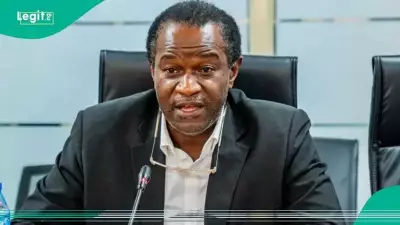
Germany's Deputy Head of Mission in Nigeria, Johannes Lehne, disclosed that the agreement had remained largely inactive until the administration of President Bola Tinubu revived it after assuming office. Speaking at the Sub-Saharan Africa International Petroleum Exhibition and Conference in Lagos, Lehne described the renewed push as a turning point for the long-delayed initiative.
"The partnership was dormant until the beginning of President Tinubu's time, when we revived it," he stated, emphasizing the renewed political commitment to addressing Nigeria's power challenges.

Ambitious Capacity Expansion Targets
Initially conceived under former President Muhammadu Buhari, the Siemens deal was structured in phases with ambitious targets:
- Increase available capacity to 7,000 megawatts
- Expand further to 11,000 megawatts
- Ultimately reach 25,000 megawatts
Nigeria currently generates roughly 4,000 megawatts for a population of over 200 million people, a severe shortfall that has crippled industrial growth and left millions dependent on expensive generators for daily electricity needs.
Project Challenges and Progress
An earlier review of the project in 2023 signaled potential hurdles. Minister of Power Bayo Adelabu noted that economic realities had shifted since the agreement was first signed in 2018, prompting a comprehensive reassessment of scope and financing. According to industry reports, delays were attributed to multiple factors:
- The COVID-19 pandemic disrupting global supply chains
- Political transitions affecting policy continuity
- Ongoing reforms within Nigeria's power sector
Despite these setbacks, progress has been made through a pilot phase that included the importation of 10 mobile substations and 10 transformers, expected to raise transmission capacity by approximately 1,300 megawatts once fully deployed.
Germany's Broader Energy Cooperation
Beyond grid upgrades, Germany is deepening energy ties with Nigeria through Berlin's Energy Support Programme, which shares technical expertise in renewable energy expansion, diversification strategies, and system stability. Germany's own energy landscape shifted sharply after the Russia-Ukraine crisis, prompting rapid investment in liquefied natural gas terminals and broader supply diversification.
Lehne indicated that Nigeria could become a strategic gas partner as Germany seeks long-term energy security, stating: "It is not clever to put all your eggs in one basket," underlining Berlin's openness to sourcing gas from Nigeria.
Nigeria's Vast Gas Potential
Nigeria's gas potential remains vast but underutilized. According to the Nigerian Upstream Petroleum Regulatory Commission (NUPRC), the country holds about 210.54 trillion cubic feet of proven gas reserves, the largest in Africa, with possible resources estimated at up to 650 trillion cubic feet.
Yet daily production hovers around 7.5 billion cubic feet, leaving Nigeria outside the ranks of top global producers. Officials argue that reforms introduced under the Petroleum Industry Act have reduced fiscal uncertainty, lowered royalty rates, and improved regulatory clarity, helping to attract new investment into gas development.
Execution Challenges Ahead
While the revival of the Siemens initiative signals renewed political will and international backing, experts caution that delivery, funding discipline, and policy consistency will determine whether the long-promised transformation becomes reality. The project forms the backbone of the Presidential Power Initiative, an ambitious plan to dramatically expand grid capacity and improve reliability across Nigeria.

If successfully executed, the $2.3 billion project could mark a decisive step toward stabilizing Nigeria's fragile grid and unlocking the economic growth long constrained by unreliable power supply. The partnership represents one of the most significant infrastructure investments in Nigeria's power sector in decades, with potential to transform energy access for millions of Nigerians and support industrial development across the country.