Nigerian Man's Innovative Solar Panel Strategy After Landlord Blocks Rooftop Access
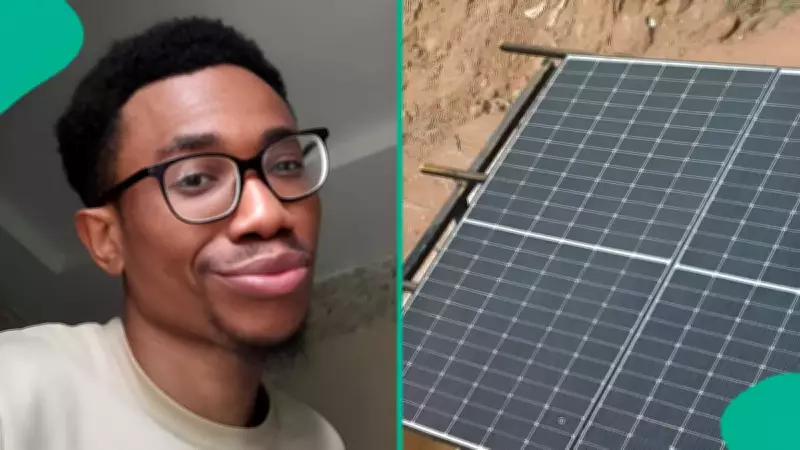
A young Nigerian man has adopted a clever and practical strategy after his landlord refused to allow him to install solar panels on the rooftop of his rented apartment. The man, identified as Ebube Maduike, shared his experience on social media, detailing how he overcame the restriction to ensure he enjoys constant electricity supply.
The Landlord's Refusal and the Creative Solution
Ebube Maduike explained that he had purchased additional solar panels with the intention of enhancing his power supply system. However, his landlord firmly refused to permit the installation of these panels on the building's roof. This posed a significant challenge, as rooftop placement is typically ideal for maximizing sun exposure and efficiency.
Instead of giving up, Maduike devised an alternative plan. He decided to use the funds he had allocated for the extra panels to construct a dedicated car park structure. This structure would serve as the mounting platform for his solar panels, effectively bypassing the landlord's rooftop restriction while still ensuring the panels face the sun properly.

Social Media Reactions and Widespread Advice
After sharing his strategy on Facebook, numerous users reacted with their own experiences and suggestions. Many emphasized the importance of seeking landlord consent before making any installations. One user, Unimke Abana, commented that their landlord allowed panels on the security roof but required a 3-meter clearance. Another, Engr Egbulefu ThankGod, noted that obtaining consent helps clarify what is permissible.
Several others shared similar predicaments, with Archibong Ekeng revealing that their landlord also refused rooftop access, forcing them to set up an iron structure at an unexpected extra cost. Wale Olajumoke advised always confirming with landlords before paying rent to avoid such issues.
Broader Context of Solar Adoption in Nigeria
This incident highlights a growing trend in Nigeria, where many residents are turning to solar energy solutions amid persistent power supply challenges. While solar adoption is increasing, not all landlords are accommodating, leading to creative workarounds like Maduike's car park structure.
Maduike's experience serves as a cautionary tale for others considering solar installations. He explicitly advised potential installers to first inquire with their landlords and plan accordingly to avoid similar setbacks. His message underscores the need for proactive communication and alternative planning in the face of restrictive rental agreements.
Related Incidents and Safety Warnings
In a related development, another Nigerian man recently reviewed a 1kVA solar generator he purchased for N360,000, plus a 390W solar panel for N75,000. He reported enjoying 24/7 electricity, powering appliances like TVs, fans, and blenders. However, a separate incident involved a N1.2 million 12kVA inverter burning hours after purchase due to improper installation with high-voltage solar panels. This underscores the importance of following safety guidelines, such as reading nameplates and avoiding overvoltage, to prevent equipment damage.
Overall, Ebube Maduike's story illustrates the resilience and ingenuity of Nigerians in adapting to energy challenges, even when faced with logistical hurdles like landlord restrictions. His solution not only provides a practical workaround but also sparks important conversations about tenant rights and sustainable energy access in rental properties.