Nigeria's mining sector, long overshadowed by oil and gas, is witnessing a transformative shift driven by a new wave of private investment and professional expertise. At the forefront of this change is Segilola Resources Operating Limited (SROL), the operator of Nigeria's first commercial gold mine. The Guardian's special report highlights the pivotal role of frontline professionals at SROL who are not just extracting minerals but are building a sustainable future for the industry.
A Strategic Vision for National Development
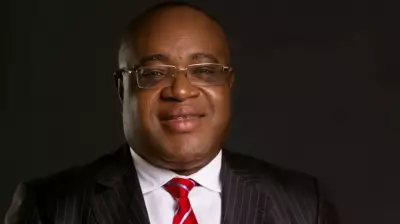
Austin Menegbo, Country Manager of SROL, embodies the sector's gradual awakening. With over 16 years of experience, Menegbo provides strategic leadership across corporate affairs, government relations, and operational optimisation for SROL and its lithium-focused sister company, NewStar Minerals. He holds an Executive MBA from ESCP Business School and a Master's in Business Ethics, grounding his approach in governance and long-term value creation.
Menegbo was drawn to the historic opportunity to shape Nigeria's first commercial gold mine. "The Segilola Gold Mine presented a rare opportunity to help shape industry standards, strengthen governance practices, and influence community outcomes in a meaningful way," he explains. Under his leadership, SROL was recognised in 2024 as one of Nigeria's Top 10 Non-Oil Exporters, challenging outdated perceptions about mining's economic role.

However, Menegbo identifies foundational challenges that must be addressed to unlock the sector's vast potential. "Robust, independently verified geological information is essential," he stressed, noting Nigeria's emerging status compared to mining giants like Ghana and South Africa. He also highlights unreliable power and poor infrastructure as critical constraints that raise costs and weaken competitiveness.
Engineering Excellence at the Operational Core
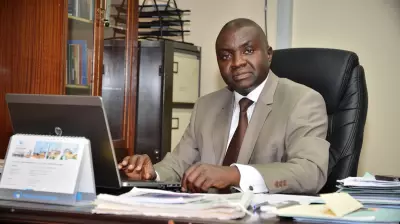
Driving the technical and operational success at Segilola is Engineer Olusola Olusomidomo, Deputy GM and Operations Manager. A COREN-registered Mechanical Engineer and PMP with over two decades of experience, Olusomidomo played a pivotal role in delivering the $67 million Segilola Gold Project in Osun State.
"Gold mining is a mechanical engineer's dream," he declares, citing the daily challenges of improving reliability, optimising energy use, and managing water and land rehabilitation. His work has significantly reduced downtime and enhanced safety through optimized equipment performance and robust maintenance regimes.
Olusomidomo advocates for the formalization of artisanal and small-scale mining (ASM) as a fast win for the sector. He believes that bringing ASM into the formal economy would improve safety, increase government revenue, and reduce smuggling. Looking ahead, he is optimistic: "Nigeria is positioning itself to become a significant gold-producing nation in West Africa," provided reforms continue and security challenges are addressed.
Building Trust with Communities
Securing the social license to operate is the critical domain of Madhurii Sarkar-Amoda, Community Development and Stakeholder Manager at SROL. With a background in international relations, diplomacy, and mass communication, she ensures communities are partners in development, not sidelined beneficiaries.
Her proactive approach integrates community engagement into operational planning, helping to reduce conflict and strengthen trust. "My role is to ensure communities are not sidelined but are genuine partners and beneficiaries of development," she states. She emphasizes that harnessing the sector for shared prosperity requires a focus on local content development, skills transfer, and transparent governance.
Mining Management for Sustainable Growth
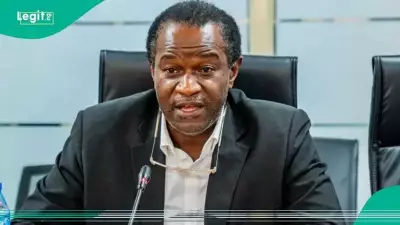
Haruna Sikiru, the seasoned Mines Manager at SROL with over 15 years of experience, drives operational improvements in safety, production, and cost optimization. A COREN and COMEG-registered engineer, Sikiru has improved safety performance, increased output per shift, and lowered mining costs through effective planning and equipment utilization.

He points to systemic challenges hindering the sector, including poor geological data, inadequate infrastructure, and funding constraints. "Nigeria's solid minerals potential is significant but underdeveloped," he notes, advocating for institutional reform, transparency, and investment in value addition. He projects that with serious investor focus, the sector's contribution could surpass its current 3-4% share of GDP within five years.
The Path Forward: Technology, Sustainability, and Policy
Across all roles at Segilola, a common thread is the commitment to technology and environmental sustainability. The company uses Compressed Natural Gas (CNG) to power its operations, significantly reducing emissions. Artificial Intelligence is leveraged for geological interpretation, predictive maintenance, and safety monitoring, though leaders like Menegbo are clear that "AI is a tool that augments our capabilities," not a replacement for human judgment.
Environmental responsibility is embedded from the start, with progressive land rehabilitation practiced throughout the mining lifecycle. The collective vision from SROL's leadership is clear: with predictable regulations, improved infrastructure, credible data, and continued focus on ESG principles, Nigeria's solid minerals sector can become a cornerstone of a diversified, prosperous economy, generating employment and stimulating local economies nationwide.