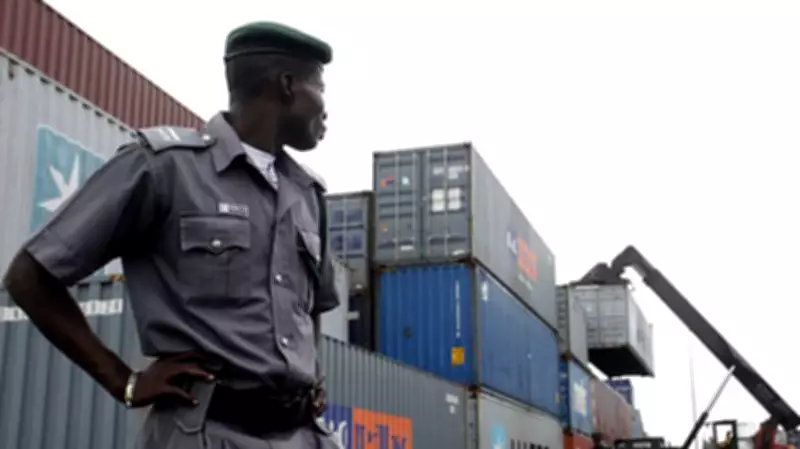
The Nigeria Customs Service (NCS), Tin Can Island Port Command, has confirmed that a vessel discharging crude oil products at the MRS terminal did so illegally after being sealed for incomplete documentation. The Guardian gathered that the vessel, MT Ny Maria, carrying 81,200 metric tonnes of Premium Motor Spirit (PMS), arrived from the Lekki Deep Seaport on May 23 and berthed at Dantata Jetty, also known as MRS.
Enforcement Action at MRS Terminal
Officers of the NCS enforcement unit halted the discharge of petrol at the TinCan Island terminal of MRS on the day of berthing. Reports indicate that the product was loaded from the Dangote Refinery, and the vessel had undergone port, customs, and immigration clearance before discharge commenced. However, during routine checks, the Customs boarding and rummaging unit discovered that the vessel's documentation was incomplete.
Missing Documents Identified
The Public Relations Officer of the command, Oscar Ivara, told The Guardian that allegations of an attempted arrest of the vessel captain were false. He explained that the vessel arrived from Lekki Deep Seaport on May 23 and berthed at Dantata Jetty for standard Customs inspections. According to Ivara, one critical missing document was the "last port clearance," a mandatory requirement for any vessel moving between Nigerian ports. "The vessel came from Lekki to Tin Can port without complete documents. The most important among them was the last port clearance, which should have been issued at Lekki before departure," Ivara said.

Customs officers also requested evidence of temporary importation documentation, including bond papers and proof of duty payment, but the vessel's representatives allegedly failed to provide them. "As a result, the enforcement unit gave them two days to regularise the documents, but the agent never returned," he stated.
Illegal Discharge Despite Customs Seal
Ivara further disclosed that Customs later received intelligence that the same vessel had commenced discharge operations at the MRS terminal despite being under Customs seal. "Our enforcement officers were alerted that the vessel we had sealed was already discharging cargo illegally. Before any discharge operation, Customs must issue what is called 'break bulk' authority. That approval was never granted," he said.
The Customs spokesperson alleged that officers who moved to stop the operation faced resistance from security personnel stationed at the terminal, including mobile police officers and private security guards. "On getting there, our officers were denied entry. There was serious resistance at the gate and a push-and-pull situation ensued while our officers attempted to stop the illegal discharge," he explained.
Obstruction and False Allegations
Ivara also alleged that officers encountered further obstruction while trying to leave the terminal after resealing the vessel. "They blocked the gate again while our officers were exiting. The officers were attacked by security personnel, but fortunately nobody was injured," he said. Reacting to reports that Customs officers attempted to arrest the vessel captain, Ivara described the claim as false and contrary to international maritime practice. "It is an international offence to attempt to arrest a captain onboard a vessel. The officers involved are experienced and understand maritime procedures very well. That narrative is completely false," he stated.
Ivara also denied allegations that Customs officials demanded money from the vessel operators. According to him, the enforcement action was carried out strictly on the directive of the office that initially sealed the vessel over documentation irregularities. On the ownership of the crude oil cargo, Ivara said he could not immediately confirm whether it belonged to the Dangote Refinery, although he noted that preliminary information suggested the vessel may have departed from the refinery.