Structural Constraints and Foreign Firm Dominance Jeopardize Nigeria's $700 Million Maritime Fund
Unless deep-rooted and historical structural constraints are comprehensively addressed, the $700 million Cabotage Vessel Financing Fund (CVFF) risks following the same ineffective path as previous interventions. This could burden beneficiaries with new liabilities while failing to add any tangible value to the maritime sector. The potential to boost the capacity of local shipping lines is further undermined by the takeover of major domestic contracts, primarily from NNPC Limited and Dangote Petroleum Refineries, by foreign firms. With 60 companies already applying for the fund, its impact may be negligible due to the sector's severe illiquidity issues.
Experts Warn of Increased Debts and Generational Indebtedness
Maritime experts have issued stark warnings that underlying infrastructural hurdles must be cleared for the CVFF to have any meaningful effect. Otherwise, disbursing the fund could merely increase the liabilities of borrowers, reduce their creditworthiness, and leave behind generational indebtedness for beneficiaries who are obligated to repay their debts. Shipowners and maritime lawyers emphasize that providing funds to operators struggling with high operating costs will not significantly enhance their capacity but will instead escalate their debt burdens.
Captain Dada Labinjo, a maritime lawyer and shipowner, told The Guardian that current disbursement plans threaten to plunge indigenous shipowners into long-term debts unless the structural problems stifling Nigeria's shipping industry are resolved. Labinjo criticized the CVFF as an ill-conceived intervention that ignores the harsh realities of the Nigerian maritime sector. He detailed the financial pressures faced by shipowners, noting that while securing $25 million to purchase a vessel is challenging, ongoing expenses are crippling.

Detailed Breakdown of Operational Costs for Shipowners
Labinjo provided a comprehensive analysis of monthly operational costs: crew salaries amount to N4 million for 10 crew members on a small vessel; charter fees yield a maximum of N5 million per trip, with up to three charters monthly generating about N12 million; food supplies for the crew cost between N1 million and N1.5 million monthly; bunker fuel expenses are approximately N4 million to N5 million monthly, regardless of activity; maintenance and servicing costs around N5 million monthly; and fresh water supply, a necessity, costs N400 million per tonne, with a small vessel requiring 20 tonnes.
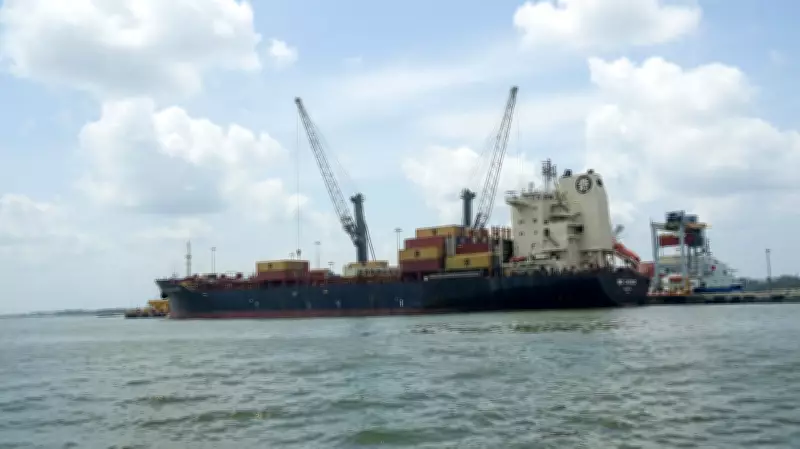
For berthing fees, Labinjo explained that at the Naval Dockyard, daily costs are about N187,000, totaling N5.6 million for a month of inactivity. Even if a vessel secures work after a period of idleness, the debt accumulated during downtime often takes at least a year to clear. He highlighted the common scenario of ships parked at Marina, Kirikiri, and Port Harcourt without jobs for months, exacerbating financial strains.
Government Policies and Foreign Dominance Undermine Local Operators
Labinjo further criticized the Federal Government's policy of issuing waivers that allow foreign vessels to dominate cabotage trade, thereby denying Nigerian operators access to domestic cargoes. This directly contradicts the CVFF's original purpose of helping local operators capture such opportunities. The inability of shipowners to access funds has fueled controversy and bureaucratic complexity, increasing uncertainty about the actual accruals and interest generated in both the CVFF account and the Treasury Single Account (TSA).
Officials at NIMASA, the Federal Ministry of Transportation, and the Federal Ministry of Marine and Blue Economy have provided conflicting figures regarding the fund's size. Initially quoted at $195 million, former NIMASA Director General Dakuku Peterside claimed it reached $200 million in 2019 and 2020. His successor, Dr Bashir Jamoh, stated in 2023 that $350 million was available as the dollar component, alongside a N16 billion naira component. Former Minister of State for Transportation Gbemisola Saraki confirmed the $350 million figure but acknowledged uncertainty about the actual balance.

Discrepancies in Fund Figures and Calls for Forensic Audit
In May 2023, the House of Representatives disclosed that the CVFF account with the Central Bank of Nigeria (CBN) held $360 million. However, some shipowners argued that total contributions should exceed $2 billion. Most recently, current NIMASA Director General Dr Dayo Mobereola announced the fund now stands at $700 million. A document obtained from NIMASA by Borderless Ltd/Gte through a Freedom of Information (FOI) request, covering transactions from January 2007 to October 2022, reveals detailed financial data.
Total naira collections amounted to N37,566,667,123.97, with N20,613,344,488.8 transferred from local banks to the TSA and N16,953,322,635.17 paid directly into the TSA. Dollar collections totaled $269,376,392.98, comprising $257,228,760.32 paid directly to the CBN/Access Bank and $12,147,632.66 held by the Office of the Auditor-General for the Federation. The FOI requests also uncovered alarming mismanagement of accrued interest, with figures from dollar accounts showing: Afribank generated $1,516,928.14; Platinum/Keystone Bank accrued $40,326.46; Access Bank earned $11,594.32; and Guaranty Trust Bank (GTB) held $43,333.81.
Urgent Calls for Accountability and Transparent Disbursement
Tunde Kasamotu, founder of the Nigerian content advocacy group, raised serious questions about financial accountability and stewardship, urging the Federal Government to commission a forensic audit of the account before any disbursement. Kasamotu also warned against political interference in the disbursement process, emphasizing that NIMASA's guidelines require applicants to be financial contributors to the fund and to present credible feasibility studies. This call for transparency and proper management is critical to ensuring the CVFF achieves its intended goals without further jeopardizing the maritime sector's growth.