Marine Minister Oyetola Presents N10.5bn 2026 Budget, Laments Inadequate Funding
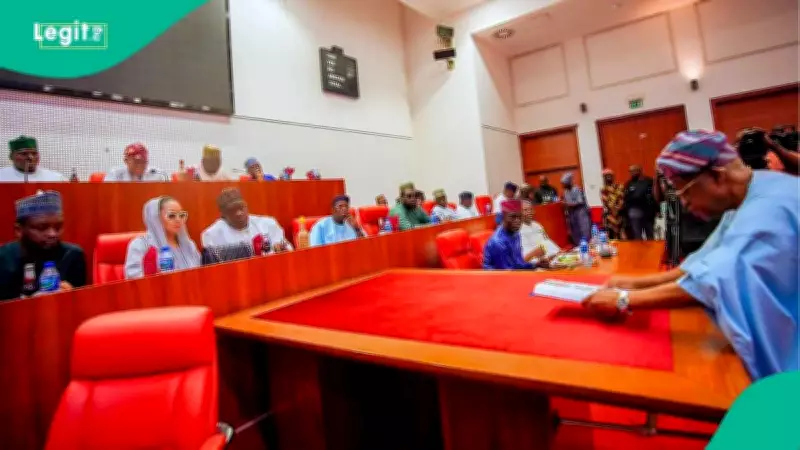
The Minister of Marine and Blue Economy, Dr. Adegboyega Oyetola, has formally presented a proposed budget of ₦10.49 billion for the 2026 fiscal year to the National Assembly. During a joint session with Senate and House of Representatives committees overseeing maritime sectors, Oyetola expressed serious concerns that the allocated amount is far too insufficient to effectively manage the ministry's extensive responsibilities and implement necessary reforms.
Budget Breakdown and Operational Constraints
According to the detailed proposal, the budget comprises ₦8.24 billion designated for capital expenditure, ₦453.86 million for overhead costs, and ₦1.81 billion for personnel costs. Oyetola emphasized that with this level of funding, the ministry would merely sustain basic operations without achieving meaningful sectoral improvements or driving substantial growth. He warned that persistent poor funding is directly undermining port efficiency, compromising inland waterway safety, and stalling efforts to expand Nigeria's fisheries and aquaculture sectors.
The minister highlighted that the ministry supervises critical national infrastructure and industries, including:

- Ports and shipping operations
- Inland waterways management
- Fisheries and aquaculture development
These sectors collectively handle over 90% of Nigeria's international trade by volume, significantly contribute to national food security, and enhance the country's economic competitiveness.
Agency Revenue Challenges and Systemic Issues
Oyetola raised alarms about financial constraints affecting key maritime agencies, despite their revenue-generating capabilities. Institutions like the Nigerian Ports Authority (NPA), the Nigerian Maritime Administration and Safety Agency (NIMASA), and the Nigerian Shippers' Council face heavy deductions at source by the Office of the Accountant-General of the Federation. These deductions have severely reduced operational cash flow, weakening the agencies' effectiveness and leading to:
- Port congestion and operational delays
- Increased transport and logistics costs
- Revenue losses for the government
- Higher prices of goods nationwide
The minister also identified budget classification errors, noting that the Council for the Regulation of Freight Forwarding in Nigeria (CRFFN) was incorrectly listed under the Ministry of Transportation instead of the Marine and Blue Economy Ministry. This misclassification hampers proper oversight and policy coordination within Nigeria's maritime logistics framework.
Urgent Needs in Inland Waterways and Fisheries
Oyetola called for increased funding to enhance safety and reduce accidents on Nigeria's inland waterways. He emphasized that water transport is globally recognized as significantly cheaper than road transport, yet Nigeria relies on road haulage for over 80% of freight movement. This over-reliance accelerates road deterioration and increases goods' costs. Developing safer, more efficient inland waterways would alleviate road pressure and lower national logistics expenses.
Regarding fisheries and aquaculture, the minister revealed a substantial production gap. Nigeria requires over 3.6 million metric tonnes of fish annually, but local production stands at only about 1.4 million metric tonnes. This shortfall results in fish imports exceeding $1 billion each year. Additionally, poor storage and handling cause up to 30% post-harvest losses, despite fish being one of the most affordable protein sources for many Nigerians. Oyetola assured lawmakers that ongoing initiatives aim to boost local production and reduce import dependency.

Historical Funding Shortfalls and Legislative Response
The minister provided context on previous funding challenges, disclosing that in 2025, only ₦202.47 million was released from a revised capital budget of ₦3.53 billion—a mere 1.7% implementation rate. Overhead funding reached 35% during the same period. Oyetola confirmed that discussions are ongoing with the Ministry of Budget and Economic Planning to address these funding gaps as part of the government's strategy to diversify the economy through the marine and blue economy.
In response, Senator Wasiu Eshilokun, Chairman of the Senate Committee on Marine Transport, assured the minister that the National Assembly would thoroughly review the budget proposal. He acknowledged the marine and blue economy's critical importance to Nigeria's long-term growth, trade facilitation, food security, and overall economic stability.