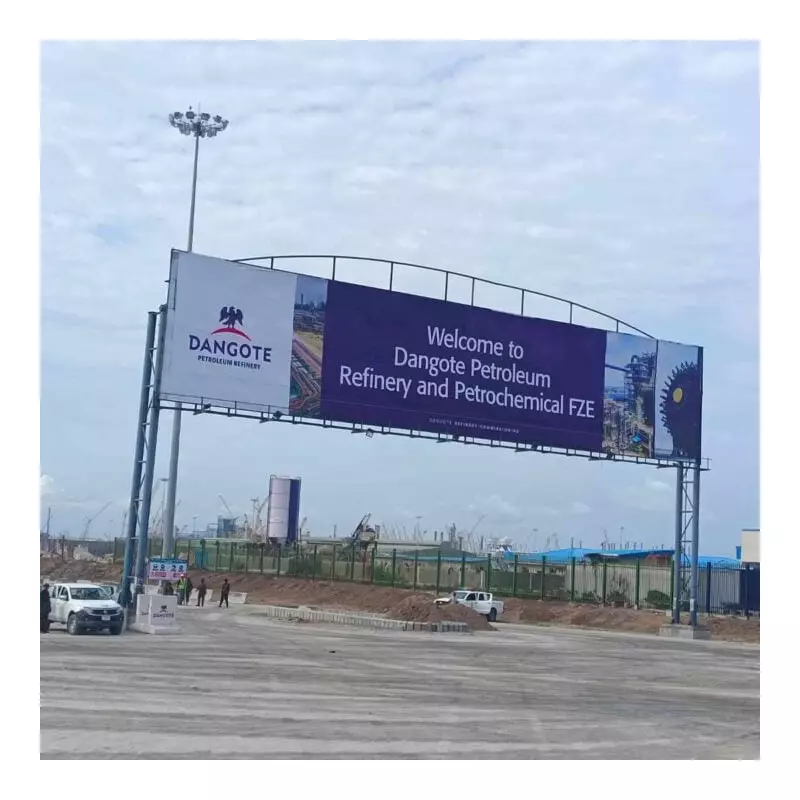
The management of the Dangote Petroleum Refinery has pointed fingers at the previous administration of the Nigerian Midstream and Downstream Petroleum Regulatory Commission (NMDPRA). The refinery alleges that the commission's former leadership issued import licences which resulted in petrol imports surpassing the nation's actual demand in November 2025.
Refinery Denies Collapse of Supply Agreements
This statement comes as a direct response to earlier reports which suggested a pricing disagreement between petroleum marketers and the refinery had caused a rupture in supply arrangements. In a firm rebuttal issued on Friday, refinery spokesperson Anthony Chiejina clarified that no such breakdown of agreements with marketers occurred.
Addressing the notable increase in imports, the refinery's statement linked the spike directly to regulatory decisions made by the prior NMDPRA leadership. The refinery claimed these officials "sanctioned volumes beyond prevailing domestic demand." Dangote emphasized that this situation was unrelated to its own production capabilities or its commitments to supply petrol, known as offtake agreements.

Detailing Supply Growth and Market Operations
The refinery provided a detailed timeline of its market entry and supply expansion. According to their account, petrol supply to the Nigerian market commenced in October 2025 with an initial agreed offtake of 600 million litres.
This volume was increased to 900 million litres in November and further rose to 1.5 billion litres by December 2025. The refinery stated these increments were a direct response to observable market growth and the increasing absorption capacity within the distribution network.
To bolster its claims of consistent supply, Dangote revealed that since December 16, 2025, it has been dispatching between 31 million and 48 million litres of petrol daily from its gantry. The actual volume each day depends on market demand. The company invited verification of these figures through official depot and regulatory loading records.
Measures to Enhance Distribution and Marketer Support
In a move designed to improve product distribution and encourage wider participation, especially among smaller marketers, the refinery implemented significant policy changes. It reduced the minimum purchase requirement from 2 million litres to 250,000 litres.
Furthermore, it introduced a 10-day credit window for qualified buyers, a facility backed by bank guarantees. The refinery also dismissed circulating claims that marketers withdrew due to uncompetitive pricing. It insisted its ex-gantry rates remain competitive, aligned with the market, and are compliant with import parity benchmarks.
IPMAN Backs Refinery, Condemns Continued Imports
The Independent Petroleum Marketers Association of Nigeria (IPMAN) echoed the refinery's position, rejecting speculation of a failed supply arrangement. The association also criticized the continued importation of refined petrol into the country.
Abubakar Garima, the President of IPMAN, affirmed that its members continue to support the Dangote refinery. "Since supply began, marketers have consistently lifted products without any complaints," Garima stated. He emphasized the association's opposition to ongoing imports, stating, "We oppose continued importation because Dangote Refinery has the capacity to meet the country’s entire PMS demand."
The IPMAN president added that marketers are satisfied with the reliability of deliveries from the refinery, which includes the direct supply of products to filling stations across the nation.