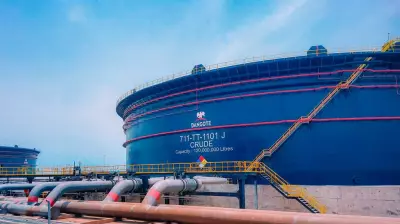
Dangote Refinery Announces Major Fuel Price Reductions
In a significant development for Nigeria's energy sector, Dangote Petroleum Refinery has implemented substantial price cuts for both petrol and diesel. The refinery has reduced the gantry price of Premium Motor Spirit (PMS), commonly known as petrol, by N100 per litre, bringing the ex-depot rate down from N1,175 to N1,075 per litre.
Comprehensive Price Adjustments Across Products
According to the refinery's latest pricing template released on March 10, 2026, the price reduction extends beyond petrol. The gantry price of Automotive Gas Oil (AGO), widely referred to as diesel, has been slashed by N190 per litre, dropping from N1,620 to N1,430 per litre. Additionally, the refinery announced that PMS coastal supply will now be sold at N1,050 per litre, reflecting a modest differential for marine distribution.
All quoted gantry prices are exclusive of charges imposed by the Nigerian Midstream and Downstream Petroleum Regulatory Authority (NMDPRA), as clarified by the refinery in its official communication.

Potential Relief After Recent Price Hikes
This downward price review arrives following a period of sharp increases in depot prices that had driven pump prices as high as N1,400 per litre in certain Nigerian states. Industry analysts suggest the reduction could provide temporary respite for marketers and bulk buyers who have been grappling with rapidly escalating loading costs in recent weeks.
The adjustment is expected to prompt filling stations to revise their pump prices accordingly, potentially bringing some relief to consumers who have been burdened by high fuel costs. However, the extent to which retail prices will decrease remains to be seen, as various factors including transportation and operational costs influence final consumer pricing.
CEO Explains Market Realities Behind Pricing
Meanwhile, David Bird, the Managing Director and Chief Executive Officer of Dangote Petroleum Refinery, has provided context regarding the refinery's pricing structure. During a media engagement on Monday, March 9, Bird explained that petrol prices may not experience dramatic declines even when the refinery reaches full operational capacity.
"We are fully exposed to the international commodity market. That needs to be widely understood," Bird emphasized, highlighting that the refinery operates within global market dynamics that directly impact crude oil and refined product costs.
Bird further clarified that the refinery purchases crude oil at global benchmark prices, including crude supplied locally through Nigeria's crude-for-naira programme. He noted that even crude supplied by the Nigerian government is priced according to international benchmarks, with additional expenses such as freight and insurance incurred during transportation to the refinery.
Broader Context of Nigerian Fuel Pricing
This development occurs against the backdrop of recent price adjustments by other market players. Earlier reports indicated that the Nigerian National Petroleum Company Limited (NNPC Limited) had increased petrol prices at its retail outlets, with surveys showing adjustments to N1,230 per litre in Lagos and corresponding changes in other states.
The contrasting pricing movements between Dangote Refinery and NNPC highlight the complex dynamics of Nigeria's fuel market, where multiple factors including international crude prices, regulatory charges, and distribution costs collectively determine final consumer prices.
Market observers will be closely monitoring how these price reductions translate at retail pumps across Nigeria and whether they signal a broader trend toward more stable fuel pricing in the coming weeks.