The proposed Initial Public Offering (IPO) of the Dangote Refinery is being hailed as a transformative economic milestone that could reshape capital formation, deepen Nigeria's financial markets, and broaden participation in large-scale industrial wealth creation across Africa.
A New Era for Infrastructure Financing
Analysts describe the planned listing as more than a routine corporate exercise, noting that it represents a fundamental shift in how mega infrastructure projects may be financed on the continent. With valuation estimates ranging between $40 billion and $50 billion, the offering is projected to raise as much as $5 billion through the sale of roughly 10 percent equity, making it one of the largest potential listings ever considered in Africa.
The Refinery's Strategic Importance
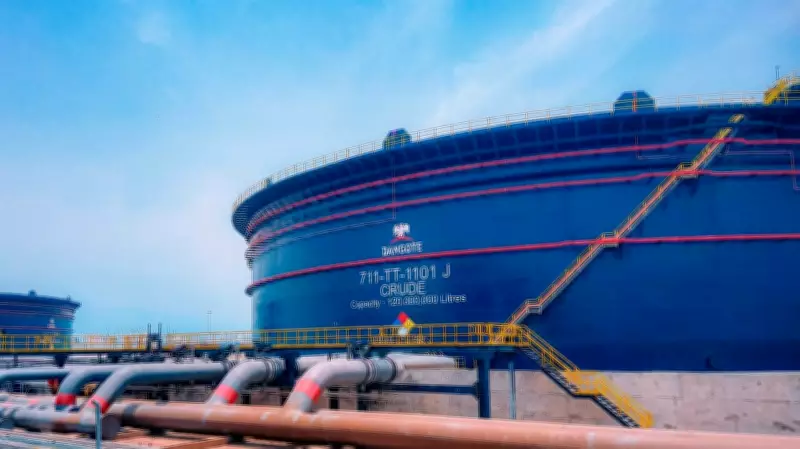
The refinery, located in the Lekki Free Trade Zone in Lagos, was commissioned in 2023 after years of construction and an estimated investment of about $20 billion. It has since grown into one of Africa's most strategic industrial assets, with a refining capacity of 650,000 barrels per day, making it the world's largest single-train refinery. It currently produces petrol, diesel, aviation fuel, and petrochemical products, including polypropylene and alkyl benzene, which are used in plastics and detergent manufacturing.

At full capacity, the facility is expected to significantly reduce Nigeria's dependence on imported refined petroleum products while boosting exports to regional and global markets. Beyond production, the refinery has also had notable employment and training impacts, with reports indicating tens of thousands of direct and indirect jobs created, alongside large-scale technical capacity development for engineers and industry workers.
Innovative Investor Returns Model
The IPO proposal is also drawing attention for its potential innovation in investor returns. The structure being considered would allow investors to purchase shares in naira while receiving dividends linked to the US dollar, a model designed to hedge against currency volatility and improve investor confidence, though it still awaits regulatory approval.
Strong Investor Interest
Investor interest appears strong, with reports suggesting significant private placement demand even before the formal public offering stage begins. Market observers say this reflects growing confidence in large-scale indigenous industrial projects and Nigeria's evolving capital market depth. If successfully executed, the listing would surpass previous record offerings on the Nigerian Exchange, including the MTN Nigeria IPO in 2019, and could draw comparisons with global energy listings such as Saudi Aramco due to its scale and strategic importance.
Risks and Challenges
However, analysts also caution that several risks remain, including concerns around valuation, debt exposure, regulatory approvals, foreign exchange implications, and the relatively limited portion of equity likely to be made available to the public. Global energy transition trends also form part of the broader discussion, with questions being raised about how long-term petroleum investments will adapt as renewable energy adoption accelerates worldwide.
Despite these considerations, the proposed IPO is widely viewed as a potential turning point for Nigeria's capital market, with expectations that it could encourage more listings from the industrial, energy, mining, and logistics sectors. Ultimately, the offering is being framed not just as a financial transaction, but as a test case for inclusive industrial wealth creation—one that could redefine how large-scale projects are funded and how ordinary investors participate in Africa's industrial growth story.