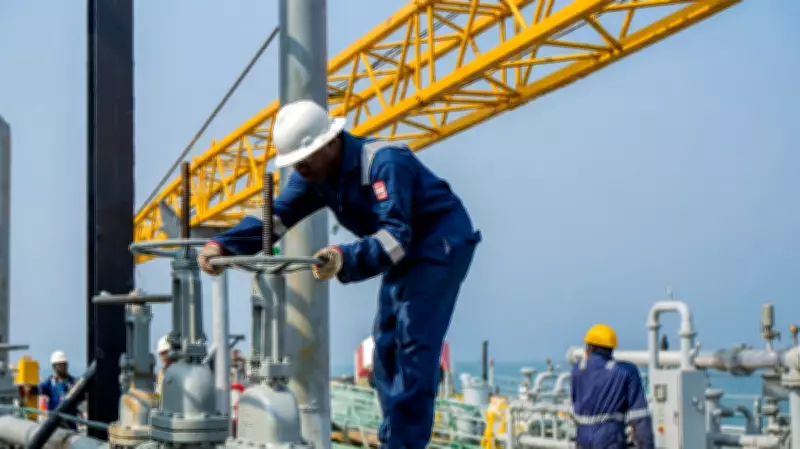
Nigeria's Strategic Naira-for-Crude Policy Ensures Energy Security During Global Turmoil
President Bola Tinubu demonstrated remarkable foresight in July 2024 when he approved using the naira as the payment currency for crude oil supplied by the Nigerian National Petroleum Corporation to the Dangote Refinery. This decision has proven strategically vital as Nigeria navigates ongoing economic challenges stemming from the prolonged Iran-Israel-U.S. conflict in the Middle East.
Robust Framework for Supply Security
Since the official launch of the naira-for-crude initiative on October 1, 2024, Nigeria has developed a comprehensive framework through a technical committee chaired by Minister of Finance and Coordinating Minister of the Economy Wale Edun and Executive Chairman of the Nigerian Revenue Service Zacch Adedeji. This framework has successfully maintained supply security, stabilized the economy, and safeguarded Nigeria's energy future despite global disruptions.
The ongoing Middle East conflict, now in its sixth week, has created worldwide economic chaos with Iran's closure of the Strait of Hormuz—a critical maritime corridor accounting for over 20 percent of global oil and gas flows. This disruption has sent shockwaves through international energy markets, causing prices for liquefied petroleum gas, liquefied natural gas, premium motor spirit, and diesel to skyrocket across Europe, the United States, Asia, Africa, and the Middle East.

Global Energy Crisis Contrasts with Nigerian Stability
While petroleum product prices have increased in Nigeria as in other nations, the country has avoided the severe shortages plaguing many economies. Unlike numerous countries where citizens wait in lengthy queues for days at fueling stations, Nigeria maintains full availability of petroleum products without such disruptions.
Many European, Asian, and major African nations including South Africa and Kenya now depend on supplies from Nigeria through the Dangote Refinery. Located in Lekki, Lagos, this facility has validated the strategic importance of local production and refining capacity for Nigeria as a regional economic powerhouse.
International Energy Supply Disruptions
The Middle East conflict has exposed critical vulnerabilities in global energy supply systems, constraining crude oil and refined product availability while triggering acute shortages and sharply rising costs worldwide. Countries historically dependent on refined product imports are experiencing significant supply chain disruptions with immediate consequences:
- Vietnam encourages remote work to reduce transportation costs
- Thailand mandates energy conservation in public buildings and considers private sector requirements
- Bangladesh closes universities early and imposes daily fuel sales limits
- Pakistan implements emergency measures including a four-day government work week and temporary school closures
- Indian restaurants close due to LPG scarcity
- Egypt mandates shops and restaurants close by 9 PM daily to combat soaring energy prices
- The Philippines declares a national energy emergency
- Parts of the United States see Americans joining long fuel queues
Dangote Refinery's Protective Role
The Dangote Refinery has largely shielded Nigeria from the worst effects of the global supply crisis. By scaling up production before the conflict escalated, the refinery has met Nigeria's refined product requirements. Despite more attractive export options, the facility has prioritized Nigeria's energy security, ensuring full petroleum product availability with zero queues while other nations grapple with scarcity.
Although petroleum product prices have increased, the refinery has managed this impact effectively. For instance, despite a 10 percent increase in crude oil prices recently, the refinery reduced petrol prices by 75 naira per liter—even while paying an additional premium of up to $18 per barrel for Nigerian crude oil cargoes.

Transforming Nigeria's Energy Landscape
The Dangote Refinery is transforming Nigeria into a more resilient and energy-independent nation, providing year-round petroleum product availability and enabling better resistance to external shocks. Petrol queues have disappeared since the refinery commenced PMS production in October 2024, even during festive seasons.
This achievement has simultaneously eliminated the substantial demurrage bills the NNPC previously incurred maintaining safety stock on floating vessels. The ongoing crisis has positioned Nigeria as a strategic and credible exporter to Africa—a role with significant long-term commercial and diplomatic importance as African governments seek more resilient and integrated energy supply arrangements.
Economic and Strategic Benefits
Since the conflict began, the Dangote Refinery has increased exports to Africa to help shore up continental supply. In March alone, the facility exported nearly 500,000 tons of refined products to various African countries, generating valuable export earnings for Nigeria.
This underscores the importance of local production and Africa's industrialization as championed by the Dangote Group. Local production not only creates and sustains thousands of jobs, preserves foreign exchange, and stimulates other economic sectors but, more importantly, insulates the country from global volatility, supply disruptions, and geopolitical risks that continue to batter import-dependent economies during times of stress.
The Dangote Refinery represents more than an industrial asset—it serves as the foundation of Nigeria's energy sovereignty and a catalyst for sustainable economic growth, demonstrating the wisdom of the naira-for-crude policy in securing the nation's energy future.