Nigeria Records Historic Shift as Net Gasoline Exporter in March
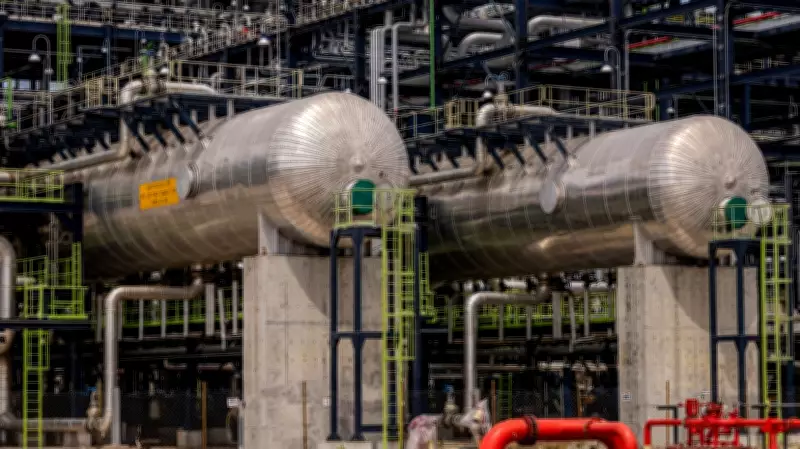
In a landmark development for the nation's energy sector, Nigeria has emerged as a net exporter of gasoline for the first time in March, marking a significant transformation in its downstream petroleum trade. This historic shift is largely attributed to the increased production output from the Dangote Petroleum Refinery & Petrochemicals, located in Lagos.
Data Reveals Sharp Decline in Imports and Rise in Exports
According to data from the market intelligence firm Kpler, gasoline imports into Nigeria dropped sharply to 41,000 barrels per day (b/d) during March, representing the lowest level on record. Concurrently, crude supply to the Dangote facility rose to approximately 565,000 b/d, the second-highest intake since the refinery commenced operations in late 2023. This indicates sustained processing activity and higher product output, with total gasoline exports from the refinery increasing to 44,000 b/d in March, compared to no exports recorded in January and February.
The net export position for Nigeria was approximately 3,000 b/d for the month, enabling the country to post a surplus in gasoline trade. In expanding its market reach, the Dangote Refinery exported gasoline to East Africa for the first time, shipping a 317,000-barrel cargo to Mozambique. Another shipment scheduled for April is also destined for Beira, Mozambique, highlighting the refinery's growing influence in regional supply patterns.

Dangote Advances Plans for Pan-African IPO
Simultaneously, Africa's richest man, Aliko Dangote, is advancing plans to list his multi-billion-dollar oil refinery across several stock exchanges in Africa. This initiative could become the continent's first pan-African public offering, aimed at broadening ownership of the refinery and deepening integration within Africa's fragmented capital markets.
The development was disclosed by Frank Mwiti, Chief Executive Officer of the Nairobi Securities Exchange, following a closed-door meeting in Lagos involving Dangote and heads of various African stock exchanges. Discussions focused on structuring a "pan-African IPO," with the share sale potentially executed across multiple jurisdictions simultaneously. This arrangement would allow investors in different African countries to buy into the refinery through their local exchanges, a move analysts say could significantly reshape cross-border investment flows across the continent.
Regulatory Coordination and Market Confidence
An email from FirstCap CEO Ukandu revealed that Dangote has designated Stanbic IBTC Capital, Vetiva Advisory Services, and FirstCap to provide advice on the IPO for Dangote Petroleum Refinery and Petrochemicals FZE. Earlier this month, Dangote also held talks with the Nigerian Exchange Group (NGX) and the African Securities Exchanges Association to explore regulatory coordination and frameworks that would support cross-border investor participation.
President and Chief Executive of Dangote Industries Limited, Aliko Dangote, recently described President Bola Tinubu's economic and energy sector reforms as critical to restoring market confidence and encouraging large-scale investment in domestic refining. However, analysts caution that the success of the proposed multi-exchange IPO will depend heavily on regulatory harmonisation, currency stability, and investor confidence in the refinery's long-term profitability.
Implications for Nigeria and Regional Markets
Nigeria's emergence as a gasoline exporter is expected to influence regional supply patterns, particularly in East Africa, where demand for alternative sources of supply has increased amid disruptions in global trade routes. The Dangote Refinery, with a capacity of 650,000 b/d, has gradually ramped up operations since commencing production in late 2023, contributing to the country's declining import dependence and rising domestic refining capacity.
This development comes as Nigeria continues to adjust its downstream market structure, with the potential to enhance energy security and economic stability. The combination of net exporter status and the proposed pan-African IPO underscores a pivotal moment in Africa's energy and financial landscapes, driven by strategic investments and policy reforms.