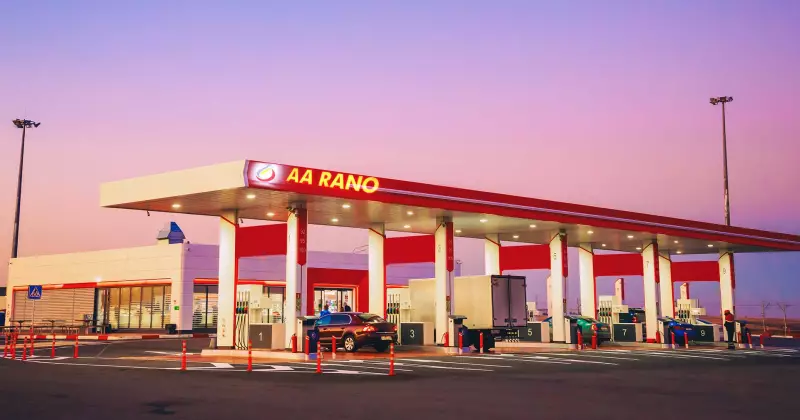
In a significant move to modernize Nigeria's downstream oil sector, A.A. Rano Nigeria Limited has officially launched a network of 24-hour unmanned fuel stations across the country. This pioneering initiative introduces fully digitalized and automated service points, allowing customers to refuel their vehicles at any time without the need for a physical attendant.
Partnership Drives Automated Fuel Dispensing
The groundbreaking project is the result of a strategic partnership between A.A. Rano Nigeria Limited and a domestic technology firm, Petrosoft Limited. The founder and owner of A.A. Rano, business magnate Alhaji Auwalu Abdullahi Rano, announced the development in a statement released from Kano on Wednesday.
Rano confirmed that Petrosoft Limited, a Nigerian company specializing in management systems for the oil and gas industry, developed the smart pumping technology. This collaboration will see Petrosoft's automated fuel station technology deployed across A.A. Rano's 200 retail outlets nationwide. Notably, this rollout includes stations in border communities adjoining Niger, Chad, Benin, and Cameroon.

Technology Promises Efficiency and Transparency
The core of this innovation lies in its self-dispensing fuel pumps equipped with instant payment systems. According to Alhaji Rano, operations at the first set of these automated stations are expected to commence from January 2026.
Motorists and motorcyclists will be able to refuel and complete transactions instantly, 24 hours a day, seven days a week, without interacting with fuel attendants. Rano emphasized that the technology is designed to tackle several persistent challenges in the retail fuel market.
The key benefits highlighted include:
- Reducing the loss of valuable man-hours typically spent queuing at fuel stations.
- Improving transparency in transactions.
- Assuring customers that they receive the exact volume of fuel they pay for, eliminating concerns about malpractice.
Local Tech Meeting International Standards
The Chief Executive Officer of Petrosoft Limited, Dr. Joshua Denila, underscored the significance of deploying home-grown technology to solve local problems. He stated that the digitalized fuel dispensing and payment project demonstrates the capacity of indigenous innovation to overcome the myriad challenges in Nigeria's retail fuel market.
"Our fuel dispensing and payment systems are developed locally and built to international standards," Denila explained. He further noted that the technology is engineered to enhance operational efficiency, scaling from individual fuel stations to larger fuelling depots across the country.
This launch marks a pivotal step towards a more efficient, transparent, and technologically advanced fueling experience for Nigerian consumers, setting a new benchmark for the nation's energy retail landscape.