Nigeria's Oil Shortfall Costs $3.3 Billion as Pipeline Project Advances
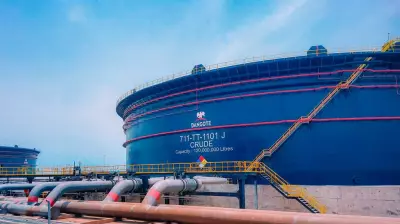
Nigeria has missed out on a significant oil revenue windfall of approximately $3.3 billion this year, despite high global crude prices, as production continues to fall short of government targets. This financial setback coincides with promising developments for the $25 billion Nigeria-Morocco Gas Pipeline, which is set to reach a key milestone with an intergovernmental agreement signing expected in 2026.
Oil Production Falls Below Expectations
According to data from the Organisation of Petroleum Exporting Countries (OPEC), Nigeria's oil output in March 2026 stood at 1.463 million barrels per day (mbpd). This figure is well below the Nigerian National Petroleum Company Limited's (NNPCL) promise of an additional 100,000 barrels per day and the Nigerian Upstream Petroleum Regulatory Commission's (NUPRC) maximum target of 1.8 mbpd.
In January, production was 1.488 mbpd, missing 352,000 bpd. February saw 1.442 mbpd, a shortfall of 398,000 bpd. March's 1.463 mbpd resulted in a deficit of 377,000 bpd. Cumulatively, Nigeria has failed to produce 33.6 million barrels of crude so far this year. At prevailing oil prices of around $100 per barrel, this translates to about $3.4 billion in lost revenue, highlighting a persistent gap between targets and actual output.

Global Oil Market Volatility
Oil prices surged more than seven percent above $100 per barrel recently, driven by geopolitical tensions. The United States imposed a naval blockade on the Strait of Hormuz, a critical chokepoint handling about 20 percent of global oil supply, aiming to throttle Iran's oil exports. This move rattled markets, with Brent crude for June delivery rising 7.1 percent to $101.64 per barrel and WTI crude for May delivery soaring 7.3 percent to $103.66 per barrel.
OPEC reported a sharp 7.56 mbpd drop in production in March, largely due to constrained flows through the Strait. Additionally, the cartel has trimmed its second-quarter global demand forecast by 500,000 bpd, citing economic fallout from the Middle East conflict. Global oil demand is now projected to average 105.07 mbpd for the second quarter, down from the previous estimate of 105.57 mbpd in March.
Nigeria-Morocco Pipeline Progress
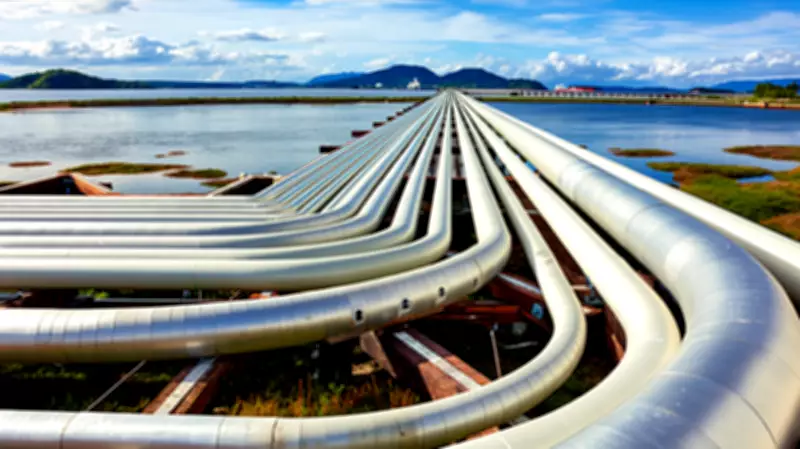
Amid these challenges, Morocco's hydrocarbons agency confirmed that an intergovernmental agreement for the $25 billion Nigeria-Morocco Gas Pipeline will be signed this year. This marks a major milestone for the decade-old project, which aims to enhance regional energy security and deepen West African integration.
The 6,900-kilometre pipeline, with a planned capacity of 30 billion cubic metres yearly, is expected to link Nigeria's gas reserves to Morocco and onward to European markets. Backed by the Economic Community of West African States (ECOWAS), the project has completed feasibility and engineering design stages, with first gas targeted for 2031. If realised, it could position Morocco as a strategic energy bridge between Africa and Europe.
Economic Implications for Nigeria
Nigeria stands to benefit from higher crude prices, as export earnings are likely to exceed budget benchmarks. With oil prices climbing above $100 per barrel, government revenues could rise, offering some fiscal relief and supporting foreign-exchange inflows. However, this upside may be tempered by challenges in the downstream segment.
Higher global oil prices typically translate into increased costs for refined petroleum products, such as petrol, diesel, and aviation fuel. In a deregulated environment where prices are closely tied to international benchmarks, this could exert upward pressure on pump prices in the local market, potentially offsetting some revenue gains.
OPEC's Outlook and Regional Impact
OPEC has reiterated its forecast that global oil demand growth this year will clock in at 1.38 mbpd, despite downward revisions applied to both OECD and non-OECD countries. The group's lower demand outlook comes as its oil production has collapsed due to ongoing conflicts, underscoring the volatile nature of the global energy landscape.

For Nigeria, the missed revenue opportunity highlights the need to address production inefficiencies while capitalising on high prices. The progress on the Nigeria-Morocco pipeline offers a long-term strategic avenue for economic diversification and regional cooperation, potentially mitigating future revenue shortfalls.