Nigeria's dependence on imported petroleum products is set to continue in the near future, defying expectations of relief from new regulatory appointments and ongoing tensions within the domestic oil market. Fresh data reveals a significant surge in imports, highlighting deep-seated challenges in the nation's refining capacity.
Soaring Imports and Stubborn Prices Defy Local Refining Hopes
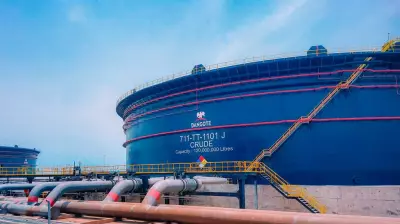
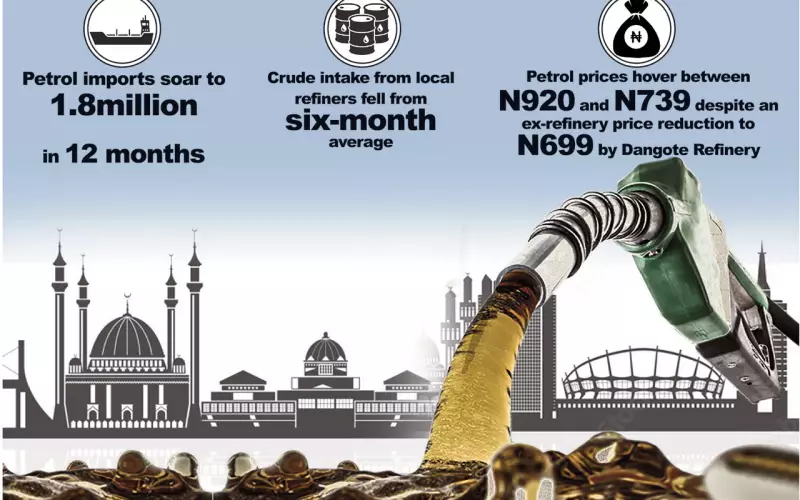
Despite the operational start of the Dangote Refinery, Nigeria and other West African nations imported over 1.8 million metric tonnes of Premium Motor Spirit (petrol) in November and December 2025. This volume marks the highest recorded in a two-month period since late 2024, according to data from S&P Global Commodities at Sea. These imports, largely sourced from Northwest Europe, accounted for a staggering 73% of Nigeria's total petrol consumption in November.
This import surge persists alongside a confusing petrol price war. While the Dangote Refinery reduced its ex-depot price to N699 per litre, pump prices across the country remained wildly inconsistent and high. In Abuja, major retailers like TotalEnergies sold at N920 per litre, while MRS offered fuel at N739. NNPC Retail, AY Shafa, and NIPCO stations were priced around N840. This significant variance, with differences of up to N181 per litre, shows marketers' defiance towards uniform price adjustments.

Regulatory Shake-Up Meets Persistent Structural Weaknesses
The import crisis unfolded amid a major regulatory overhaul. Following tensions with the Dangote Refinery, President Bola Tinubu appointed new heads for the Nigerian Midstream and Downstream Petroleum Regulatory Authority (NMDPRA) and the Nigerian Upstream Petroleum Regulatory Commission (NUPRC). Saidu Mohammed now leads the NMDPRA, while Oritsemeyiwa Eyesan heads the NUPRC. They have quietly resumed with new governing boards, a first since the Petroleum Industry Act (PIA) was passed.
However, industry stakeholders warn that changing personnel alone cannot solve the problem. Olufemi Idowu, a partner at Kreston Pedabo, stated that expecting fuel imports to end abruptly is unrealistic. "Nigeria still relies heavily on imported refined products, spending trillions of naira annually," he said. The core issue remains inadequate local production.
Regulatory data confirms this. Nigeria's average daily petrol consumption in November 2025 was about 52.9 million litres, exceeding the old 50 million litre benchmark. In contrast, the Dangote Refinery supplied only between 18 to 23.5 million litres per day in October-November, missing its 35 million litre target. The state-owned refineries produced zero petrol.
Technical Hiccups and the Long Road to Energy Independence
Operational challenges at the Dangote Refinery have compounded the supply gap. Market intelligence from CITAC indicates the refinery's Residue Fluid Catalytic Cracker (RFCC) was taken offline for maintenance on December 5, 2025. This unit has been operating at only 60–70% capacity since October due to unresolved technical issues. A planned 49-day maintenance period began on December 6 to address these problems.
Vice President of Dangote Refinery, Devakumar Edwin, confirmed the refinery began a planned turnaround maintenance that will pause its main gasoline unit and briefly halt all crude processing in early 2026. The refinery clarified that while some units are under maintenance, others like the Naphtha Hydrotreater and Hydrocracker remain operational, producing diesel and jet fuel.
Stakeholders have outlined clear expectations for the new regulators. Energy economist Professor Wunmi Iledare urged a focus on institutional reform using a QUAD-E framework: Efficiency, Effectiveness, Equity, and Ethics. He emphasized the need for predictable approvals and competitive neutrality.
Joseph Ambakederimo, Chairman of the Community Development Committees in the Niger Delta, warned against relying on a single energy supplier. "It is dangerous to leave a product as critical as energy for over 240 million people in the hands of one entity," he argued, advocating for a mix of local production and imports.

The Executive Secretary of the Major Energy Marketers Association of Nigeria (MEMAN), Clement Isong, expressed optimism, noting that the new governing boards provide crucial strategic direction missing since the PIA's enactment.
Ultimately, the consensus is clear: Nigeria's journey to ending costly fuel imports is far from over. The new regulators face the monumental task of fixing structural flaws, ensuring transparency, and fostering a competitive market before the nation can achieve true energy security.