Nigeria's New Oil Boom: A Real Opportunity or Just Another Illusion?
Global energy markets are currently in a state of high alarm, with Brent crude oil prices surging toward $114 per barrel. This sharp increase is fuelled by an intensifying conflict in the Middle East that has effectively shuttered the Strait of Hormuz, a critical maritime chokepoint. With approximately 20 percent of the world's oil and liquefied natural gas supply now bottlenecked at this location, the world is facing its most significant supply shock since 2022.
For most petrostates, this price spike represents a massive fiscal windfall, offering a chance to boost revenues and stabilise economies. However, for Nigeria, a familiar paradox persists: a global oil boom does not yet guarantee domestic economic relief. The country enters this crisis as Africa's top oil producer, but its ability to capitalise on $114 oil is severely constrained by ongoing challenges.
The Production Stagnation Challenge
While OPEC+ has set Nigeria's 2026 production quota at 1.5 million barrels per day, the country is currently averaging closer to 1.46 million barrels per day. In a market where every additional 100,000 barrels per day translates to roughly $4.1 billion in annual export revenue, Nigeria's "missing" capacity represents a multi-billion-dollar leak in the national treasury. The government is actively pushing for deepwater expansion to hit a target of 2.0 million barrels per day, but for now, the gap between potential and reality remains wide and problematic.

The Refining X-Factor and Domestic Impact
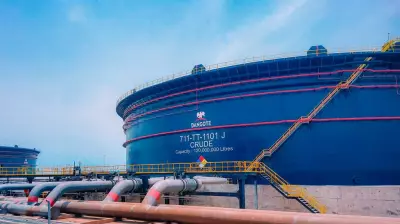
Unlike previous oil booms, Nigeria now possesses a critical internal stabiliser: The Dangote Refinery. Operating at a significant scale, the facility is attempting to shield the domestic market from the full brunt of the global shock. However, with subsidies largely dismantled, local prices are now tethered to international realities. As of March 10th, 2026, the refinery's ex-depot petrol price has climbed to ₦1,175 per litre, marking a sharp ₦401 rise, or 51.8 percent, within a single week.
This surge has immediately trickled down to consumers, with retail pump prices now swinging between ₦1,200 and ₦1,400 per litre across major cities like Lagos, Abuja, and Port Harcourt. This increase places additional strain on a population already grappling with high inflation and economic uncertainty.
A Structural Crossroads for the Economy
The current crisis highlights deep-seated structural fragility within Nigeria's economy. Oil still accounts for 80 percent of the country's export earnings but contributes less than 10 percent of the Gross Domestic Product. This imbalance leaves the Naira and the federal budget perpetually exposed to geopolitical volatility in regions like the Persian Gulf.
While nations such as Norway manage a $1.6 trillion sovereign wealth fund to weather such storms, Nigeria's fiscal buffers remain thin and underdeveloped. The current windfall offers a rare, high-stakes opportunity to rebuild institutions like the Nigeria Sovereign Investment Authority and the Excess Crude Account, which are crucial for long-term economic stability.
The Bottom Line and Path Forward
High oil prices are a double-edged sword for Abuja. While they swell export receipts and potentially boost government revenues, they simultaneously drive up the cost of living for millions of Nigerians. For the 2026 boom to be a genuine opportunity rather than an illusion, the mandate is clear and urgent.

- Aggressively close the production gap to meet and exceed the 1.5 million barrels per day OPEC quota, leveraging investments in infrastructure and technology.
- Fully integrate domestic refining to reduce the foreign exchange spent on fuel imports, enhancing energy security and economic independence.
- Institutionalise the windfall by directing excess revenues into long-term fiscal buffers, ensuring that future generations benefit from today's resources.
Oil booms are historically fleeting, often followed by busts that can devastate unprepared economies. The real test for Nigeria is whether it can finally build an economy that thrives not just because oil is expensive, but because its structural foundations are deep enough to withstand any boom or gloom shock in global prices. This requires decisive action, transparent governance, and a commitment to diversifying beyond oil dependency.
Kelvin Uwaibi, an investment strategist focusing on African industrial development and economic governance, wrote from Abuja. His analysis underscores the critical need for Nigeria to seize this moment for transformative change.