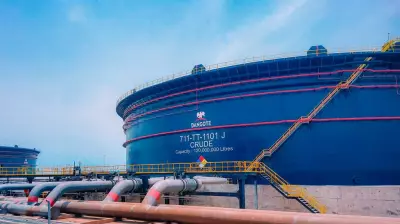
Nigeria's Oil Reserves Stagnate at 37 Billion Barrels, Gas Reserves to Sustain 85 Years
The Nigerian Upstream Petroleum Regulatory Commission (NUPRC) has reported that the country's crude oil reserves have stalled at approximately 37 billion barrels, a figure that has remained largely unchanged over the past decade. This stagnation dashes hopes of reaching the 40 billion barrel target set by the Federal Government, which has already missed deadlines in 2020 and 2025.
Detailed Breakdown of Reserves
As of January 1, 2026, Nigeria's total proven crude oil and condensate reserves stand at 37.01 billion barrels. This includes 31.09 billion barrels of crude oil and 5.92 billion barrels of condensate. In contrast, gas reserves have shown a modest increase, with associated gas estimated at 100.21 trillion cubic feet (TCF) and non-associated gas at 114.98 TCF, bringing the total gas reserves to 215.19 TCF.
Reserves Life Index and Production Outlook
According to Mrs Oritsemeyiwa Eyesan, the Commission Chief Executive, based on current production levels, Nigeria's oil resources may last for 59 years, while gas reserves could sustain production for up to 85 years. This highlights a significant shift in focus towards gas as a strategic transition fuel for the nation's energy sector.

Factors Behind Stagnation and Growth
The data reveals a slight decline of 0.74 per cent in oil reserves in 2025, attributed to ongoing production activities and routine technical evaluations of existing fields. Conversely, gas reserves grew by 2.21 per cent, driven by new discoveries and enhanced reservoir studies, underscoring Nigeria's commitment to leveraging its gas potential.
Regulatory Commitments and Future Plans
The NUPRC has reiterated its dedication to improving upstream performance through the full implementation of the Petroleum Industry Act (PIA) 2021. This includes strategic objectives aimed at boosting reserves and ensuring stable production. Eyesan confirmed these figures as Nigeria's official petroleum reserves position, in compliance with the PIA provisions.
This report underscores the challenges in expanding oil reserves while highlighting the growing importance of gas in Nigeria's energy landscape, with implications for long-term economic planning and energy security.