Nigeria's Refineries: Billions Wasted, No Production, Economic Crisis Deepens
Nigeria's four petrochemical refineries, once symbols of industrial potential, have transformed into colossal money-guzzling entities, draining millions of taxpayers' dollars across successive administrations without delivering any meaningful utility. A stark illustration of this parasitic legacy emerges from the staggering $3.14 billion invested in revamping three of these facilities, which remain entirely comatose and non-operational.
Ghost Towns of Neglect and Decay
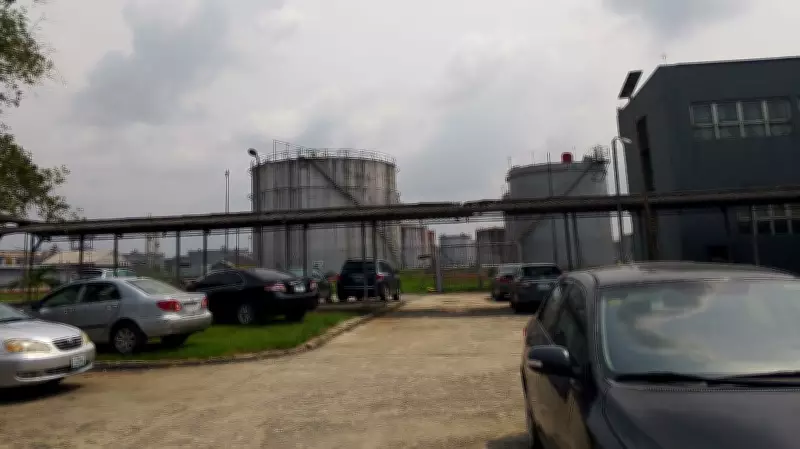
Recent visits to the Port Harcourt Refining Company (PHRC) and the Warri Refining and Petrochemical Company (WRPC) reveal facilities that resemble abandoned ghost towns rather than functioning industrial complexes. The impact of the $1.5 billion spent on PHRC and approximately $897 million on WRPC is virtually invisible. Large sections are overrun by wild shrubs, with an atmosphere of dishevelment and neglect pervading the premises.
Key installations sit idle and silent at midday, when they should be roaring with activity. The once-constant flare stack, a flickering signal of refining operations, has gone dark. Human presence is sparse, with birds perching undisturbed on technical units, leaving droppings that indicate a prolonged absence of routine cleaning or maintenance. The access roads are severely deteriorated, riddled with deep ditches, and heaps of refuse line the perimeter fences.

At the loading bay, known as Area Five, which was historically the heartbeat of the refinery, no petroleum tankers queue to load products. Only two police officers stand guard at the entrance, raising questions about what remains to be secured in the absence of any visible production or distribution activities.
Financial Quagmire and Broken Promises
Despite repeated assurances from the Federal Government that these refineries would be resuscitated to alleviate rising petrol prices, these promises have consistently been broken. The refineries have accumulated over N4 trillion in debt, validating warnings from figures like former President Olusegun Obasanjo and business leader Atedo Peterside, who opposed the massive rehabilitation expenditures.
In March 2021, the Federal Executive Council approved another round of spending, with PHRC receiving $1.5 billion, WRPC $897.6 million, and the Kaduna Refinery $740.67 million, totaling about $3.14 billion. Hopes were raised when deals were signed with international firms like Tecnimont SPA and Daewoo Engineering, but from 2021 to March 2026, the refineries have suffered repeated delays, broken promises, and stop-start operations.
The removal of petrol subsidy by President Bola Tinubu in May 2023 triggered a sharp increase in pump prices, from about N189-N195 per litre to as high as N1,400 in many parts of the country today. This has exacerbated cost-of-living crises, placing immense pressure on households, businesses, and the broader economy.
Single Point of Failure and Economic Implications
The continued non-functionality of all state-owned refineries creates a dangerous single point of failure in Nigeria's fuel supply chain, especially amid global uncertainties like the COVID-19 pandemic and geopolitical conflicts. With an installed capacity of 445,000 barrels per day, these refineries could have complemented the Dangote Refinery's 650,000 barrels-per-day capacity, offering competitive advantages and supply diversification.
Instead, Nigeria's refining landscape lacks diversification, making the country vulnerable to disruptions. The implications extend beyond fuel availability, affecting critical sectors such as manufacturing, construction, pharmaceuticals, and petrochemicals. For instance, local refining could reduce high diesel costs, enable local bitumen production for infrastructure projects, and decrease import dependence on petrochemical derivatives for drug manufacturing.

Professor Emeritus Wumi Iledare, an expert in petroleum economics, emphasizes that the closure of state-owned refineries is a major structural constraint. He notes that operational refineries would enhance supply diversification, improve market contestability, and reduce risks associated with reliance on a single domestic supplier. However, he cautions that effective market design, including transparent pricing and open infrastructure access, is essential for sustainable competition.
Community Impact and Allegations of Mismanagement
The shutdown of refineries has devastated host communities, where small businesses that depended on these facilities have collapsed, worsening local microeconomic conditions. In Warri, Chief Omafume Amurun laments the economic stagnation enveloping the area since the refinery's closure, describing it as a major setback for Delta State and Nigeria.
Stakeholders allege deliberate obstruction by interest groups that benefit from fuel importation, a system that imposes high costs on the broader population. Policy analyst Chris Onyegbule blames cabals profiting from refinery dysfunction, advocating for privatization or commercialization as the only viable solution. Energy expert Ruth Lawal echoes this, criticizing the government's lack of transparency and implementation, and calling for more industry operators to foster competition and lower prices.
Pathways to Reform and Accountability
Professor Adeola Adinikinju, an energy economist, urges a thorough investigation into the huge investments in refineries, questioning the outcomes of past rehabilitation efforts. He advocates for a public-private partnership model, where the government retains a minority stake and cedes majority ownership and management to experienced private investors to drive efficiency and create a competitive market.
Adinikinju stresses the need for the Federal Government to investigate fund utilization by the Nigerian National Petroleum Company Limited (NNPCL) and set clear timelines for restoring refineries to operation. Decisive action is required to ensure accountability, minimize economic losses, and restore value to the sector.
Nigeria's downstream petroleum sector stands at a critical juncture. The injection of N3.25 trillion into refinery rehabilitation was expected to strengthen supply security and reduce import dependence, but continued inactivity has deepened structural imbalances. Ensuring transparency in fund allocation, introducing private-sector participation, and creating a regulatory framework that promotes competition are essential steps forward. Policies must balance support for local refining with the need for supply flexibility to secure Nigeria's energy future.