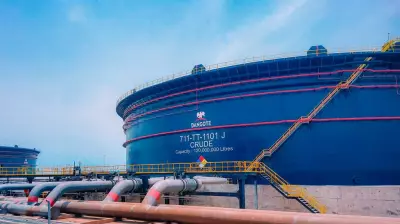
In a landmark move for Nigeria's energy industry, the Nigerian National Petroleum Company (NNPC) Limited has officially commenced a formal bidding process to divest stakes in selected oil and gas assets. This action, announced on 30 December 2025, represents a pivotal step in the state-owned company's transformation into a fully commercial entity.
Strategic Shift Under Petroleum Industry Act Reforms
The decision aligns with the broader mandates of the Petroleum Industry Act (PIA), which compels NNPC to operate profitably and reduce its financial exposure in the upstream sector. Under the leadership of Bayo Ojulari, the company is strategically shifting its focus. Instead of a retreat, this is a recalibration designed to attract credible investors with the technical expertise and capital needed to develop assets more efficiently.
For years, NNPC has grappled with funding obligations in its joint ventures, leading to production shortfalls and stalled projects. By selling minority or non-core stakes, the company aims to free up capital, mitigate operational risks, and concentrate its resources on assets with stronger long-term returns.

Targeted Assets and Investor Requirements
While a complete public list is not yet available, the bidding process is expected to cover interests in oil mining leases, gas projects, and joint venture holdings. The portfolio includes mature fields requiring significant investment to boost output, as well as gas-focused projects critical to Nigeria's energy transition and export goals.
NNPC has established a competitive and transparent framework for the sale. Interested bidders must demonstrate strong financial standing, relevant technical experience, and full compliance with Nigerian regulations. The process will involve pre-qualification, data room access, and commercial evaluation before final approvals are granted.
Implications and Stakeholder Reactions
The successful conclusion of these divestments could reshape Nigeria's upstream landscape. Analysts anticipate benefits including increased crude oil production, job creation, and higher government revenue from taxes and royalties. For NNPC, a stronger balance sheet will reinforce its new identity as a limited liability company focused on value creation.
However, the move has not been without controversy. Major labour unions, including the Nigeria Union of Petroleum and Natural Gas Workers (NUPENG) and the Petroleum and Natural Gas Senior Staff Association of Nigeria (PENGASSAN), have voiced strong opposition. Festus Osifo, President of PENGASSAN, labeled the plan as "dangerous" and a potential threat to national financial stability, noting that government stakes in JV assets currently sit between 55% and 60%.
Despite this resistance, the divestment push continues. The next steps will see NNPC announce preferred bidders and conclude negotiations, pending regulatory approvals. The outcome is being closely monitored as a key indicator of how aggressively Nigeria is pursuing its energy sector reforms. In a rapidly changing global energy landscape, NNPC's bid process sends a clear signal: Nigeria is repositioning its national oil company for competitiveness, efficiency, and long-term sustainability.