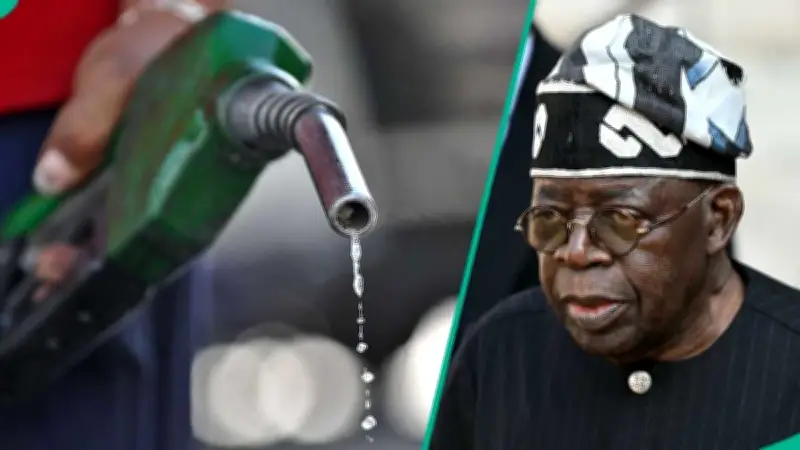
Within three years, the price of Premium Motor Spirit (petrol) in Nigeria has surged by over 600% from approximately N175 per litre in May 2023 to between N1,300 and N1,400 by May 2026, market data shows.
Fuel Subsidy Removal Triggered Price Hikes
This massive increase followed the abolition of fuel subsidy by President Bola Ahmed Tinubu just weeks after his inauguration on May 29, 2023. Upon announcing the fuel subsidy is gone, petrol prices jumped from around N175-N200 per litre to over N500 per litre within a few weeks. The Nigerian National Petroleum Company Limited led the initial price adjustments as the downstream market began to move towards complete deregulation, Punch reports.
Forex Reforms and Naira Devaluation
The subsequent foreign exchange reforms and the devaluation of the naira consequently led to higher import costs and higher fuel prices. By 2024, petrol prices had surpassed N1,000 per litre in many parts of the country, fueled by inflationary pressures. The market stabilised to some extent temporarily through what analysts described as an implicit subsidy, where the government supposedly offset part of the difference between landing prices and retail prices. Previously, the International Monetary Fund had warned that such mechanisms are equivalent to under-recovery schemes, failing to account for the true cost of fuel supply.

Dangote Refinery Impact and Global Shocks
The commissioning of the Dangote Petroleum Refinery resulted in a temporary decrease in prices to between N800 and N900 per litre in 2025, due to competition from the domestic refinery and decreased reliance on imports. However, a setback in 2026 saw the gains reversed due to renewed shocks in the international oil market, primarily linked to the Middle East crisis and the blocking of the Strait of Hormuz. This caused global crude prices to soar, resulting in a jump in import costs, which in turn rapidly led to increased pump prices. By the middle of 2026, petrol was selling for between N1,300 and N1,400 per litre, with NBS also reporting some states paying as high as N1,500.
Expert Insights on Economic Impact
Muda Yusuf, the Chief Executive Officer of the Centre for the Promotion of Private Enterprise, told Legit.ng that the immediate consequence of the reforms was a significant inflationary shock. He stated that energy prices surged, transportation and logistics costs escalated, production expenses increased sharply, and the depreciation of the naira amplified imported inflation pressures. Yusuf added: The removal of fuel subsidy was arguably the most consequential fiscal reform undertaken by the administration. The subsidy regime had become a major drain on public finances, encouraging smuggling, arbitrage and rent-seeking while crowding out productive public investment. The next phase of reforms must focus on translating macroeconomic stability into inclusive growth through accelerated investment, improved productivity, stronger energy security, security of life and property, enhanced food security, industrial competitiveness and poverty reduction.
Depots Respond to Dangote Price Reduction
Earlier, Legit.ng reported that private depots in Nigeria followed Dangote Petroleum Refinery in lowering petrol prices on Monday, June 1, 2026. The price cuts by operators range between N1 and N22 per litre, depending on the location and volume. The latest move by depot owners has now fueled increased competition in the downstream oil industry for customers.