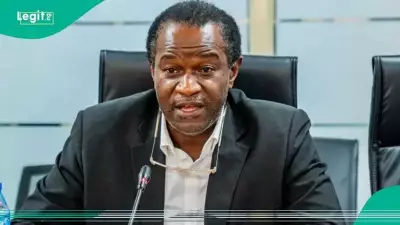
President Bola Ahmed Tinubu has taken a decisive step to reshape the leadership of Nigeria's crucial oil and gas regulatory bodies. He has formally requested the Nigerian Senate to confirm a total of 21 nominees appointed to the governing boards of the Nigerian Upstream Petroleum Regulatory Commission (NUPRC) and the Nigerian Midstream and Downstream Petroleum Regulatory Authority (NMDPRA).
Strengthening Governance Under the PIA
In two separate letters forwarded to the Senate, the President outlined that these nominations are strategic. Their primary goal is to strengthen governance, deepen regulatory effectiveness, and consolidate the reforms initiated by the landmark Petroleum Industry Act (PIA). This move underscores the administration's focus on ensuring the agencies tasked with overseeing the nation's vital hydrocarbon sector are robust and credible.
New Leadership for Upstream Regulation
For the NUPRC, which regulates upstream activities, President Tinubu has nominated Magnus Abe as Board Chairman. Abe, a former two-term Senator for Rivers South-East, brings significant legislative experience and sector knowledge, having previously served on the board of the Nigerian National Petroleum Company and currently chairing the National Agency of the Great Green Wall.

The President also nominated two non-executive commissioners: Paul Yaro Jezhi, a former Trade Union Congress chairman in Kaduna State, and Sunday Adebayo Babalola, a former deputy director at the defunct Department of Petroleum Resources (DPR).
A full slate of executive commissioners was named for the NUPRC Board, including:
- Muhammed Sabo Lamido (Finance)
- Edu Inyang (Exploration and Acreage)
- Justin Ezeala (Economic Regulation and Strategic Planning)
- Henry Darlington Oki (Development and Production)
- Indabawa Bashari Alka (Corporate Services and Administration)
- Mahmood Tijani (Health, Safety and Environment)
- Olayemi Adeboyejo (Secretary and Legal Adviser)
This list introduces new members while retaining some, like Lamido and Adeboyejo (first appointed in 2022) and Alka (2023), signaling a balance between continuity and renewal at the upstream regulator.
Expertise for Midstream and Downstream Oversight
In a separate communication for the NMDPRA, the President nominated Adegbite Ebiowei Adeniji as Board Chairman. Adeniji is a lawyer with over three decades of experience in energy and natural resources. He previously served as Special Technical Adviser to the Minister of State for Petroleum and was part of the World Bank team that supported Nigeria's petroleum sector reforms. He is currently the Managing Partner at ENR Advisory.
The non-executive member nominees for the NMDPRA Board are Kenneth Kobani, a former Minister of State for Trade, and Asabe Ahmed.
The executive nominees for the authority include:
- Abiodun Adeniji (Finance)
- Francis Ogaree (Hydrocarbon)
- Oluwole Adama (Midstream and Downstream Gas Infrastructure)
- Mustapha Lamorde (Corporate Services and Administration)
Other nominees to the board are Yahaya Nasamu Yinusa (Distribution Systems), Adeyemi Murtala Aminu (Corporate Services), Modie Ogechukwu (Economic Regulation and Strategic Planning), and Olawale Dawodu as Board Secretary and Legal Adviser, who previously worked at Exxon's Nigerian subsidiaries.
A Call for Expedited Approval and Professionalism
President Tinubu has urged the Senate to consider the nominations expeditiously, emphasizing the strategic importance of having strong boards in place for the regulators established under the PIA. This request follows the recent Senate confirmation of the chief executives for both agencies: Oritsemeyiwa Eyesan as CEO of NUPRC and Saidu Aliyu Mohammed as CEO of NMDPRA.

In a statement released by his Special Adviser on Information and Strategy, Bayo Onanuga, the President charged all nominees and appointees to discharge their duties with professionalism, independence, and integrity. This directive aligns with the administration's stated commitment to transparency, effective regulation, and sustainable growth across the entire Nigerian oil and gas value chain.