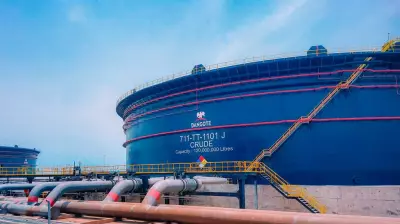
President Tinubu's Executive Order Overhauls Nigeria's Oil and Gas Revenue Framework
President Bola Tinubu has enacted a significant executive order that restructures the distribution of Nigeria's oil and gas revenues, aiming to enhance transparency and accountability in the sector. The order, signed recently, directs that all revenues from oil and gas be paid directly into the Federation Account, bypassing intermediaries and limiting the Nigeria National Petroleum Company Limited's ability to retain statutory deductions.
Key Directives of the Executive Order
The executive order includes multiple directives designed to reshape the financial landscape of Nigeria's petroleum industry. It eliminates the 30% management fee previously deducted by NNPCL and abolishes the Frontier Exploration Fund, redirecting these funds to the Federation Account. Additionally, payments for gas flaring penalties, Royalty Oil, Tax Oil, and Profit Oil are now required to be remitted directly to the Federation Account under the new regulations.
Government Justification and Stakeholder Reactions
The federal government, through presidential spokesman Bayo Onanuga, has stated that this measure is intended to improve transparency and strengthen statutory allocations to the three tiers of government. Pro-government commentators argue that the order will force NNPCL to operate as a profit-driven commercial entity, potentially reducing revenue leakages. However, critics, including energy experts and labor unions, have raised concerns about possible job losses, financial suffocation for NNPCL, and conflicts with the Petroleum Industry Act of 2021.

Major Highlights of the Executive Order
- Direct Remittance: Oil and gas revenues must be paid directly into the Federation Account, eliminating intermediary management.
- Restoration of Constitutional Entitlements: Aims to return revenue shares to Federal, State, and Local Governments that were reduced under the PIA framework.
- Elimination of the 30% Management Fee: NNPCL is no longer entitled to this fee, with its 20% profit retention deemed sufficient for operations.
- Abolition of the Frontier Exploration Fund: Funds earmarked for frontier basin exploration are redirected to the Federation Account, raising questions about future oil output expansion.
- NNPCL Goes Fully Commercial: The order repositions NNPCL as a strictly commercial enterprise to prevent market distortions.
- No More Deduction of Gas Flaring Penalties: Payments will now go to the Federation Account instead of the Midstream and Downstream Gas Infrastructure Fund.
- Royalties and Tax on Oil Profit Straight to Federation Account: As of February 13, 2026, all contractors must pay Royalty Oil, Tax Oil, and Profit Oil directly.
- Joint Team Between NUPRC and NMDPRA: Establishes a joint project team for combined upstream and midstream petroleum operations.
Expert Analysis and Potential Impacts
Energy expert Dr. Joseph Obele highlighted that the order may reduce revenue leakages and ensure full remittance of national resources, but warned it could weaken NNPCL's operational flexibility and lead to workforce reductions. The Petroleum and Natural Gas Senior Staff Association of Nigeria has also expressed concerns about job losses and operational destabilization. Additionally, the order conflicts with sections of the PIA, such as those establishing the Frontier Exploration Fund and mandating the 30% management fee, without legislative amendments.
In summary, President Tinubu's executive order represents a pivotal shift in Nigeria's oil and gas revenue architecture, with implications for fiscal transparency, institutional operations, and sector stability. While it aims to boost Federation Account inflows and enforce commercial discipline, it has ignited debates over legal consistency, investor confidence, and employment security in the industry.