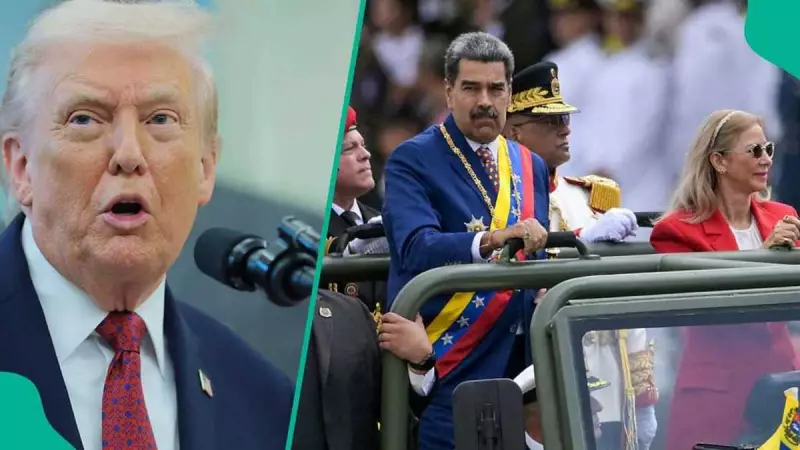
In a dramatic move with global implications, United States President Donald Trump has declared his intention to tap into Venezuela's enormous oil wealth following the military capture of the country's leader, Nicolás Maduro.
Operation in Caracas and a Bold Oil Plan
The development follows a significant military operation on Saturday, where the US carried out a series of air strikes on Venezuela's capital, Caracas. President Maduro and his wife were apprehended and subsequently flown to New York City, where they are set to face charges related to drug trafficking and weapons.
Addressing a news conference in Florida, President Trump outlined his vision for Venezuela's future, centering on its crippled oil industry. "We're going to have our very large United States oil companies, the biggest anywhere in the world, go in, spend billions of dollars, fix the badly broken infrastructure, the oil infrastructure, and start making money for the country," Trump stated.

He confirmed that the US would manage Venezuela's affairs until a secure political transition is achieved. Notably, Trump emphasized that the existing embargo on all Venezuelan oil remains active. This embargo stems from economic sanctions first imposed by Washington in 2017, with specific oil sanctions following two years later.
The Scale of the Prize and the Immense Challenges
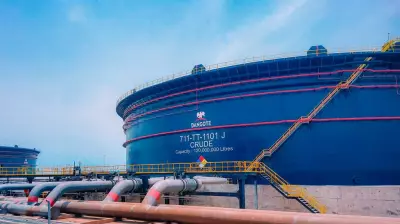
Venezuela's oil potential is staggering. The nation holds the world's largest proven oil reserves, estimated at a colossal 303 billion barrels. However, decades of state control, underinvestment, and US sanctions have crippled production. Output has plummeted from its peak, with current production at roughly 860,000 barrels per day as of November 2025—less than a third of its output a decade ago.
Despite the size of the prize, industry experts are sounding alarms about the feasibility of Trump's plan. They point to enormous political, financial, and technical hurdles.
Homayoun Falakshahi, a senior commodity analyst at Kpler, explained that even with political stability, the process would take months to initiate. He estimated that restoring Venezuela's former output levels would require tens of billions of dollars and potentially up to a decade.
Neil Shearing, chief economist at Capital Economics, echoed this sentiment, noting that the plans would have minimal near-term impact on global oil prices. "Firms will not invest until a stable government is in place, and the projects will not deliver for many years," Shearing said.
Further complicating matters is the nature of Venezuela's oil. Most of its reserves consist of "heavy, sour" crude, which is more complex and expensive to refine than the "light, sweet" oil commonly produced in the United States.
Corporate Stance and Regional Tensions
Currently, Chevron is the sole US company operating in Venezuela under a special license granted in 2022, accounting for about one-fifth of the country's production. The company has stated its focus remains on employee safety and legal compliance.
Other major international oil firms have maintained public silence, though analysts suggest internal discussions are intense, weighing the massive opportunity against the profound political risks. "The potential prize may be deemed too big to avoid," Falakshahi remarked.
The US action has also heightened tensions in Latin America. Following the operation, President Trump issued a direct threat to Colombian leader Gustavo Petro, who criticized the raid. Colombia has since announced plans to reinforce its border security in response.
As the situation develops, the world watches to see if President Trump's ambitious plan to harness Venezuela's oil can overcome the monumental challenges that stand in its way, or if it will remain a high-risk, long-term venture with uncertain returns.