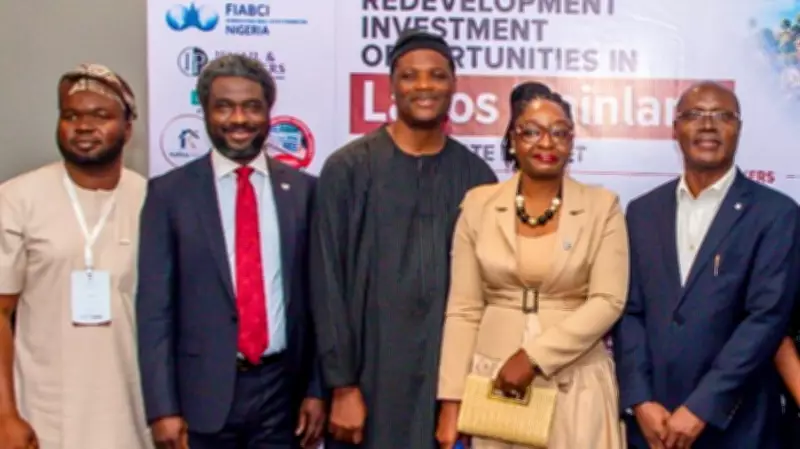
Stakeholders have urged investors and property developers to explore redevelopment opportunities in the Lagos Mainland residential real estate market, particularly in student housing and mixed-use developments. They also advised the government to upgrade infrastructure alongside socio-economic protections, stressing that state-led urban renewal programmes must incorporate anti-displacement mechanisms to prevent the eviction of low-income residents.
Call for Reduced Approval Costs
Speaking at a forum entitled “Exploring redevelopment investment opportunities in Lagos Mainland real estate market,” organised by Exclusive Estates in Lagos, the Director of the Centre for Housing and Sustainable Development at the University of Lagos, Prof. Timothy Nubi, called on the government to reduce the cost of property assessment and approvals, Certificates of Occupancy, and documentation. According to him, the high costs associated with approvals are discouraging investment and stalling projects.
“When the government reduces the high cost of getting approval and allows projects to come to the market, it can begin to charge land use fees and earn revenue sustainably,” he said. Nubi lamented that approval costs had recently increased instead of declining, warning that the development could encourage more illegal construction activities.

Demographic and Investment Drivers
Nubi noted that about 85 per cent of Lagos State’s population resides on the mainland, adding that metropolitan Lagos has outgrown its jurisdictional boundaries, making the mainland the demographic core of the state. According to him, key drivers reshaping the mainland’s investment landscape include infrastructure expansion, proximity to economic and educational centres, and speculative capital.
Nubi identified government-led initiatives such as urban regeneration programmes by the Lagos State Urban Renewal Agency (LASURA), slum upgrading schemes, market redevelopment projects, new housing hubs, the Mainland Central Model City Plan, the Okobaba redevelopment initiative and the proposed Fourth Mainland Bridge as major catalysts for growth.
Advice for Investors
He advised investors to focus on transit-connected locations, prioritise affordable and mixed-use developments, integrate sustainability into projects and work closely with government agencies. Nubi also urged developers to adopt community-inclusive models to minimise displacement conflicts, deploy phased project rollouts to manage cash flow and explore modular, cost-efficient construction methods to protect profit margins.
He further appealed to the government to improve land administration and title clarity, expand infrastructure investment, provide clear redevelopment incentives and strengthen enforcement of urban planning regulations. “Government should recognise and integrate incremental housing and traditional compound structures into urban planning rather than entirely replacing them with capital-intensive developments,” he said. He added that housing policies should shift from a purely market-driven approach to one that addresses the severe housing deficit facing low- and middle-income urban residents.
Exclusive Estates Chairman Speaks
Chairman of Exclusive Estates, Peter Adobamen, said the company’s latest report showed a rapid rate of urbanisation in Lagos, driven largely by younger demographics involved in the digital economy. According to him, demand is shifting away from large five-bedroom duplexes towards smaller housing units preferred by younger residents. He said the forum was designed to stimulate conversations, build partnerships and create opportunities within the real estate market.
“The challenges with urban development include finance, high interest rates and government regulation. We must find a balance between government regulation, development dynamics and the need to avoid displacing low-income residents,” he said. Adobamen added that the firm would continue engaging stakeholders across government and the private sector to deepen discussions on urban renewal and redevelopment. “In five years, we expect Lagos to have advanced significantly in the gentrification process, with visible improvements in urban renewal,” he said.

FIABCI President Proposes Solutions
President of International Real Estate Federation Nigeria Chapter, Akin Opatola, identified major barriers to urban redevelopment as lengthy permit processes, community resistance, infrastructure deficits, talent shortages, land ownership disputes and limited financing. He proposed the establishment of a dedicated Lagos Mainland Redevelopment Authority, urban development zone tax holidays, systematic land title regularisation, a Lagos Lagoon Waterfront Masterplan and a Lagos Mainland Diaspora Redevelopment REIT aimed at channelling diaspora remittances into real estate development.
Legal Perspective
Senior Advocate of Nigeria, Dapo Akinosun, represented by Olumuyiwa Balogun, said property acquisition in Lagos Mainland could be rewarding if guided by proper legal processes. He stressed the need for due diligence, transparency and compliance with statutory procedures, given the complexity of land administration in Lagos. “Before committing funds, always ensure verification of title and ownership, proper documentation and registration, and engagement of a qualified legal practitioner,” he said.
LASBCA General Manager Weighs In
General Manager of the Lagos State Building Control Agency, Florence Gbaye, represented by Oluseye Olanrewaju, said redevelopment encompasses reconstruction and renovation of existing buildings, urban renewal projects, slum upgrading, infrastructure modernisation and land-use conversion. She noted that rapid population growth has intensified pressure on land and infrastructure, making redevelopment essential for housing delivery, urban modernisation, economic growth and environmental sustainability.
“Redevelopment in Lagos faces significant regulatory and compliance challenges. Sustainable redevelopment requires collaboration among regulators, developers, professionals and communities to achieve safe, inclusive and resilient urban growth,” she said.