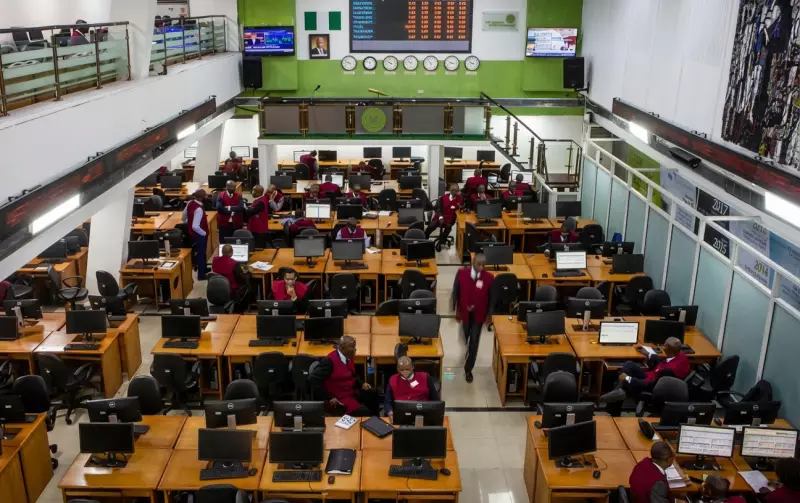
The Nigerian stock market concluded the year 2025 by writing a new chapter in its history, delivering a performance that shattered expectations and set a new benchmark for growth. The Nigerian Exchange All-Share Index (ASI) recorded an annual gain of 51.19 per cent, marking its most robust performance in close to twenty years. This powerful bull run pushed the total market capitalisation of equities to the verge of the monumental N100 trillion threshold, a symbolic achievement highlighting the market's expanding depth and surging investor confidence.
Sectoral Breakdown: Consumer Goods Lead Historic Rally
The impressive gains were not concentrated but spread across various sectors, indicating broad-based investor participation. The standout performer was the consumer goods sector, which skyrocketed by an astonishing 129.6 per cent. This surge was fueled by better corporate earnings, reduced foreign exchange losses due to currency stability, and strong investor belief in the sector's pricing power as inflation eased. Stocks like Guinness Nigeria, Vitafoam, and Honeywell Flour Mills saw extraordinary increases, while giants such as Nigerian Breweries and Nestle also posted significant advances.
Following closely was the insurance sector, which jumped 65.6 per cent. This rally was primarily triggered by the signing of the Nigerian Insurance Industry Reform Act (NIIRA) 2025 and expectations of balance-sheet strengthening from recapitalisation, with companies like Sovereign Trust Insurance and AIICO leading the pack.

The industrial goods sector also enjoyed strong growth of 58.9 per cent, driven by high construction demand and notable rerating of stocks like Beta Glass, which gained over 470 per cent. Even the banking sector, despite facing regulatory challenges and dividend suspensions in mid-2025, managed a solid 39.8 per cent return as investors focused on the long-term benefits of the sector's recapitalisation exercise. The only underperformer was the oil and gas sector, which ended the year slightly in negative territory.
Global and Domestic Drivers of the 2025 Boom
This exceptional performance was supported by a favourable mix of international and local factors. Globally, 2025 saw moderate economic growth, easing inflation, and a shift towards less restrictive monetary policies in developed nations, which improved risk appetite for emerging markets like Nigeria.
Domestically, Nigeria's macroeconomic landscape showed marked improvement. GDP growth strengthened to approximately 3.9 per cent, while inflation moderated to around 14 per cent following CPI rebasing and tight monetary policy. Crucially, stability returned to the foreign exchange market, supported by higher capital inflows and increased domestic refining capacity. External reserves climbed to about US$45 billion, and foreign portfolio investment inflows witnessed an explosive 800 per cent increase to N1.12 trillion.
Key reforms also played a pivotal role. The passage of the Investment and Securities Act (ISA) 2025, the implementation of the T+2 settlement cycle, and the successful banking sector recapitalisation that raised over N2.5 trillion ahead of schedule all aligned the market with global standards and boosted investor protection and confidence.
2026 Outlook: Cautious Optimism Amidst Risks
Entering 2026, the Nigerian stock market is on a strong footing, but the outlook is one of cautious optimism rather than unbridled bullishness. Several factors will shape the year.
On the downside, persistent global geopolitical tensions, particularly the Russia-Ukraine conflict, are expected to keep global oil prices subdued around $60-$65 per barrel. This price level is below Nigeria's fiscal breakeven and could strain government finances, potentially leading to higher borrowing and upward pressure on yields, which might crowd out private sector credit.

However, domestic tailwinds provide a solid counterbalance. The Central Bank of Nigeria projects GDP growth to accelerate to 4.49 per cent in 2026, while inflation is forecast to moderate further to an average of 12.94 per cent. A stable exchange rate and potential monetary policy easing could boost real investment returns and make equities more attractive compared to fixed income.
The full implementation of the Nigeria Tax Act (NTA) 2025 promises a more efficient fiscal regime, potentially improving corporate profitability and dividend payouts. Furthermore, recapitalisation activities across banking, insurance, and pensions will continue to drive market activity through rights issues and mergers.
The most anticipated event of 2026 could be the listing of Aliko Dangote's Dangote Petroleum Refinery, alongside potential listings of other major enterprises. Such moves have the power to inject trillions of naira in value, dramatically deepen market liquidity, and attract substantial foreign investment.
Investment Strategy for a VUCA Environment
Given this volatile, uncertain, complex, and ambiguous (VUCA) environment, a strategic approach is essential. The market is unlikely to repeat the blanket gains of 2025, making selectivity key. Performance will increasingly depend on earnings quality, balance-sheet strength, and smart sectoral positioning.
Investors are advised to focus on the long-term transformation of Nigeria's market. A diversified portfolio, prudent risk management, and a long-term perspective—the DHL approach—remain crucial. Sectors like banking, insurance, and select consumer goods stocks appear well-positioned, while opportunities will also arise from recapitalisation corporate actions and landmark new listings. By aligning with these structural shifts, investors can navigate 2026 to preserve capital and build sustainable returns.