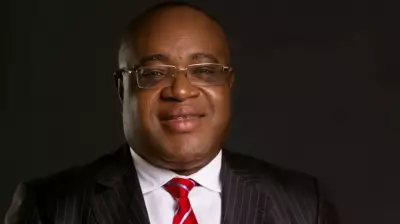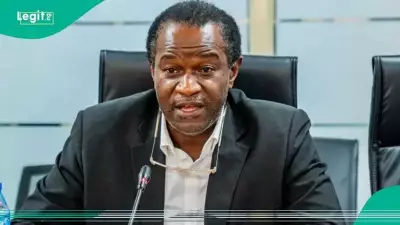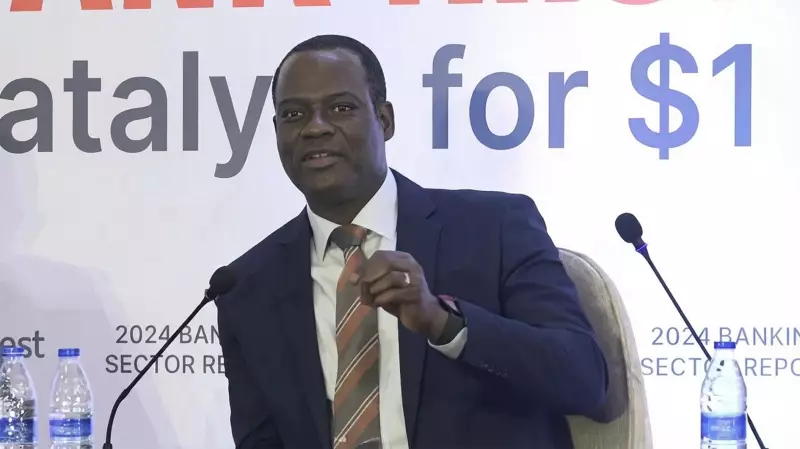
The Chairman of the Presidential Fiscal Policy and Tax Reforms Committee, Taiwo Oyedele, has declared that Lagos State possesses the potential to generate up to ₦1 trillion annually from property taxation. He stated that achieving this monumental revenue target hinges not on increasing tax rates, but on improving data quality, harmonising laws, and enhancing administrative coordination across government agencies.
The Power of Property Tax as a Revenue Anchor
Oyedele made this revelation on Tuesday, December 24, 2025, at the Tax Reform Summit 2026 held in Lagos. He positioned property tax as a critical yet underutilised revenue stream for states and local governments. "Property taxation is one of the most underutilised yet stable revenue sources," Oyedele told the audience. He explained that when properly administered, it is difficult to evade, grows alongside urban development, and creates a direct link between tax payments and visible public services.
To illustrate the scale of the opportunity, Oyedele outlined a straightforward scenario. "If just two million properties are taxable in Lagos State... and they are worth an average of ₦100 million, and you tax at just 0.5 per cent of the valuation. That's ₦1 trillion every year," he calculated, emphasising that such revenue could be continuously reinvested into community development.

Data, Harmonisation, and Administrative Reform
However, the tax chief stressed that this potential remains locked without a foundation of reliable data. He identified a credible database of taxpayers and accurate property valuations as non-negotiable prerequisites. Oyedele challenged Lagos to dramatically expand its taxpayer register, noting that the entire country has fewer than 10 million active individual taxpayers—a number he believes Lagos State alone should aim for.
Beyond data, Oyedele called for leadership in legal and institutional reforms. He disclosed that a model tax harmonisation law has already been drafted by his committee with the Joint Revenue Board. He revealed that states like Ekiti, Zamfara, Anambra, and Kano have already enacted this law, urging Lagos to follow suit. He also criticised fragmented revenue collection, advocating for all tax collection within the state to be consolidated under the Lagos State Internal Revenue Service for greater efficiency.
Lagos Government's Commitment to Implementation
In his remarks, Lagos State Governor, Babajide Sanwo-Olu, acknowledged that the success of national tax reforms would be tested at the state level. He said Lagos is positioning itself to transition from policy debates to concrete execution. "Lagos State is positioning itself as a leading sub-national in the implementation of these reforms," Sanwo-Olu stated.
He framed taxation as a social contract built on trust, where compliance increases when citizens believe the government is responsible and accountable. The Governor highlighted that tax revenues in Lagos are being channelled into transport, healthcare, education, and security.
Adding detail to the state's plans, the Special Adviser to the Governor on Taxation and Revenue, Abdul-Kabir Ogungbo, said the summit aimed to resolve structural weaknesses, especially at the local government level. A key goal is establishing a standardised revenue portal across all Local Governments and Local Council Development Areas (LCDAs) that integrates with state systems and aligns with the national Tax Identification Number (TIN) framework.
Ogungbo further argued that Lagos's current budget is misaligned with its vast responsibilities, underscoring an urgent need to achieve a sustainable annual revenue target between ₦10 trillion and ₦15 trillion.
The discussions at the summit clearly indicate that Lagos's journey to unlock large-scale property tax revenue will serve as a crucial test case for how effectively Nigerian states can translate national tax reforms into tangible fiscal gains for development.