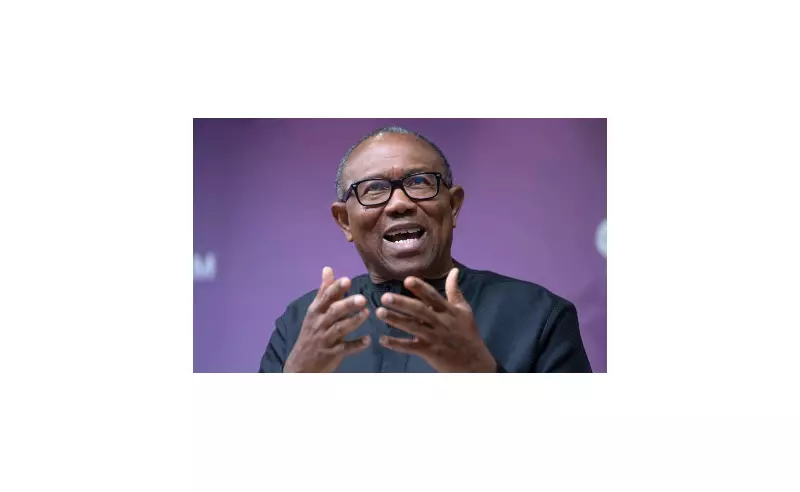
Peter Obi, the 2023 presidential candidate of the Labour Party, has issued a strong demand to the Federal Government. He wants the immediate suspension of the controversial new tax law that is currently being enforced.
Major Flaws Identified in Tax Legislation
In a statement released on Tuesday, January 13, 2026, the former Anambra State governor pointed to a damning report by the global accounting firm, KPMG. The report allegedly identified 31 critical problem areas within the new tax laws. These issues range from simple drafting errors to significant policy contradictions and major administrative gaps.
Obi stated that these findings should force any responsible administration to act without delay. He expressed deep concern that such serious flaws were only uncovered after private discussions between the National Revenue Service and KPMG.

"If experts need closed-door discussions to make sense of our tax laws, what hope does the average Nigerian have of understanding the obligations being imposed on them?" Obi questioned.
Taxation as a Broken Social Contract
Obi elaborated that taxation is more than just fiscal policy. He described it as a fundamental social contract between the government and the citizens it serves. He argued that this contract cannot be enforced if it is neither understood nor trusted by the people.
He explained that globally, governments justify tax policies by delivering clear, tangible benefits to the public. These include:
- Improved healthcare systems
- Quality education
- Job creation initiatives
- Infrastructure development
- Robust social safety nets
"In Nigeria, the focus appears to be on how much more the government can extract, rather than what it is prepared to give in return. A tax system without visible public benefits is not reform; it is extortion," Obi stated bluntly.
Lack of Consultation and Mounting Public Hardship
The Labour Party leader highlighted that in other nations, extensive consultations with businesses, workers, and civil society groups are standard practice. These discussions often last for months or years before any tax proposal is finalized. Citizens are clearly informed about both their obligations and the expected benefits.
Obi lamented that no such transparent process occurred in Nigeria. This has left citizens confused about the new regulations and what they stand to gain. He accused the government of rushing to collect taxes without building a national consensus and enforcing rules without clear explanations.
He connected this to the current economic pain felt by Nigerians, who are still waiting for relief after the removal of subsidies. Citizens now face:
- Soaring food prices
- High transport costs
- Declining purchasing power
- Deepening poverty
"Before addressing these challenges, we are being pushed into a sweeping new tax regime filled with inconsistencies and flagged with 31 major concerns by a leading global accounting firm. This is not responsible governance," he said.
Obi warned that a tax system implemented without trust feels like punishment. Without clarity, it breeds confusion, and without delivering visible public value, it amounts to robbery.
He concluded by insisting that Nigeria cannot afford to place more burdens on its already struggling citizens. He called for a government that listens, communicates clearly, and prioritizes national consensus as the only path to genuine reform, unity, growth, and shared prosperity.