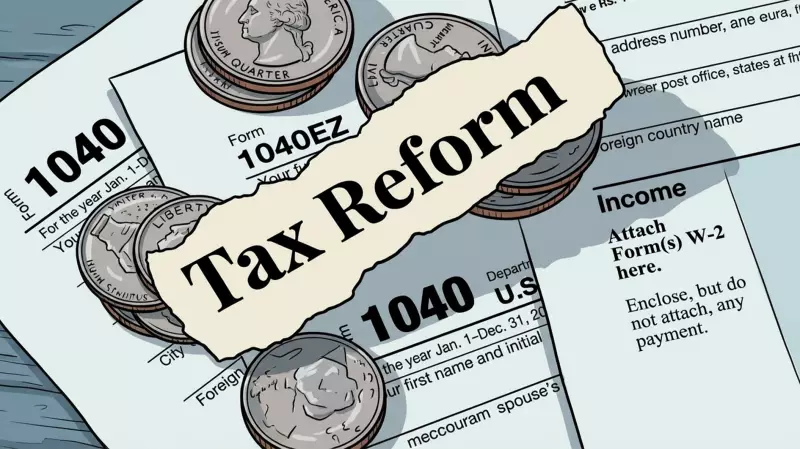
Nigeria's ambitious new tax reform law, which officially commenced on Thursday, January 1, 2026, has been met with immediate and significant public resistance. Various groups and individuals are calling for its suspension, highlighting a deep-seated distrust in government policy execution.
Roots of Public Distrust and Reform Fatigue
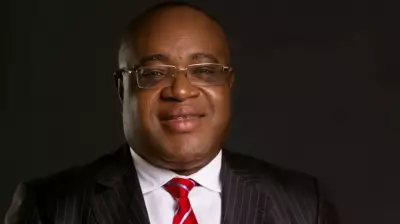
According to Dr Muda Yusuf, Chief Executive Officer of the Centre for the Promotion of Private Enterprise (CPPE), this opposition is not simply a failure of communication. He argues it is fundamentally rooted in the lived experiences of Nigerians. Past reforms have often led to higher costs of living and declining welfare, with little visible improvement in public services to show for the sacrifices made.
Dr Yusuf, in a detailed statement, pointed to a persistently weak social contract that undermines public confidence. There is scant belief that additional tax revenues will be deployed transparently or efficiently. This skepticism comes at a precarious time, with businesses and households still grappling with the aftershocks of elevated inflation, weakened purchasing power, and the adjustment costs from the removal of fuel subsidies and foreign exchange reforms. Most are experiencing what he termed "reform fatigue."

He warned that a rigid, enforcement-heavy approach risks destroying the reform's credibility before any benefits can materialize. This is especially critical as the nation approaches a politically sensitive pre-election period.
Potential Benefits Versus Implementation Pitfalls
On paper, Dr Yusuf acknowledged the reforms have a sound framework. They aim to strengthen revenue mobilization, improve equity, simplify the system, and align fiscal policy with economic diversification. Key benefits include exempting low-income earners from personal income tax and providing VAT relief on basic goods and essential services like education, healthcare, and agriculture.
"On the growth side, targeted incentives for priority and job-creating sectors strengthen alignment between tax policy and Nigeria’s diversification agenda," he stated. The rationalization of multiple taxes and repeal of obsolete laws also responds to long-standing private-sector demands.
However, he issued a stark caution: "History offers a sobering lesson: good policy design does not guarantee good outcomes." The success of Nigeria’s tax reform will depend far less on its legislative provisions and far more on its implementation. Without careful sequencing, political sensitivity, and economic realism, even well-intentioned reforms can trigger resistance and further erode trust.
The Informal Sector Challenge and Policy Flashpoints
A major concern is the reform's impact on Nigeria's vast informal economy, which, according to the last Nigeria Labour Force Survey by the National Bureau of Statistics (NBS), accounts for over 90 per cent of jobs. Most informal operators lack structured records, have limited tax literacy, and operate on thin, cash-based margins.
"Yet the new tax framework introduces mandatory filing requirements, defined record-keeping standards, penalties for non-compliance and presumptive taxation where records are inadequate," Dr Yusuf noted. He warned that without careful handling, these rules risk criminalizing informality instead of encouraging gradual formalization.
He also highlighted specific policy flashpoints causing anxiety:
- The mandatory reporting of quarterly bank transactions of ₦25 million and above to the tax authority.
- The proposed increase in capital gains tax from 10 to 30 per cent, which has unsettled investors.
- A ₦500,000 annual rent relief cap misaligned with urban housing costs, squeezing middle-class income.
- Wide enforcement powers for tax authorities and severe penalties embedded in the new laws.
A Call for Strategic, Phased Implementation
Dr Yusuf called for a strategic framework focused on revenue efficiency, not blanket enforcement. Evidence suggests roughly 20 per cent of businesses generate nearly 90 per cent of tax receipts, and a similar proportion of taxpayers contribute over 80 per cent of personal income tax.

"Concentrating enforcement on large corporations, established SMEs and high-net-worth individuals will deliver substantial revenue gains without destabilising livelihoods or deepening social resistance," he advised.
He urged authorities to prioritize the formal sector initially and integrate the informal sector gradually through incentives, sustained education, simplified tools, and digital support. "Shifting emphasis from penalties to compliance-building will produce more durable outcomes," he said. The goal should be to grow the tax net organically, not force it prematurely.
With 2026 as a pre-election year, he stressed that political and social caution is imperative. Aggressive enforcement risks social discontent, political backlash, and potential reversal of the reforms. "Stability, trust-building and reform credibility must take precedence over short-term enforcement optics," Dr Yusuf concluded, advocating for a phased, pragmatic, and socially sensitive approach anchored on trust and economic reality.