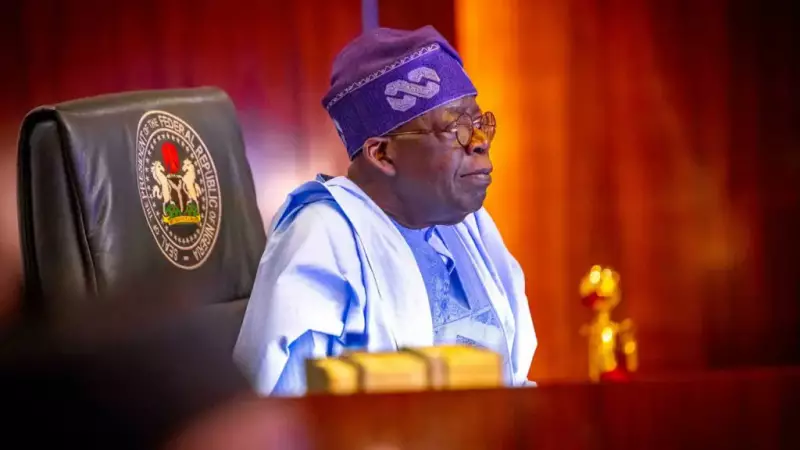
President Bola Tinubu has firmly dismissed mounting calls for a suspension of Nigeria's new tax legislation, insisting that the controversial reforms will officially commence on January 1, 2026. This decision comes despite serious allegations from the opposition, professional bodies, and civil society that the published versions of the laws contain unauthorized alterations not approved by the National Assembly.
President Stands Firm on Reform Timeline
In a statement personally signed by him on December 30, 2025, President Tinubu described the tax reforms as a "once-in-a-generation opportunity" to build a fairer and more resilient fiscal framework. He argued that the regime is designed not to increase burdens but to reset the system through harmonisation and efficiency.
The President directly addressed the swirling controversy, stating that no substantial issue had been established to justify disrupting the implementation timeline. "Trust is built over time by making the right decisions, not through premature or reactive measures," the statement noted, emphasising the need for stability in long-term fiscal policy.

Tinubu urged all stakeholders, including the National Assembly, state governments, and the private sector, to support the implementation phase, asserting that the process has now entered the delivery stage.
Opposition and Experts Raise Constitutional Alarm
The Peoples Democratic Party (PDP) has led the charge against the government's stance, accusing the Tinubu administration of prioritising revenue over citizen welfare. In a statement by its National Publicity Secretary, Comrade Ini Ememobong, the party demanded an immediate suspension of the Act's commencement.
The PDP cited alarming inconsistencies between the harmonised version passed by lawmakers and the copy currently gazetted and in public circulation. The party alleged that "dangerous provisions" earlier removed by the legislature had mysteriously reappeared in the published law.
"This disposition clearly shows where the priority of the government lies — between Nigerians and money," the PDP's statement declared, recalling the contentious fuel subsidy removal as another example of the administration's fiscal priorities.
Accountants Demand Legal Rectification
Echoing these concerns, the Association of National Accountants of Nigeria (ANAN) called for the withdrawal and re-gazetting of the tax laws. The professional body, led by its President, Zuwairat Talatu Kishimi, warned that the discrepancies pose a direct threat to the rule of law and fiscal stability.
ANAN stressed that the constitution vests legislative authority exclusively in the National Assembly, and any post-assent alteration without a formal amendment lacks validity. The association argued that the confusion created undermines voluntary compliance, increases disputes, and could erode investor confidence in Nigeria's economy.
Ezekwesili Warns of Constitutional Crisis
Adding a powerful voice to the dissent, former Minister and policy advocate Obiageli Ezekwesili submitted a public memorandum dated December 30, 2025. She called for an immediate suspension of the Tax Reform Act, warning that the alleged discrepancies have triggered a credibility and constitutional crisis.
Ezekwesili demanded not just a re-gazetting but a full independent inquiry into how the divergence between the passed and published texts occurred. She insisted that implementation must halt until the process is reset, starting from the public hearing stage, to ensure democratic accountability and public ownership of the laws.
A Nation Awaits January 1 Amidst Uncertainty
As the standoff continues, the nation is poised for the new laws to take effect. President Tinubu has pledged continued collaboration with the National Assembly to resolve any implementation concerns. However, with the PDP, a key professional accounting body, and a respected economist all raising identical red flags about the law's integrity, the launch of these pivotal reforms is shrouded in unprecedented controversy. The coming days will test the administration's commitment to due process against the backdrop of fierce public and professional scrutiny.