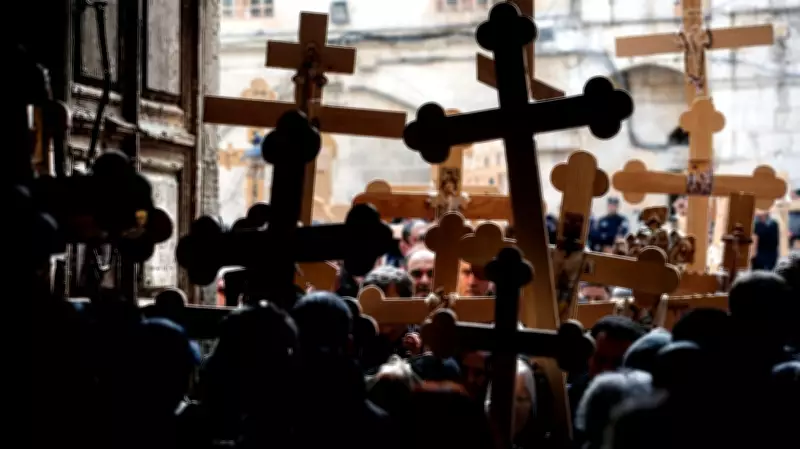
Holy Week: Christianity's True Grace vs. Fake Grace in Spiritual Renewal
The liturgical year of the Church serves as a comprehensive formative course in Christian discipleship, with Lent and Holy Week intensifying lessons on true discipleship. Throughout the year, Christians receive formation through the mysteries of faith, but Lent and its culmination in Holy Week provide specialized training to align human wills intimately with God's will, akin to the self-submission on the Mount of Olives. This journey leads to the union of wills via the path of the Cross, revealing that true worship integrates prayer, penance, and charity. In prayer, communication occurs through words; in penance, through the body; and in charity, through good works. Thus, during this season of grace and renewal, Christians mature by integrating these three pathways to God in cooperation with divine grace.
The Significance of Holy Week and Costly Grace
At the threshold of Christianity's holiest days, every believer is invited to focus on grace. The mystery of Holy Week underscores the inevitability of grace for salvation, emphasizing that grace is costly. The faithful relive the mystery of their salvation through active participation in Holy Week, which commemorates the last week of Jesus Christ's earthly ministry. Laden with grace, it offers a profound spiritual experience, highlighting the core mysteries of salvation: excruciating suffering, violent death, and glorious resurrection. This week awakens the faithful to the deeper meaning of Easter faith, encouraging an intentional embrace of God's salvation as an expression of radical love. It is a time for personal repentance and renewal, inviting Christians to a living encounter with the Risen Lord in appreciation of the great price paid for salvation.
The Paschal events of Holy Week make it evident that salvation, though free, is very costly, requiring the excruciating pain and violent death of Jesus Christ. The betrayal, suffering, death, and resurrection of Christ give this week its meaning and significance, representing costly grace that is freely given but demands active devotion. These events, culminating in Christ's resurrection, are unique points on the path to Paschal grace, through which salvation is freely offered to all who receive it. Reception is not passive; it requires active participation, beginning with faith in Christ and leading to discipleship. Without conscious cooperation, grace remains ineffective, as showers of divine rain may not drench those who do not engage.

The Dangers of Fake Grace and Complacency
While grace is a free, gratuitous gift of God—the divine presence enabling Christians to live their divine filiation—its counterfeit is cheap grace. Many doctrines on grace amount to counterfeit due to distortions: true grace inspires a response, while cheap grace suggests passivity. Scriptures such as Romans 6:1 and 2 Corinthians 9:8 directly rebut misunderstandings that salvation is cheap, emphasizing it costs the precious blood of the Son of God. Cheap or fake grace treats grace as a license to follow personal impulses without consequences, distorting forgiveness by presenting it as requiring no human cooperation. As certain brands of Christianity emerge, faith is often portrayed as a religion of 'luxury or nothing,' depending on fake grace that strips the Cross of its meaning.
Rooted in ancient Gnostic teachings like antinomianism, this theology of grace opposed to law found resonance among some Reformation groups. Teachings such as faith alone or grace alone echo hyper-grace or cheap grace, promoting salvation without sanctification. At its core, this false doctrine asserts that salvation is by faith alone, with works having no place, in an effort to underscore salvation as a free gift and oppose work-righteousness. Under the deceptive guise that sin is settled at Calvary, moral conduct is taught to be outside God's salvation scheme, unable to impact a believer's fate. This corrective doctrine errs far beyond the error it seeks to correct, focusing only on accepting Jesus as personal Lord and Savior, formed by the idea that grace is acquired once and cannot be lost or increased.

Transforming Faith Through True Grace
While Christianity centers on the encounter with Christ and justification by faith, fake grace robs faith of its consequential expression in love, delinking it from discipleship—ecstasy without exodus, encounter without discipleship. The effect is a religion that excludes sacrifice, promoting a Christianity of luxury or nothing. This distortion has characterized the faith for many adherents, robbing it of transformative power and validating untrained, irascible, or concupiscible appetites. Though grace is essential—without it, there is no Christianity—the corruption of grace results in fake grace, which bifurcates truth and love, preaches wealth without work, and indulges in pleasure without responsibility.
Fake grace prioritizes encounter without discipleship, grace devoid of law, faith excluding good works, salvation without repentance, and a prosperity gospel idolizing worldliness while neglecting participation involving conversion, suffering, and persecution. It preaches salvation and ignores sanctification, thriving among lazy believers who see faith as a scheme to meet needs without sacrifice, tapping the spiritual realm without self-alignment. Through Holy Week celebrations, Christians are challenged to ascend the mountaintop for a transfiguration experience, transforming souls into Christ. This mystery calls for a shift from profit-seeking, prosperity-focused, commercialized faith toward transformative, Christ-centered faith and ethical life, inviting agents of real renewal for the world.