What truly defines the Nigerian character? After months of dedicated research and years of personal observation, the answer lies in a complex, living tapestry of principles that guide over 220 million people. Nigerian values are not merely abstract ideals discussed in seminars; they are the bedrock of daily decisions, family priorities, and national identity, woven from constitutional mandates, deep traditional roots, religious teachings, and modern realities.
The Official Framework: Nigeria's 7 Constitutional Values
Formally, the Nigerian state outlines a clear ethical roadmap. Section 23 of the 1999 Constitution (as amended) explicitly identifies seven national ethics: Discipline, Integrity, Dignity of Labour, Social Justice, Religious Tolerance, Self-Reliance, and Patriotism. These are presented as the foundational pillars meant to guide both governance and citizenship.
However, a significant gap often exists between these aspirational principles and lived experience. For instance, while the constitution champions Integrity, Transparency International's corruption perceptions index frequently highlights the systemic challenges Nigeria faces. Conversely, the value of Dignity of Labour resonates powerfully in a society that deeply respects hustle and legitimate hard work, whether in a corporate office or a roadside workshop.

The Living Heart: 10 Deep-Rooted Cultural Values
Beyond the legal document, a richer set of cultural values actively governs behaviour in homes, markets, and communities across Nigeria's 371 ethnic groups. These are the unwritten codes that often carry more weight than official pronouncements.
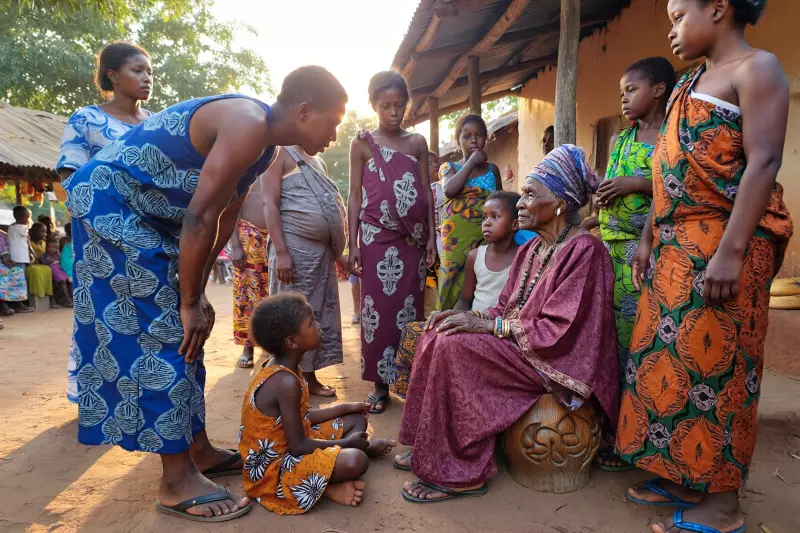
Respect for elders and hierarchy is non-negotiable. From children prostrating (Yoruba) or kneeling (Igbo) in greeting to younger adults deferring to older opinions in meetings, age commands automatic authority. This value was vividly displayed when a 70-year-old market woman publicly corrected a much younger bank manager for perceived rudeness, with onlookers affirming her right to do so.
Family loyalty and communal responsibility create an extensive support network. The extended family system means individual success is communal property. It is not unusual for a professional in Lagos to financially support the education, healthcare, or wedding expenses of numerous extended family members, viewing it not as a burden but as a fundamental duty. This principle was captured when a man in Enugu sent ₦500,000 to fund a cousin's son's university education, despite never having met the young man, simply stating, "It's what family does."
Religious devotion permeates everyday life. Nigeria, roughly split between Christianity and Islam, with traditional beliefs in the mix, sees faith influencing business hours, political discourse, moral reasoning, and community conflict resolution. Religious leaders often wield significant influence, sometimes surpassing that of government officials in local matters.
Sacred hospitality dictates that a guest must never leave a home without an offer of refreshment, even if it's just water. Families have been known to offer visitors the best portions of their meal, even when resources are scarce, viewing generosity as a core moral obligation.
Other pivotal values include the celebration of hard work and entrepreneurial hustle, a near-sacred belief in education as the path to advancement, communal decision-making, deference to traditional authority, fierce pride in cultural and ethnic heritage, and perhaps the most defining of all: resilience and adaptability in the face of constant systemic challenges.
Regional Variations and Contemporary Pressures
These core values manifest differently across Nigeria's diverse regions. The South-West (Yoruba) emphasises elaborate hierarchical protocols (Omoluabi), the South-East (Igbo) champions individual entrepreneurship and collective strength (Igwebuike), while the North (Hausa-Fulani) prioritises Islamic principles and traditional Emirate authority. The Middle Belt has historically valued interfaith tolerance, though this is under severe strain.

Today, these timeless values are being tested and reshaped. Economic hardship, with inflation and unemployment, strains the communal safety net. Globalisation and technology introduce new values of individual branding and digital innovation. Younger, urban Nigerians are negotiating a delicate balance, questioning certain aspects like nepotism or blind deference while still holding fast to family, faith, and cultural pride.
Understanding Nigeria requires moving beyond the constitution to observe the living values in action: in greeting rituals, in how resources are shared within families, in community-based conflict resolution, and in the ingenious survival strategies deployed during infrastructure failures. These practices reveal a nation of profound complexity, where aspirational ideals and on-the-ground realities are in constant, dynamic conversation, forging an identity that is uniquely and resiliently Nigerian.