

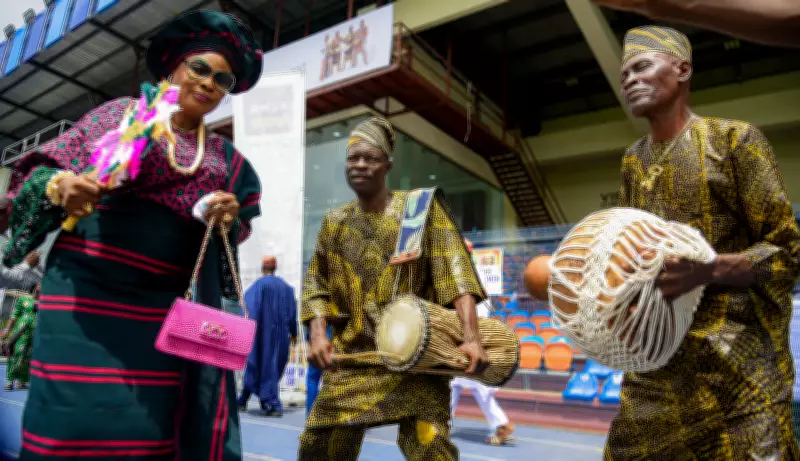
The city of Ibadan in southwest Nigeria is witnessing a transformation where culture is evolving from memory and ceremony into a more active, organized, and economically valuable force. The 2026 edition of the Ibadan Cultural Festival, also known as the Oke Ibadan Festival, exemplifies this shift. Organized by the Central Council of Ibadan Indigenes, the three-week event was not a loose sequence of activities but a structured gathering where heritage meets enterprise.
Across the city, the festival's impact was tangible. Hotels saw increased bookings, transport operators experienced higher demand, and local markets, artisans, and small businesses reported stronger patronage. Members of the diaspora returned, drawn by both memory and participation. The city buzzed with activity across hilltop neighborhoods and older quarters, creating circulation that carried both meaning and economic value.
The festival's program covered culture, community, and enterprise. It included the Ibadan Conference and vocational programs, community visits and historical tours, youth-focused events, stage plays, sports competitions, educational programs, and a business dinner. Charity visits and medical outreach extended the festival's social reach, while the grand finale anchored the experience in tradition.

Chief Kola Karim, Chairman of Shoreline Group and Agbaoye of Ibadanland, described the festival as both a cultural expression and an economic platform. "The festival is a celebration of the deep roots of our culture and a platform for driving economic activity in Ibadanland," he said. "It reminds us of who we are and reinforces our responsibility to preserve our heritage, while also adding economic value." He highlighted partnerships, adding, "Our partnership with First City Monument Bank (FCMB) is an opportunity to build together, weaving culture and tradition to benefit Ibadan and Nigeria. The next edition will broaden inclusion and deepen engagement."
Ajeniyi Ajewole, President-General of the Central Council of Ibadan Indigenes, emphasized the ripple effects. "The festival drives tourism, supports local businesses, and creates an opportunity for Ibadan indigenes in the diaspora to return, reconnect, and contribute to the city's growth," he said.
Chief Bayo Oyero noted the festival's deeper role. "Ibadan Cultural Festival is far more than a celebration. It is the heartbeat of our heritage, a bridge connecting our past to our present and future," he said.
At the policy level, Governor Seyi Makinde, represented by Musibau Babatunde, Secretary to the Oyo State Government, signaled continued support. "Ibadan has remained a beacon of culture and tradition because of the unity among its people. We will continue to create opportunities that will elevate the festival to greater heights," he said.
Ibadan's strength lies in its authenticity. Its cultural assets—lineage systems, traditional institutions, and indigenous communities—are lived realities shaped over time across its hills and settlements. The homage paid to the 44th Olubadan of Ibadanland, His Imperial Majesty, Oba Rashidi Ladoja, Arusa I, during the festival reflects that continuity.
This foundation opens into wider possibilities. The city's landscape and heritage base position it for cultural tourism, from heritage trails to community-based experiences and local craft economies. What is emerging is not a departure from tradition but a reorganization of it—one that connects memory with movement and identity with participation.
The 2026 festival stands as a marker of this shift. In Ibadan, culture is not held in place; it moves across its hills, through its people, and into new forms of expression and value.

