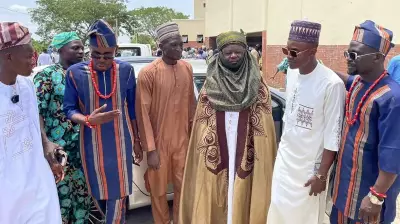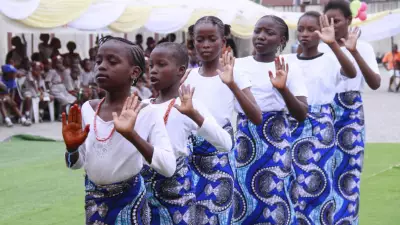
If you think saying hello in Nigeria is simple, think again. This vibrant nation of over 220 million people boasts a greeting culture so rich and complex it reflects its profound diversity. With more than 520 indigenous languages, a simple "hello" transforms into hundreds of unique expressions, each carrying weighty social and cultural significance.
The Cultural Weight of a Simple Salutation
In Nigeria, greetings are far more than mere words. They function as social contracts, cultural markers, and relationship builders. The Federal Ministry of Information and National Orientation highlights how these linguistic traditions create "unity in diversity," serving as bridges between ethnic groups rather than barriers.
A personal anecdote illustrates this depth. A journalist recalls his first week in Kano, greeting an elderly Hausa woman with a simple "Hello." The response was a confused stare. Only when a colleague intervened with the proper "Sannu" did her face light up with recognition and warmth. This moment underscores a fundamental truth: in Nigeria, how you greet someone signals respect, awareness, and your place within the social fabric.

Mastering Greetings in Nigeria's Major Languages
While the linguistic landscape is vast, greetings in Nigeria's three largest ethnic groups provide a essential foundation. However, each system operates on unique cultural frameworks.
In Hausa-speaking regions, predominantly in the north, "Sannu" is the foundational hello. But Hausa greetings are notably contextual. You modify the salutation based on the person's activity: "Sannu da aiki" (greetings on your work) if they are working, or "Sannu da abinci" (greetings on your food) if they are eating. This practice shows respect for the individual's current endeavor.
Yoruba greetings from the southwest are deeply tied to time of day and respect hierarchy. "E ka aro" (good morning), "E ka san" (good afternoon), and "E ku irole" (good evening) are essential. The prefix "E" is a marker of respect used for elders; it may be dropped when speaking to peers or younger individuals. Misjudging this formality can be a notable cultural misstep.
In the Igbo-speaking southeast, "Kedu?" serves as a universal "how are you?" while "Ndewo" is a general hello. Like Yoruba, Igbo employs formal and informal registers, requiring speakers to navigate social hierarchies carefully. The National Council for Arts and Culture actively works to document and preserve these intricate linguistic variations as vital cultural heritage.
The Universal Bridge: Nigerian Pidgin and Slang Greetings
Where tradition meets modern urban life, Nigerian Pidgin English and slang create a dynamic, unifying greeting culture. Spoken by an estimated 60 million Nigerians as a lingua franca, Pidgin breaks down ethnic barriers.
The quintessential informal greeting is "How far?"—a two-word phrase that efficiently means "How are you? What's happening?" Its genius lies in its economy and widespread understanding. Another staple is "Wetin dey?" (What's happening?).
Slang evolves at breakneck speed, fueled by social media, music, and comedy. Phrases like "You dey for ground?" (Are you around?), "I dey" (I'm okay), or exclamations like "See you o!" have moved from street culture to mainstream usage, as noted by outlets like Guardian Nigeria. This creates a fascinating duality where many Nigerians seamlessly code-switch between formal indigenous greetings and casual urban slang.
Why "Hi" Often Isn't Enough
The casual English "hi" is common in urban centers but can feel incomplete or even slightly rude in traditional contexts. A proper Nigerian greeting historically involves enquiring about health, family, work, and journeys. An exchange between elders could last minutes, involving specific questions about each relative. While city life has shortened these rituals, the ethos persists. "Good morning, how are you?" flows as a standard, respectful phrase.

Regional religious influences also shape greetings. In the predominantly Muslim north, "Salam alaikum" (peace be upon you) is widespread. In the Christian-majority south, phrases like "God bless you" or "How are you by God's grace?" are woven into daily hellos.
Beyond Words: Gestures and Protocols
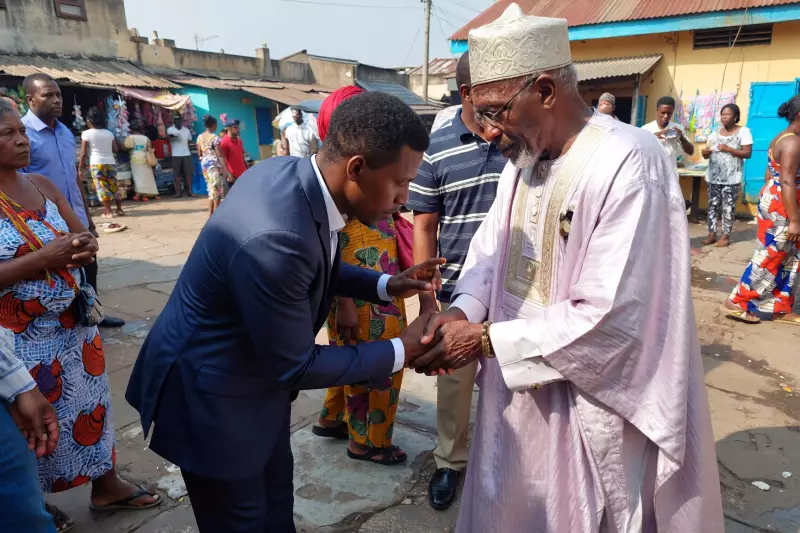
Nigerian greetings are a full-body experience. Physical gestures carry immense meaning:
- Prostration & Kneeling: In Yoruba culture, younger men prostrate fully, and women kneel when greeting elders. This is a profound display of respect.
- The Two-Handed Handshake: When greeting an elder or superior, it is respectful to offer your right hand while your left hand supports your right elbow or wrist.
- The Nigerian Handshake: Among peers, a handshake often involves a grip followed by a snap of the fingers as hands part, sometimes repeated rhythmically.
These actions are not mere formalities; they are integral to the greeting's social function. A child who doesn't greet properly may be judged as poorly raised, while one who does is commended for good upbringing.
Navigating Modernity and Preservation
Technology and urbanization are reshaping greeting customs. WhatsApp voice notes carry "good morning" messages across continents, and quick "hi" is acceptable in fast-paced Lagos offices. Yet, the core value—showing respect and acknowledging community—remains steadfast. The form adapts, but the function endures.
Phrases like "Oya na" (originally Yoruba for "hurry up") exemplify this evolution. Now a pan-Nigerian expression, it can mean "let's go," "goodbye," or "well then," showcasing how languages blend to create shared national touchstones, a phenomenon recognized by the Federal Ministry of Arts, Culture and Creative Economy.
Ultimately, asking "How do Nigerians say hello?" opens a door to understanding the nation's soul. It's a practice rooted in respect, shaped by incredible diversity, and constantly evolving. Whether with a formal "Sannu da aiki," a ubiquitous "How far?," or a deep prostration, the Nigerian hello is an invitation to connect, acknowledge, and build relationship—one carefully chosen word at a time.