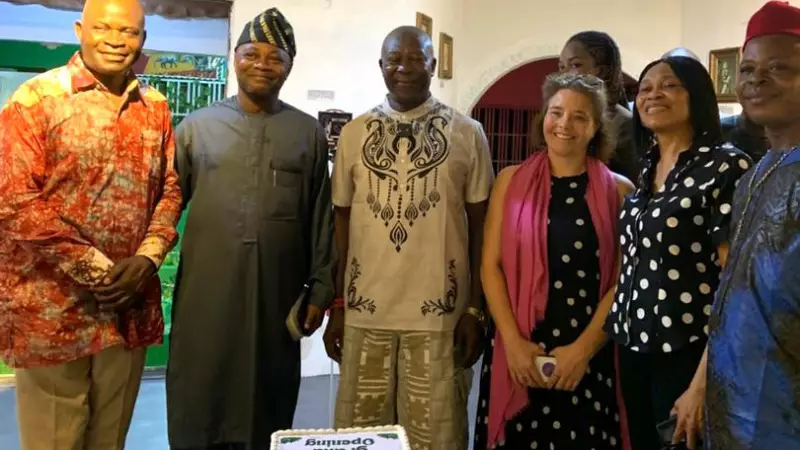
In a significant move to safeguard the nation's collective memory, the Center for Research, Information and Media Development (CRIMMD) has officially opened its expansive new facility. This development marks a crucial step in ensuring Nigeria's rich and diverse history is meticulously documented and preserved for the understanding of present and future generations.
A New Home for Nigeria's Story
The center, founded and led by Dr Raphael James, has relocated from its previous base in Idimu to a much larger, purpose-built structure. The new facility, inaugurated recently, is a 13-room building specifically designed to serve as a comprehensive repository for the Nigerian narrative. Dr. James articulated the center's unique philosophy, which focuses on capturing history as it unfolds through items that resonate with ordinary people.
Unlike traditional museums that often prioritize rare or elite artefacts, CRIMMD dedicates itself to preserving the fabric of everyday life. Its collections include currency notes, postage stamps, vintage magazines and newspapers, bottles, photographs, and common household tools. "This is a history museum without restrictions," Dr. James explained. "Everything that can tell the Nigerian story has a place here. Our mission is to document how ordinary Nigerians lived, worked, and expressed themselves across decades and centuries."

Celebrating Community and Shared Heritage
The opening ceremony was described as more than a mere event; it was framed as an affirmation of national identity. Prof. Johnson Bade Falade, Programme Manager at United Nations Habitat in Nigeria and chairman of the occasion, emphasized its profound significance. "This is not just about unveiling a building," he stated. "It is about affirming memory, identity, and our shared creativity as a people." He also highlighted the strategic choice of locating the museum on the mainland, making it more accessible to the public and reinforcing that heritage belongs to the community, not just to elites.
Prof. Falade acknowledged the support of the German Embassy in Nigeria, noting the power of cultural partnerships to build bridges between nations. He praised Dr. James's enduring dedication to Nigerian arts and history, showcasing how cultural work can be both educational and transformative.
International Acclaim for a "Transition Museum"
Dr. Nadine Siegert, Director of the Goethe-Institut Nigeria, commended CRIMMD's innovative approach, describing it as a "transition museum." She stressed that preserving everyday objects is one of the most effective methods for keeping history tangible and alive. Sharing a personal anecdote, Dr. Siegert recalled creating a small museum in her own childhood home. "Witnessing CRIMMD execute this vision on such a substantial and meaningful scale is truly extraordinary," she remarked. She also reaffirmed the Goethe-Institut's support and thanked the Ford Foundation for providing the funding that enabled the museum's relocation.
The event drew a wide array of Nigeria's cultural custodians, including Prof. Adisa Ogunfolakan (Founding Curator, Natural History Museum, OAU), activist Joe Okei-Odumakin, Prof. Ben Ezeohagwu (Chancellor, African American University), and cultural archivist Jahman Anikulapo. The presence of professionals from publishing, tourism, and academia underscored CRIMMD's growing relevance as a national institution dedicated to preserving the true essence of Nigeria's past.