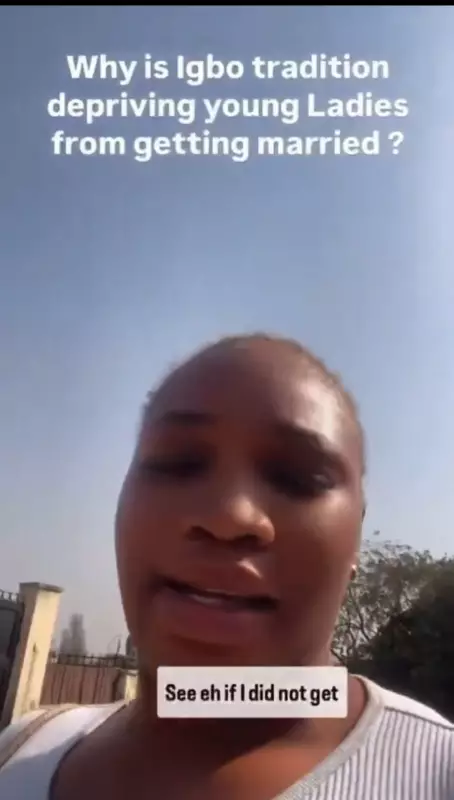
A young Nigerian woman has ignited a significant online debate after voicing her deep frustration with certain Igbo traditional marriage practices. She claims these customs, particularly the extensive financial obligations imposed on the groom, are creating major hurdles for young women who wish to marry.
The Heart of the Complaint: Financial Burden from Distant Relatives
In a passionate video shared online, the lady detailed her distress. Her primary grievance centers on the long list of monetary requirements demanded from her prospective husband by members of her extended family. She expressed particular anguish that these demands are coming from relatives she barely knows or has no relationship with, often referred to as umunna (kinsmen) and umuada (daughters of the lineage).
She questioned the fairness of individuals who have never supported her in any meaningful way suddenly presenting heavy financial conditions simply because she has decided to get married. According to her account, these family groups are insisting that all customary payments must be completely settled by her partner before the marriage ceremony can proceed.

Tradition Versus Modern Realities
The pressure, she described, is overwhelming for the couple. She acknowledged the importance of cultural heritage and tradition but argued that the way some families apply these practices has become counterproductive. The lady firmly stated that the weaponization of these customs is not only discouraging marriages but also placing unnecessary and severe strain on intending couples who are often just starting their lives together.
This situation raises critical questions about the evolution of cultural practices in modern Nigeria. While traditions aim to strengthen family bonds and validate unions, the commercial weight they sometimes carry can conflict with the economic realities faced by today's youth.
A Viral Plea for Reconsideration
The lady's video was posted on the popular blog, Linda Ikeji's Instagram page (@lindaikejiblogofficial), on January 5, 2026, at 12:00 PM. Its rapid spread online indicates her sentiments resonate with a large number of people. The conversation it has sparked touches on broader themes of:
- Family obligation versus individual choice.
- The economic pressures of modern marriage.
- The need for cultural practices to adapt to contemporary contexts.
Her outcry is more than a personal complaint; it is a call for families and communities to reflect on how traditions are enforced. It highlights a growing tension between preserving valued cultural identity and ensuring these practices do not become impediments to the happiness and stability of the very unions they are meant to bless.