Indigenous Pastors in Umuoji Stage Spiritual Warfare Against Uzoiyi Festival
In a dramatic spiritual confrontation, indigenous pastors in Umuoji community, Idemili North local government area of Anambra state, have organized warfare prayers targeting what they describe as destructive spirits associated with the century-old Uzoiyi festival. The event, held on Sunday, March 8, 2026, represents a significant clash between Christian religious practices and traditional cultural heritage in southeastern Nigeria.
Spiritual Battle Against Cultural Festival
The warfare prayer service took place at Glorious Divine Grace Assembly in Ireh village, Umuoji, convened by Chief Apostle Fidel Chimezie, President of Nigerian Ministers Project. The service featured intensive spiritual interventions including exorcisms, prophetic revelations, and symbolic blood sacrifices specifically designed to counteract rituals associated with the Uzoiyi festival.
Apostle Tony Phillips, Senior Pastor of Glorious Divine Grace Assembly who ministered during the service, described the Uzoiyi festival as a fetish tradition that promotes idolatry and the worship of a marine goddess. He claimed this spiritual practice destroys destinies, infests community members with hopelessness and evil, and leads people away from their Christian faith.

Revelations About Festival Rituals
The cleric provided detailed spiritual insights into the festival's practices, explaining that one week before the Uzoiyi festival, participants go to the Idemili River to invoke the Idemili goddess. According to his account, once this invocation occurs, nobody enters the river for the entire week-long festival duration.
In a particularly vivid revelation, Apostle Phillips described seeing the spirit of the Idemili goddess moving through Umuoji's 23 villages, throwing star apples (udara) as it traveled. He claimed that as the spirit returned to the river, it collected these apples, simultaneously gathering blessings, favor, fruitfulness, and abundance from the community while leaving behind destruction, shame, reproach, and poverty.
During the warfare prayers, Apostle Phillips reported witnessing a spiritual intervention where an angel of God blocked the Idemili goddess from emerging from the river to wreak havoc on the community.
Defining Cultural Heritage Versus Idolatry
Apostle Phillips made a distinction between what he considers pure cultural heritage and practices he views as idolatrous. He argued that authentic Igbo tradition includes elements such as:
- Traditional ways of dressing
- Local culinary practices
- Cultural thought patterns and values
However, he maintained that ceremonies involving what he perceives as idol worship, such as those associated with the Uzoiyi festival, do not constitute pure cultural heritage but rather represent spiritual corruption.
Convener's Perspective on Festival's Spiritual Impact
In an exclusive interview following the prayer service, Chief Apostle Fidel Chimezie, convener of the warfare prayer meeting, elaborated on the spiritual implications of the Uzoiyi festival. She explained that while the festival appears to be a cultural celebration featuring masquerades and flamboyant displays, she believes it fundamentally represents worship of idols and marine spirits.
"When God opened my eyes, I saw that a lot of diabolical powers are involved in the festival," Chief Apostle Chimezie revealed. "The aim is to pull destinies down and drag our people into nonsensical things."She described the warfare prayer as a divine instruction to counteract what she perceives as negative spiritual influences affecting the Umuoji people. The convener drew parallels between traditional priests (Babalowo) invoking the Idemili goddess before the festival and Christian ministers praying against these spiritual forces.

Symbolic Sacrifice and Spiritual Ransom
The warfare prayer service included a significant symbolic element involving the sacrifice of a full ram. Chief Apostle Chimezie explained this ritual as representing the blood of Jesus Christ, intended to counteract any blood sacrifices performed against the Umuoji people in connection with the Uzoiyi festival.
"What we've done today is a ransom for the souls of our people," she stated. "When matters are very hard and strong, arm yourself with blood sacrifice, just as we've done today. When God called me, He commissioned me to spoil anything they use blood to do against His people."
Background of the Uzoiyi Festival
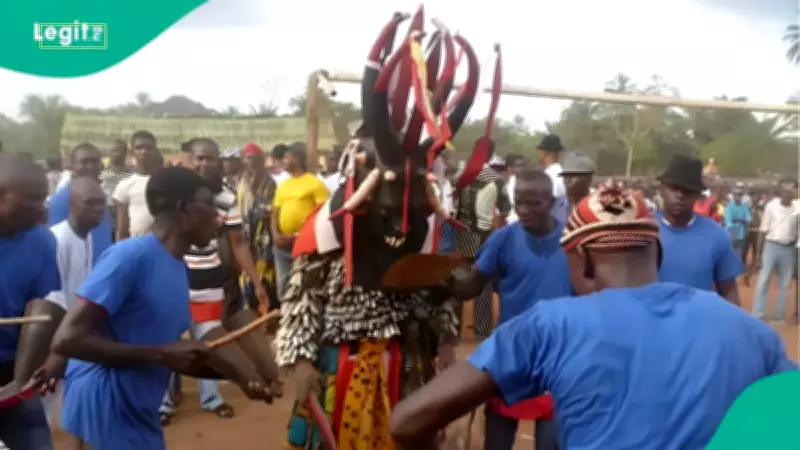
The Uzoiyi festival represents a premier annual cultural event in Umuoji that celebrates Igbo heritage, specifically honoring the Idemili River goddess to ensure bountiful harvests and adequate rainfall for the farming season. This vibrant, unifying event features:
- Elaborate masquerade performances from all 23 villages of Umuoji
- Traditional music and dance showcasing artistic ingenuity
- Notable masquerades including Enyi Abidi, Ijele, and Ocha
The festival is deeply integrated with the agricultural calendar, offering sacrifices to the Idemili deity to bless the community with rain and prosperity. It serves as a significant cultural preservation effort, maintaining traditional practices that have been celebrated for over a century.
Community and Spiritual Implications
This spiritual clash highlights ongoing tensions between Christian evangelical movements and traditional cultural practices in southeastern Nigeria. The indigenous pastors' organized opposition to the Uzoiyi festival represents a growing trend of religious interventions targeting cultural ceremonies perceived as conflicting with Christian doctrine.
The warfare prayer service attracted multiple ministers who joined in what they described as "standing in the gap" to pray against the perceived evil influence of the Idemili goddess on the Umuoji people. This organized spiritual resistance to a long-standing cultural tradition underscores the complex interplay between religion, culture, and community identity in contemporary Nigeria.
As both the Uzoiyi festival and Christian religious practices continue to shape community life in Umuoji, this spiritual confrontation raises important questions about cultural preservation, religious freedom, and the evolving nature of traditional practices in modern Nigerian society.