A Nigerian geoscientist studying in the United States is making significant waves in the field of environmental science with his groundbreaking work on groundwater contamination. Fidelis Onwuagba's research is providing new, critical insights into one of North America's most historically impacted mining regions, contributing valuable knowledge for environmental monitoring and public health protection.
Original Fieldwork in the Tri-State Mining District
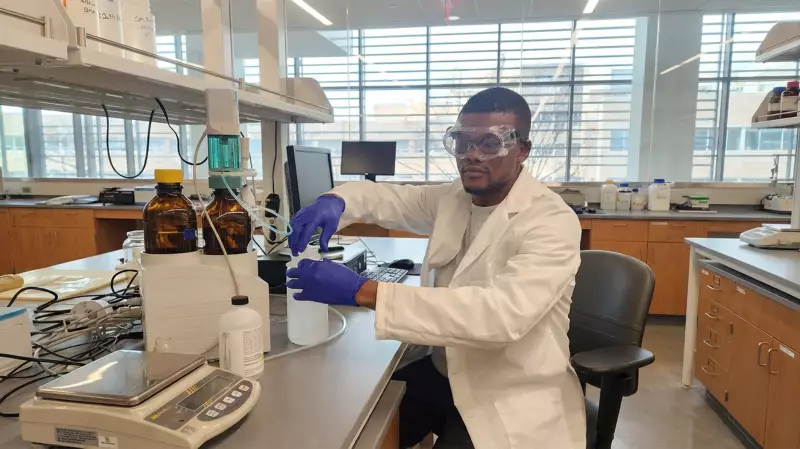
Fidelis Onwuagba conducted his master's research in geology in the Kansas section of the Tri-State Mining District. This area has been shaped by decades of intensive lead and zinc extraction. Recognizing the long-term environmental dangers from these legacy mining activities, Onwuagba designed and executed an extensive, original field campaign. He collected groundwater samples directly from the affected aquifer systems to generate fresh, high-quality geochemical data.
His approach was distinct. Unlike many studies that depend on existing datasets, Onwuagba's work was built on primary data gathered through systematic fieldwork, careful sampling, and detailed laboratory analysis. This effort produced a robust dataset on trace metal concentrations and groundwater chemistry, offering new understanding of contamination patterns and subsurface processes in the region.

From Academic Study to a Lasting Public Resource
The impact of Onwuagba's research extended far beyond academic circles. The groundwater data he generated was formally integrated into the Kansas state survey's official groundwater database. This integration transformed his findings into a long-term scientific resource for the state.
"This enables regulators, researchers, and environmental managers to use this data in ongoing groundwater monitoring, risk assessment, and remediation planning," Onwuagba explained. He highlighted that such a direct application of graduate-level research to public policy is an uncommon and significant achievement.
Building on this strong foundation, Onwuagba collaborated with scientists at the Kansas Geological Survey. Together, they investigated the geochemical controls on groundwater composition, including fluid-rock interactions and how metals move within the aquifer. This collaborative work deepened the understanding of how subsurface chemistry affects the persistence and movement of contaminants, providing vital insights for managing water resources in mining-affected areas.
Recognition and Broader Impact
The scientific rigor and relevance of this work attracted competitive funding from the prestigious American Chemical Society. Furthermore, the research earned multiple awards at university, state, and international levels, receiving recognition from diverse scientific and professional bodies for both its technical excellence and its societal value.
The public health implications are profound. Groundwater is a primary drinking water source for many communities near historic mining districts. By clarifying contamination patterns and the underlying geochemical processes, Onwuagba's research delivers evidence-based guidance for protecting water quality and reducing long-term health risks for residents.
Now pursuing advanced doctoral research in geology in the United States, Onwuagba has expanded his focus. His current work explores critical mineral systems, subsurface energy storage, carbon management, and sustainable resource development—fields that are central to the global energy transition. His career reflects a commitment to applying geoscience not just for resource discovery, but for environmental stewardship and climate-conscious innovation.
As a Nigerian scholar excelling internationally, Fidelis Onwuagba represents a growing generation of African scientists whose work gains global acclaim. His journey demonstrates how rigorous training, original research, and international collaboration can produce outcomes with lasting value for society, helping to tackle some of the world's most pressing environmental challenges.