In a powerful address that resonated with historical echoes for Nigeria and Africa, Pope Leo XIV issued a stark warning to the global community on January 9, 2026. Speaking to the Diplomatic Corps Accredited to the Holy See, the Pontiff lamented the dangerous decline of multilateralism, replaced by a diplomacy of force where "war is back in vogue." His words, deeply rooted in Catholic social teaching and the philosophy of Saint Augustine, pose a critical question for an international order still grappling with the legacy of conquest and exploitation.
The Historical Cycle of 'Might is Right' from Africa to the Present
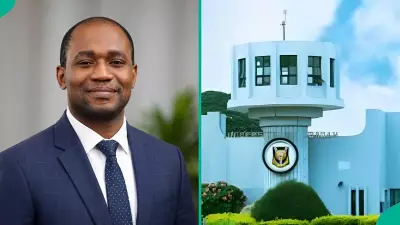
The Pope's critique finds a painful mirror in African history. Long before the encounter with European powers, the continent witnessed conflicts where clans and kingdoms fought over land and wealth, including the lesser-known Yoruba Civil War. However, the 19th-century European scramble for Africa institutionalized this principle on a global scale. As noted in the analysis by Father Anthony Akinwale of Augustine University, Ilara-Epe, the British used the abolition of slavery as a pretext to depose Oba Kosoko, the slave dealer King of Lagos, in the mid-19th century. Their underlying motive, however, was access to palm oil for Europe's Industrial Revolution.
This pattern repeated across the continent. The Sokoto Caliphate was conquered for its cotton and groundnut. European nations, including the French, Portuguese, Belgians, Italians, Spaniards, and Germans, engaged in what historian Thomas Pakenham termed "The Scramble for Africa." This historical exploitation raises enduring questions: would the Global North be as affluent without colonization, and would Africa be as impoverished without both foreign and indigenous exploitation?

A Broken System: The UN and the Resurgence of Hegemony
The formation of the United Nations after the devastation of the World Wars was meant to end this cycle. Its Charter, specifically Article 2(4), explicitly requires members to refrain from the threat or use of force against the territorial integrity of any state. Yet, as Pope Leo XIV observed, this principle has been "completely undermined." The noble institution has, in many ways, fallen into the hands of the mighty, its power to enforce peace diminished. The world now witnesses a disdain for multilateral dialogue, replaced by the unilateral actions of powerful nations or alliances, seeking peace not as a gift but through weapons and dominion.
The Augustinian Path to Peace: Conquering the Self, Not Others
Drawing directly from his spiritual mentor, Saint Augustine of Hippo, Pope Leo offered a profound alternative. He quoted Augustine's City of God, noting that even those who make war ultimately desire a peace that suits them better. True peace, therefore, cannot be imposed by guns-a-blazing. "Peace is achieved in the tranquility of the rightly ordered self," the analysis paraphrases. It requires conquering one's own desires and ordering them toward truth, goodness, and love. This internal conquest is the prerequisite for genuine dialogue between nations.
Today's global landscape, however, reflects a resurgent Machiavellianism—a desire to conquer every self except one's own. It is a world of absolutized individuals and nations who determine right and wrong autonomously and use their might to impose that view. This despotic and unaccountable power violates human dignity and makes everyone unsafe.
Pope Leo XIV's 2026 clarion call is a reminder of foundational international law and a deeper philosophical truth. He possesses no army, only moral authority. His question hangs in the air, challenging world leaders and citizens alike: In a world still scarred by the legacy of the scramble for resources, from Lagos's palm oil to modern-day lithium, will his words be heeded? The answer will determine whether the cycle of "might is right" continues or finally gives way to a just and multilateral order.