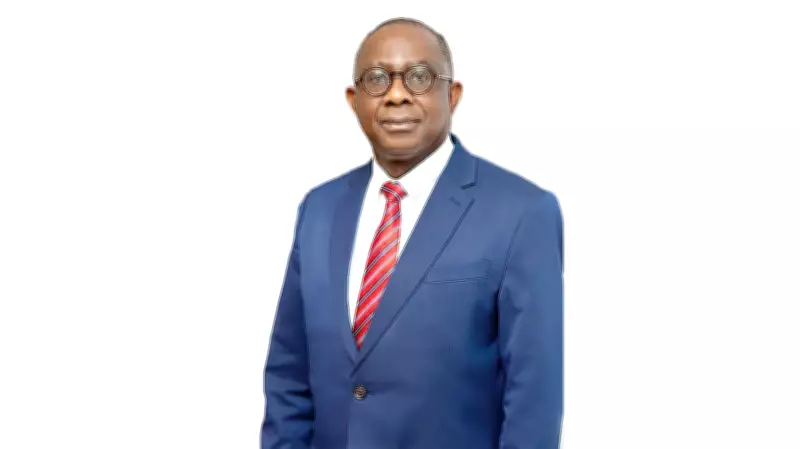
Professor Oyelaran-Oyeyinka on Africa's Industrialization Path and Innovation Culture
Professor Oyebanji Oyelaran-Oyeyinka, a distinguished development economist and Nigeria's first professor of Industrialization, Innovation, and Technology Policy, recently shared profound insights on Africa's economic transformation journey. As the immediate Senior Special Adviser on Industrialization at the African Development Bank and newly appointed Chairman of Ladoke Akintola University Teaching Hospital, his perspectives carry significant weight in continental development discourse.
Personal Journey and Professional Evolution
Celebrating his 71st birthday, Professor Oyelaran-Oyeyinka reflected on remarkable moments across seven decades. "There were many exhilarating moments, naturally," he shared. "Professionally, the days I graduated from University of Ife and defended my PhD thesis stand out. The external examiner told me: 'Banji this is a great thesis, it deserves to be read by a larger audience, get it published.'"
His academic journey began with first-class honors in chemical engineering from the University of Ile-Ife (now Obafemi Awolowo University), followed by a master's degree from the University of Toronto's prestigious chemical engineering department. His transition to development economics was, in his words, "a divinely guided move" rather than an inability to continue in engineering.

Overcoming Challenges in a New Discipline
As Nigeria's first professor in his specialized field, Oyelaran-Oyeyinka faced significant hurdles. "There were two major hurdles: conceptual misunderstanding as to why a nation needs experts who have deep connections to engineering and economics, and of course, institutional inertia," he explained.
He recalled early skepticism from colleagues who questioned the relevance of his work. "A friend asked me: 'You are a brilliant fellow, how will you even get a job dabbling into this thing nobody understands.' It was his way of saying that I was wasting my talent." Despite this, he persisted, eventually training numerous master's and doctoral students through his work at the Nigerian Institute of Social and Economic Research and the United Nations University-Institute for New Technologies in Maastricht.
Three Pivotal Career Moments
Professor Oyelaran-Oyeyinka identified three critical experiences that shaped his focus:
- The collapse of early industrial experiments in Nigeria in the 1980s: "Witnessing the collapse showed me that national autonomous technology capacity—not raw investment dollars—was the missing piece." He cited the Ajaokuta Steel plant where foreign contractor withdrawal led to project abandonment.
- Doctoral research connecting industrial policy to institutional learning: His thesis on technology acquisition in Nigeria revealed leadership as "an indispensable ingredient for nation building and economic development."
- Experience at United Nations and African Development Bank: This exposed how "fragile progress can be when finance is unavailable to build infrastructure and innovation capacity."
Industrialization as Engine for Inclusive Growth
As a member of the Advisory Council on Industrialization of the African Continental Free Trade Area, Oyelaran-Oyeyinka emphasized industrialization's role in creating jobs, diversifying exports, and building productive capacity. "The AfCFTA provides the continental platform to scale industries beyond narrow national markets," he stated. "By harmonising standards, reducing intra-African tariffs, and aligning infrastructure, AfCFTA can transform Africa's 1.4 billion people into a coherent industrial market."
He identified pressing barriers to African industrialization:

- Infrastructure deficits, particularly in energy and logistics
- Skills mismatch where education fails to produce technically capable graduates
- Fragmented policy frameworks that are often reactive rather than strategic
"The solution lies in industrial ecosystems—coordinated investment in power, transport, skills, and finance around specific sectors," he advised. "No country industrialises by accident; it happens through concerted design. It happens through strong leadership."
Learning from South Korea's Success
Professor Oyelaran-Oyeyinka challenged misconceptions about successful industrialization models. "Many people erroneously believe that countries like South Korea with conglomerates like Samsung just evolved as a matter of accident. No," he asserted.
He explained how South Korea's industrialization was built on domestically owned chaebols—family-controlled corporate groups that have become global juggernauts. "In the mid-1960s liberalisation by the country deliberately excluded foreign direct investment initially owing to fear of Japanese competition," he noted. "Korea has fewer multinationals than almost any other late-industrialising country, and this strengthened the state's capacity to discipline private firms and build domestic science and technology capability."
He highlighted that in 2025, the revenue of South Korea's top four chaebols represented 41% of the country's GDP, with the top 30 accounting for 78%.
Technology as Africa's Great Equalizer
"Technology is Africa's great equaliser—if we master it strategically," Professor Oyelaran-Oyeyinka declared. He emphasized that this requires nations to invest in infrastructure, nurture national firms while attracting foreign direct investment, invest in applied research solving national challenges, deepen digital infrastructure, and develop industrial clusters connecting companies with investors.
He identified a critical strategic error: "The strategic opportunity that Africa missed is to rely almost exclusively on foreign multinationals. This dependency inadvertently supplanted national firms, and the 'Technological Learning' process was lost. This is why today, roads, bridges and basic engineering projects are contracted to foreign firms."
Fostering Innovation Culture
On cultivating innovation for sustainable economic growth, he stated: "Innovation thrives where curiosity meets support. We must democratise research, making it relevant to real social and industrial challenges and this where we need strong involvement of local firms. Universities should become laboratories for problem-solving, not just degree factories."
He recommended governments de-risk experimentation through innovation funds, startup grants, and public-private partnerships.
Four Enablers for Technology Hubs
For developing technology hubs and innovation ecosystems across Africa, Professor Oyelaran-Oyeyinka advised governments to focus on four enablers:
- Affordable and reliable electricity
- Broadband connectivity
- Coordinated research funding and commercialisation programmes
- Urban innovation clusters co-located with universities and manufacturing zones
"Policies must shift from rhetoric to predictable funding mechanisms, so hubs don't vanish when donor projects end," he cautioned.
Modernizing Traditional Sectors
He emphasized that the Fourth Industrial Revolution doesn't replace the old economy but reprograms it. "By modernising rather than abandoning traditional sectors. Agriculture, for instance, can absorb digital technologies—drones, analytics, and agro-processing—to create new value chains."
AfDB Initiatives and Future Vision
As Senior Special Adviser on Industrialization at the African Development Bank, Professor Oyelaran-Oyeyinka highlighted two initiatives: "The Industrialise Africa Strategy, which mobilised billions in co-financing for manufacturing zones and infrastructure; and the Special Agro-Industrial Processing Zones, which blend agriculture with modern industry."
He envisions Africa's industrial future as hybrid: "The future will be hybrid—a fusion of digital and physical production. Africa's competitive strength will lie in agribusiness and resource-based industrialisation, powered by green technology, regional integration, and digital platforms. Innovation will define who moves from consumer to creator."
Reflections on Nigeria's Industrial Journey
Professor Oyelaran-Oyeyinka offered sobering reflections on Nigeria's industrial development: "We need to reflect on our past and how we ended up a failed industrial state. Nigeria's early post-independence blueprints for industrialisation were, on paper, not dissimilar in ambition from those of East Asia. Yet we must confront the stark lesson: a vision without the requisite, sustained leadership action is merely a daydream."
He noted that while development plans were articulated, the nation lacked continuity, political will, and transformational leadership to see them through. "Policies were crafted, investments were voted, and human capital was, at times, developed—only to be dissipated by short-term political calculus, mismanagement, and a recurring cycle of institutional amnesia."
Influences and Future Plans
Professor Oyelaran-Oyeyinka cited several influences on his thinking: "Books by Joseph Schumpeter, Albert Hirschman, Chris Freeman, Dr. Pius Okigbo, a great Nigerian economist shaped my understanding of innovation and development while John Kenneth Galbraith influenced my attitude as a public intellectual."
Looking ahead, he plans to devote more time to mentorship, public advocacy, and writing—potentially establishing a Pan-African Center for Innovation Policy, Industrialisation, Technological Change and Development. "I also plan to document Africa's overlooked industrial experiments—less as nostalgia, more as instruction," he concluded, emphasizing that legacy lives not only in institutions but in people.