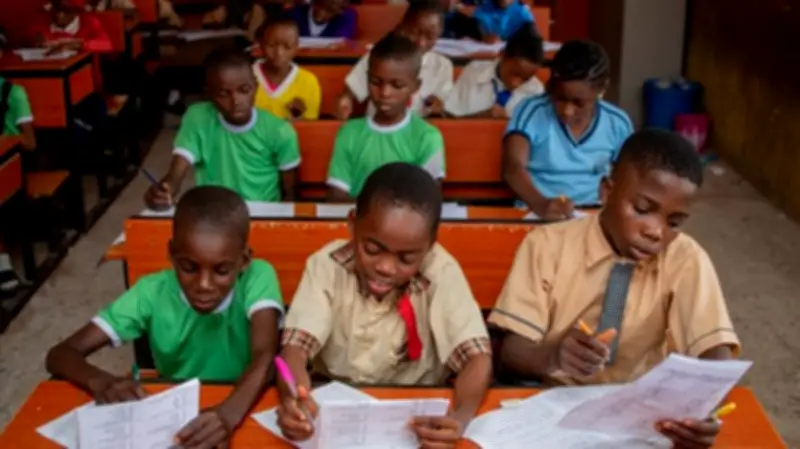
When Nigeria introduced the 9-3-4 education system in 2007, it was presented as a transformative step towards achieving universal and compulsory basic education. The policy replaced the old 6-3-3-4 structure by integrating primary and junior secondary education into a continuous nine-year learning cycle intended to eliminate barriers such as the Common Entrance Examination. Two decades later, however, the Federal Government’s renewed push to abolish the examination reveals that the original vision was never fully implemented. Across many states, including Lagos, junior secondary schools remained administratively detached from primary schools, while entrance examination is adopted as a gatekeeping mechanism into public secondary education. The situation reflects a broader problem in Nigeria’s public policy environment where reforms are introduced with lofty expectations but weakened by poor coordination, inadequate funding, infrastructure deficits, and lack of accountability. As stakeholders debate the implications of the latest directive, the controversy highlights the enduring challenge of translating educational policies from theory into measurable outcomes, GBENGA SALAU reports.
Background of the 9-3-4 System
Educational reforms in Nigeria have often been characterised by ambitious policy formulation and weak implementation strategies. This became evident when the Federal Government recently announced the ban of Common Entrance Examination for Primary Six pupils two decades after introducing the nine years of basic education, three years of senior secondary education, and four years of tertiary education, popularly known as the 9-3-4 system. The introduction of the policy ought to have eliminated common entrance 20 years ago. The system emerged from the need to modify the earlier 6-3-3-4 structure that had been in place since 1982, which divided schooling into six years of primary education, three years of junior secondary, three years of senior secondary, and four years of tertiary education. This reform effectively merged the six years of primary education and the three years of junior secondary school into a single block of nine years of compulsory basic education. The new structure was formally launched around November 2007, marking a significant shift in Nigeria’s educational system.
The rationale behind this reform was both educational and socio-economic. The government sought to ensure uninterrupted and compulsory education for every Nigerian child up to the junior secondary level. By extending basic education to nine years, policymakers had expected reduction in dropout rates, especially among children who previously left school after primary education. The 9-3-4 system was designed to standardise the curriculum and improve learning outcomes. The previous system (6-3-3-4) often created disjointed transitions between primary and junior secondary school, but the new design was then projected to provide a more continuous and integrated learning experience.


Persistent Challenges
Another major reason for the reform was the need to align Nigeria’s education system with global best practices and development goals, particularly the Millennium Development Goals (MDGs), which emphasised universal access to basic education. By making nine years of schooling compulsory, Nigeria aimed to improve literacy rates and human capital development. Nigeria introduced the Universal Basic Education (UBE) programme alongside the 9-3-4 system to improve school enrollment and reduce the number of out-of-school children. While enrollment figures increased over the years, one of the signs of the failure of the 9-3-4 system is the realization that Nigeria, presently, still has one of the highest numbers of out-of-school children globally. Noteworthy is that the United Nations Children’s Fund (UNICEF) 2024 report disclosed that Nigeria has approximately 18.3 million out-of-school children, 10.2 million at the primary level and 8.1 million at the secondary level. This figure is about 7 million higher than the number of out-of-children in 2006 when the 9-3-4 system was introduced. Then the number of out-of-school children was 11.4 million according to then Minister of Education, Mallam Adamu Adamu, who said 60 per cent of the out-of-school children in Nigeria are girls. Adamu stated this in August 2016 during the presentation of “Education for change: a Ministerial Strategic Plan (2016-2019) to stakeholders in Abuja.
UNICEF said Nigeria accounts for roughly one in every five out-of-school children globally. It also noted that only about 61 per cent of children aged 6 to 11 regularly attend primary school in Nigeria. In northern Nigeria, UNICEF stated that attendance dropped further with net attendance around 53 per cent in some of the states. It also stated that early childhood education is also very low, as only 35.6 per cent of children aged 36 to 59 months receive pre-primary education.
In addition, the implementation process exposed a significant policy gap, as many schools lacked the facilities, manpower, and administrative support needed to successfully adjust to the new system. In Lagos State for instance, rather than merge the junior schools to primary schools, the junior schools became stand-alone schools with distinctive administrative heads similar to that of senior secondary schools. The schools were headed by principals not headmasters or headmistress that is the norm in primary schools. Furthermore, Lagos State like many other states, was still conducting common entrance examination as gateway to enter junior secondary, rather than the pupils continuing without any barrier. This was not the philosophy behind the 9-3-4 policy.
However, education stakeholders have repeatedly linked the weak implementation of the 9-3-4 policy to inadequate funding. Nigeria’s education budget has consistently fallen below the 15 to 20 per cent benchmark recommended by the United Nations Educational, Scientific and Cultural Organisation (UNESCO). In the 2024 national budget, education received approximately 7.9 per cent of total Federal expenditure, far below international recommendations. In 2025, it came down to 7.3 per cent. At the subnational level, while some states budget allocation to education exceeds the UNESCO recommendation, majority are still allocating below the World Bank and UNESCO recommendations.
Besides, Nigeria currently needs about 1.1 million additional classrooms in basic education, according to the Universal Basic Education Commission (UBEC) disclosing that 907,769 classrooms are needed at the primary school level and 200,085 classrooms needed at junior secondary level. UBEC observed that classroom shortage is one of the biggest obstacles to quality basic education in Nigeria. UBEC also stated that about 40 per cent of classrooms in Nigeria’s basic education sector are in bad condition, with many schools operating with leaking roofs, broken windows, cracked walls, inadequate ventilation, insufficient desks and chairs and poor sanitation facilities. Likewise, UNICEF-linked reports indicated that about 60 per cent of public primary schools lack basic infrastructure such as adequate classrooms, chairs, and sanitation facilities. It stated that in rural communities, this rises to roughly 75 per cent.
Stakeholder Perspectives
The Lagos State/South West Coordinator, Civil Society Action Coalition on Education For All (CSACEFA), Stella Olubunmi Francis, said the 9-3-4 system of education in Nigeria (nine years of basic education, three years of senior secondary, four years tertiary) was introduced largely to improve foundational learning, reduce dropouts, and promote skills. However, measurable impacts on outcomes, especially literacy, skills acquisition, and preparation for higher education have been mixed and often limited by implementation challenges. “The system mandates nine years of free and compulsory basic education, aiming to improve literacy rates and reduce early school leaving. By removing transition barriers between primary and junior secondary, it was expected to ensure continuity in learning, however, evidence suggests limited or no significant improvement in learning outcomes.”
Also commenting, an educationist, Michael Omisore, noted that the integration is largely on paper. “If you want to know, ask the average school teacher about the 9-3-4 system and what should be his/her contribution to its actualisation. Those that are supposed to run the system themselves are clueless about the system. Not their fault, if you ask me. It is the fault of the government with their top-down approach to policy formulation and implementation, rather than bottom-up.”
The shortage of qualified teachers remains another major challenge. Data from the Teachers Registration Council of Nigeria and the Universal Basic Education Commission have repeatedly shown significant teacher deficits in public basic schools, particularly in mathematics, science, and vocational subjects. In many public schools, overcrowded classrooms and teacher-pupil ratios exceeding recommended standards continue to undermine effective learning. Nigeria has about 915,913 teachers serving 31.7 million primary school pupils, according to data from the Universal Basic Education Commission (UBEC). This translates to roughly a 1:35 teacher–pupil ratio nationally, while many rural and overcrowded schools exceed 1:80. And UNESCO recommended about 1 teacher to 25 to 35 pupils depending on level. UBEC also reported that Nigeria needs about 694,078 teachers at the primary level, but only 499,202 qualified teachers were available in public primary schools, leaving a shortage of nearly 195,000 teachers. Similarly, UNESCO estimates that Sub-Saharan Africa needs 15 million additional teachers by 2030, with Nigeria contributing significantly to that gap because of its rapidly growing school-age population.
Francis said: “The new development from the Minister of Education helps to separate the policy idea from the actual results on the ground. The 9-3-4 system was meant to provide six years of primary school, three years of junior secondary school, a continuous nine-year basic education cycle, without high-stakes exams between them. The goal was to remove barriers like entrance exams, ensure smooth transition from primary to junior secondary, reduce dropout rates and standardise basic education nationwide. So, in theory, exams like the Common Entrance were supposed to become unnecessary. However, what has actually happened in 20 years in practice is that the policy has had mixed results. While there is some progress such as increased school enrollment, especially in early years, greater awareness of universal basic education and more states adopting continuous assessment models. But there has also been major challenges because Common Entrance exams never fully disappeared, many states and elite schools still use them for selection. There has been Infrastructure gaps, overcrowded classrooms, limited teaching staff, poor funding, weak learning outcomes with many pupils still struggling with basic literacy and numeracy. In fact, the system exists more on paper than in consistent practice. The minister’s recent statement to cancel Common Entrance is not entirely new, it is actually a return to the original intent of the 9-3-4 system. It suggests that the government acknowledges the policy has been poorly enforced. This is a push to finally align practice with policy. Focus may shift more toward continuous assessment instead of one-off exams.”
Despite increased enrollment, literacy outcomes remain poor. According to the World Bank, learning poverty in Nigeria remains high, with many children unable to read and understand a simple text by age 10. Education experts argue that while access to schooling has improved, actual learning outcomes have not kept pace. According to UNICEF, only about 27 per cent of children aged 7 to 14 have foundational reading skills, while only 25 per cent have foundational numeracy skills. It also stated that only about 4 to 5 per cent of children from the poorest households demonstrate core reading skills, compared with over 60 per cent from the richest households. Similarly, the World Bank estimates that roughly 37 million children aged 7 to 14 cannot read and understand a simple sentence appropriately for their age.
Omisore noted that the integration is largely on paper: “If you want to know, ask the average school teacher about the 9-3-4 system and what should be his contribution to its actualisation. Those that are supposed to run the system themselves are clueless about the system. Not their fault, if you ask me. It is the fault of the government with their top-down approach to policy formulation and implementation, rather than bottom-up.” According to him, policies need proper and effective structure for compliance and workability. “As it is, there are gaps, which need to be filled, in the operation of education by the local, state and federal governments. There is need for government at different levels to be on the same page on the issues of funding and intended education outcomes.”
But 20 years after the 9-3-4 system commenced, the present minister of education is talking about scrapping Common Entrance. What does it say about policy formulation and implementation? Omisore stated that it is why the country’s education is where it is today: “Our problem in this part of the world is more of policy implementation than the formulation itself. Our implementation is usually weakened by the ineffectiveness of the system, discontinuity, and not thinking the whole process through. I learnt canceling the Common Entrance exams have been in the UBE plan for the 9-3-4 system from inception. For a minute, let’s leave the question about whether it is right or wrong to cancel it, and ask some other questions. Why have we waited 20 years to scrap Common Entrance? What have we been running all these years? Are we sure another government will not come and return Common Entrance? Has the current Ministry of Education thought and walked through the process of implementing so we won’t be back to Square One? The sincere answers to these questions point to why our education is where it is today.”
On her part, Francis stated that 20 years after the 9-3-4 system has had strong conceptual goals but weak measurable outcomes. “The consistent finding across studies is that implementation, not design is the core issue. Without adequate funding, trained teachers, infrastructure, and monitoring, the system has not translated policy intentions into measurable educational improvements,” Francis stated.
Omisore argued that the 9-3-4 is a version of the 6-3-3-4, a system that has worked in other climes. He observed that the limitation in Nigeria’s case is the odds stacked against the system of education by the quality and standard of education being provided. “So, whether you remove Common Entrance and replace it with Continuous Assessment and introduce Learner’s Identification Number, so far the quality and standard of education is still as low as it is, there won’t be any significant yield. Incompetence breeds mediocrity on one hand and corruption on the other hand. So, instead of the Ministry of Education solely focusing on policy formulation, it should also channel its energy towards interventions that will improve teachers’ quality, form public-private partnerships for improved and more accessible education, and deal with poor infrastructures. The ministry should not be known for wielding policies alone. It should be known for actually solving education challenges down to the grassroots level.”
For Francis, the likely implications, if properly implemented is that there will be less exam pressure on young pupils, more inclusive access to junior secondary education and better alignment with global education models. “But if challenges remain, policy may again fail at the state implementation level. The bottom line is that after 20 years, the 9-3-4 system has succeeded in principle but struggled in execution. The minister’s proposal is therefore, less of a new reform and more of an attempt to fix a long-standing implementation gap. The fact that this new reform is just coming up is an indication that our policy makers did not think through the policy and its implementation at the inception 20 years ago.”
Francis also observed that while access and enrollment likely improved, actual literacy gains have been weak, mainly due to inadequate funding, teacher shortages, poor instructional quality. “Invariably, the system improved access to schooling more than literacy proficiency. A major reform goal was to integrate vocational and technical skills into early education to promote self-reliance and employability. Empirical findings show low effectiveness in skill acquisition because of lack of equipment/workshops, insufficient trained vocational teachers and weak curriculum implementation. The policy design supports skills training, but delivery is largely theoretical rather than practical. Students often transition to senior secondary without adequate mastery of basic competencies, affecting performance in sciences, humanities, and technical studies. The system has not significantly improved readiness for senior secondary education,” Francis stated.
On his part, Omisore said of what use is any system or change in policy that will not impact on the bottom line? “As an educator and education consultant, I run programmes for students on literacy, exam preparation, and values, and I know the growing impact these programmes are having in my own corner. The ministry of education should be able to measure how much 9-3-4 has impacted generally regarding these highlighted gains. From where I stand, I don’t think it is something significant.”
Speaking specifically to the cancellation of the common entrance examination, a licensed counselor with the Nigerian Association of Counselors and an assistant lecturer, Silver Onu, noted that in a time where critical thinking and independent learning is going obsolete, cancelling common entrance exams will further impact the lives of young people who have resorted to the Internet and artificial intelligence for basic knowledge, leading to misinformation. “Over the years, I have constantly advocated ‘introduction to vocation’ as a subject in formal education. Students would learn various skills in preparation of higher institutions. Less monitoring of the 9-3-4 system by state governments particularly in Rivers State is a contributory factor to non compliance, especially by private school owners. Interruption and changing of policies by appointed ministers and policy makers causes confusion among students and school owners, making it hard to implement these policies successfully at the state government level.”
Funding and Infrastructure
Worthy to mention is that the introduction of the 9-3-4 education structure made Junior Secondary School (JSS) part of the compulsory nine-year basic education programme across Nigeria. And because JSS became part of basic education under the policy, states now receive UBEC intervention funds specifically to strengthen junior secondary education. These funds are managed through State Universal Basic Education Boards (SUBEBs). The grants support the separation and expansion of JSS facilities, recruitment of teachers, and improvement of learning conditions in public schools. The funding system has helped many states improve junior secondary schools through classroom construction, renovation projects, free textbooks, and teacher development programmes, all aimed at achieving the goals of the 9-year basic education policy. But yet many of the states did not merge the primary and junior schools into one aside that there were still barriers to the seamless transition from primary to junior schools.
As a result, the Director of Press, Ministry of Education was contacted to explain the successes and challenges the ministry has been having with the implementation of the policy, especially that UBEC has been providing funding for infrastructure and learning items for junior secondary schools as a result of that policy. She is however yet to respond.