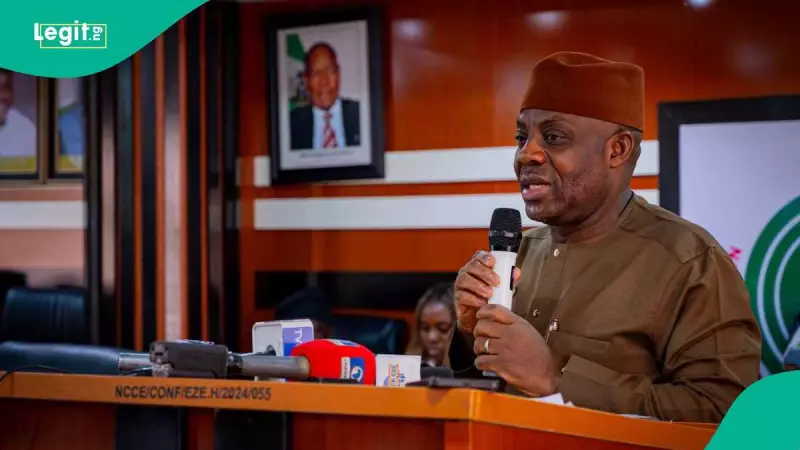
In a significant move to ease the financial strain on families and promote sustainable practices, the Federal Government announced a sweeping new policy framework for the nation's education sector on Friday, January 9, 2026.
Major Shifts in School Ceremonies and Learning Materials
The policy, jointly presented by the Minister of Education, Maruf Tunji Alausa, and the Minister of State for Education, Prof Suiwaba Sai'd, introduces two major changes. First, it streamlines graduation ceremonies to reduce expenses for parents. Under the new guidelines, only students completing Primary 6, Junior Secondary School 3 (JSS3), and Senior Secondary School 3 (SSS3) will be permitted to hold formal graduation events. This effectively bans such ceremonies for pupils in pre-Primary 6 and other junior classes.
Secondly, the government is enforcing a shift towards sustainable learning materials. The initiative prioritizes the use of standardized, high-quality textbooks designed to last between four and six years. A key provision prohibits schools from bundling disposable workbooks with these core textbooks, ensuring the main materials can be reused across multiple academic sessions.

Driving Down Costs and Curbing Waste
The ministers explained that this approach is designed to achieve multiple objectives. By making textbooks durable and reusable, siblings can share them, which will significantly lower the recurring cost of education for parents. It also aims to reduce waste within the school system by ending the cycle of annual textbook purchases.
The reforms directly address long-standing complaints from parents and stakeholders about frequent textbook revisions that offer no real educational value. The new framework mandates that any future textbook revisions must reflect substantive improvements in content, not just minor changes in layout or pagination. This is intended to extend the lifespan of approved textbooks and ensure better value for money.
Furthermore, the policy introduces limits on the number of approved textbooks per subject and grade level, aligning with international best practices observed in countries like Japan, Kenya, and Tanzania. This measure is expected to improve quality, reduce market saturation, and simplify the textbook selection process for schools.
A Broader Reform Agenda for Consistency
These changes are part of a broader set of reforms aimed at repositioning Nigeria's education sector. The government has also introduced a uniform academic calendar nationwide to promote consistency in teaching, learning, and school planning.
The Nigerian Educational Research and Development Council (NERDC) will continue to play a central role in assessing and assuring the quality of all instructional materials, working to ensure only curriculum-aligned textbooks are approved for use in schools.
Reaffirming the government's commitment, the ministry commended the Universal Basic Education Commission and NERDC for their contributions. The ministers stated that the Federal Government remains resolved to safeguard educational standards, promote equity, and ensure learners across Nigeria have access to high-quality materials that support effective teaching and learning outcomes.