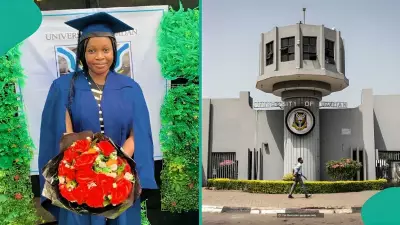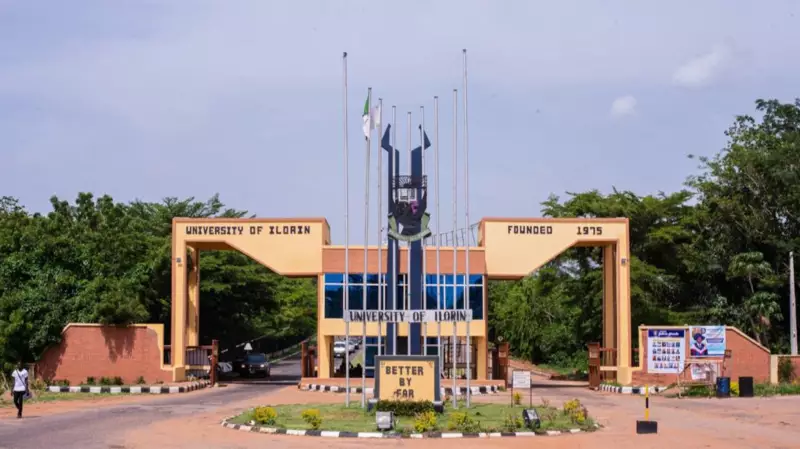
A respected political scientist has issued a stark warning about a deep-seated practice he says is tearing Nigeria apart. Professor Gbade Ojo of the University of Ilorin has identified the pervasive 'indigene' versus 'non-indigene' distinction as a critical threat to national unity and the effective functioning of the federation.
The Hijacking of Federal Institutions
Professor Ojo raised the alarm during his recent inaugural lecture, titled 'The worship of an unknown deity.' He argued that local interests have effectively taken over federal tertiary institutions in their areas. This hijacking, he stated, destroys the very idea of universality that federal universities are supposed to represent.
"Local potentates have virtually hijacked federal tertiary institutions in their domains," Ojo declared. He explained that this creates a hostile environment for staff from other states. Both teaching and non-teaching staff who take jobs in these universities outside their home states often face terrible marginalisation or career stagnation. This situation, he lamented, highlights the absurdities within Nigeria's current federal structure.

A Flawed Concept of Citizenship
The core of the problem, according to the scholar, is Nigeria's problematic definition of citizenship. He stressed that this flawed concept severely undermines the country's federal system. For many Nigerians, working outside their ethnic homeland, especially at the state level, is seen as a significant career risk.
"To be employed outside one’s ethnic enclave in Nigeria... is a very big risk, career-wise," Ojo explained. "Such a person will bear the burden or toga of a non-indigene." This dual identity—being a Nigerian citizen but also a citizen of a state—creates constant conflict. He gave the example of children of federal civil servants who, despite their parents paying taxes in a state, are charged higher 'non-indigene' school fees in state-owned institutions.
Consequences for National Integration
The professor detailed how this bias affects every aspect of life, weakening loyalty to the nation. He noted that Nigerians living outside their states of origin often feel compelled to 'go home' to marry, build houses, or vote. Even in death, they are rarely buried outside their state of origin. This reality truncates allegiance to the Nigerian federation, as states prioritize their own 'indigenes.'
Ojo pointed to the National Youth Service Corps (NYSC) scheme as a national program that has failed to achieve its core objective of fostering genuine integration, largely due to these entrenched biases. He argued that a state which cannot solve the citizenship problem contradicts the fundamental principles of federalism.
A Call for Urgent Reform
To heal these divisions and build a stronger Nigeria, Professor Gbade Ojo called for a decisive redefinition of citizenship. He proposed a clear, legal, and sociological framework that grants full rights based on residence.
"The problematic citizenship in Nigeria must be addressed once and for all," he urged. His solution is straightforward: "Anyone who has resided in a place for at least 10 years should not be discriminated against in any guise." This reform, he believes, is essential to restore fairness, cohesion, and true federal efficiency across the nation.