The Executive Secretary of the Universal Basic Education Commission (UBEC), Dr Aisha Garba, has announced that the newly introduced HOPE-EDU programme is based on a performance-based financing model. This model is designed to expand access to basic education and significantly reduce the number of out-of-school children in Nigeria.
How the Performance-Based Model Works
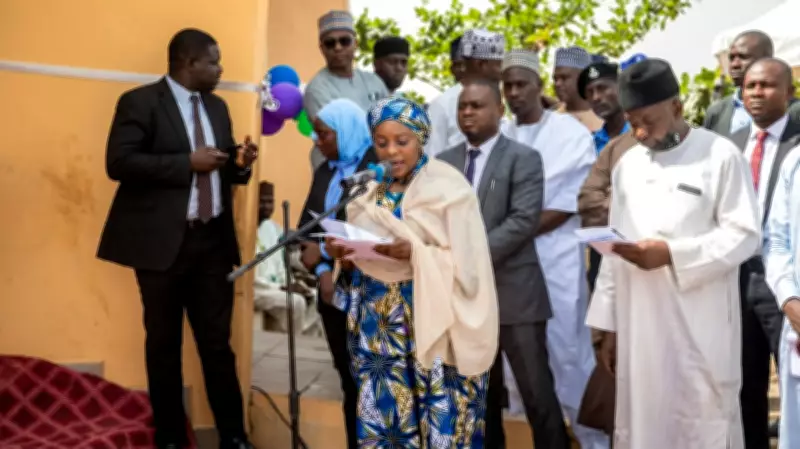
Dr Garba explained that under this model, the World Bank will provide incentive rewards to states only after verifiable results are achieved. Funding will be directly tied to measurable progress in returning children to school. She made these remarks in Kano during the opening of a two-day sensitisation programme on the implementation of HOPE-EDU.
The intervention, funded by the World Bank and the Global Partnership for Education (GPE), is being implemented in collaboration with State Universal Basic Education Boards (SUBEBs). According to Dr Garba, the $552.18 million programme aims to strengthen basic education delivery by improving school enrolment, enhancing infrastructure, and providing technical support to states.

Incentive-Based Financing Structure
Dr Garba noted that the programme introduces an incentive-based financing structure in which states are rewarded for verified results in reducing the number of out-of-school children. She stated, “The basic education sector is a top priority for this government. So, the most important thing that this programme is targeting is to increase access, particularly for out-of-school children in Nigeria, as well as improve the quality of education by empowering teachers and building their capacity.”
She stressed that the additional financing the programme brings to the basic education sector is critical. Dr Garba further clarified the programme’s structure, which operates as a results-based programme. She explained, “What Programme for Results means is that the states will actually implement the programmes through the SUBEBs. The World Bank will now give them what it calls an incentive reward once the result is achieved. For example, one target is to reduce the number of out-of-school children. We can now say that Kano State has reduced the number by one million and brought them back to school. So, for each child, the project will now count to see how many children, and then based on that, they give them the financing.”
State Governments as Key Drivers
Dr Garba said state governments, through their SUBEBs, remain the key drivers of implementation. The boards will access grants and technical assistance after meeting specified performance requirements. She added that the sensitisation programme, which drew participants from SUBEBs in the north-west and north-east zones, was designed to familiarise stakeholders with the operational guidelines for effective implementation of HOPE-EDU.
Kano State's Commitment
Also speaking at the event, Kano State Commissioner for Education, Dr Ali Makoda, said the state was prepared to leverage the intervention to improve the quality of teaching and learning in public basic schools. Dr Makoda noted that the Kano State government had already prioritised education through increased budgetary allocations, the recruitment of additional teachers, and the declaration of a state of emergency in education. He commended the Federal Government for initiating the programme and pledged the state’s commitment to meeting the performance targets set under HOPE-EDU.