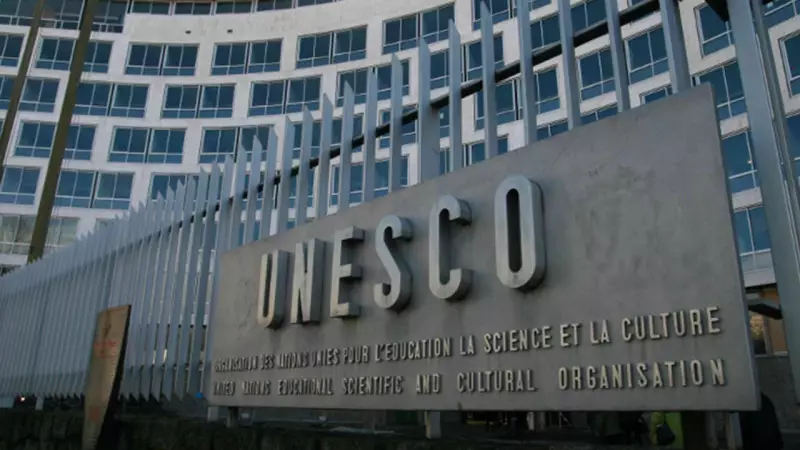
The United Nations Educational, Scientific and Cultural Organisation (UNESCO) has renewed the appointment of a distinguished Nigerian academic to a pivotal global position. Prof. Olunifesi Adekunle Suraj from the University of Lagos (UNILAG) has been reappointed as the Network Co-Coordinator of the UNESCO Universities Network on Media and Information Literacy and Intercultural Dialogue (UNITWIN-MILID).
A Renewed Mandate for Global Impact
This significant reappointment secures Prof. Suraj's leadership role for another five-year term. The official communication, a letter signed by Dr. Sobhi Tawil, Director of the Future of Learning and Innovation Division at UNESCO, was addressed to the Vice-Chancellor of UNILAG, Prof. Folasade Ogunsola. Similar letters were sent to the heads of the other coordinating institutions: the Autonomous University of Barcelona in Spain and the Universidade de São Paulo in Brazil.
The letter confirms that the existing cooperation agreement, first established back in 2011, will now remain officially valid until December 31, 2029. This renewal underscores the enduring importance and success of the network's mission.

Leadership and Strategic Objectives
Under the renewed framework, the network will be led by Prof. José Manuel Pérez Tornero from the Autonomous University of Barcelona as the Network Coordinator, working in close partnership with Prof. Olunifesi Suraj as Co-Coordinator. Their combined leadership is expected to steer the network's contributions to UNESCO's Communication and Information Sector through a multi-faceted approach.
The core activities will focus on:
- Advanced research and academic teaching.
- Specialised training programmes.
- Direct community action and public communication initiatives.
UNESCO's letter explicitly called for strong institutional support from UNILAG and partner universities to ensure the network's active participation in global activities. A key part of the new mandate involves a strong push for open access to knowledge.
Championing Open Science and Educational Resources
In a move aligning with modern academic values, UNESCO has requested that research produced by the network be made available as Open Access, following the 2021 Recommendation on Open Science. Similarly, educational materials should be shared as Open Educational Resources (OER), in line with UNESCO's 2019 recommendation on OER.
The network is also encouraged to bolster the global UNESCO Media and Information Literacy (MIL) Programme. This involves fostering wider international participation and creating systems to monitor how the network's work influences policy and society.
Looking ahead, institutions wishing to continue the network beyond 2029 must submit a formal renewal request to UNESCO by June 30, 2029. The reappointment of Prof. Suraj places Nigeria and UNILAG at the heart of global efforts to promote critical media literacy and foster intercultural understanding for years to come.