Art Teachers Exhibition Showcases Freedom of Expression in Lagos
The vibrant world of Nigerian art education took center stage as the second edition of the Art Teachers' Exhibition opened at the new location of the Centre for Research, Information and Media Development (CRIMMD) Museum of Nigerian History in Ajao Estate, Lagos. Titled Freedom of Expression, this seven-day exhibition organized by Culture Art Academy in collaboration with CRIMMD Museum brought together art lovers, scholars, and educators to witness the powerful stories told through paint, sculpture, and mixed media.
Diverse Artistic Voices on Display
The exhibition featured works from seven accomplished artists, each bringing unique perspectives to the theme of free expression. The participating artists included:
- Victor Assam, an experimental visual artist
- Funmi Opanubu-Alasholuyi, head of Mides Fun World Art Gallery
- Babatunde Lawanson, an art instructor
- Opara Nelson Rossi, art coach and mixed media artist
- Temidayor Ayeni, specializing in sculpture and mixed media
- Enijesiku Olumide Olalekan, working in art and industrial design
- Ekhalyeme Augustine, a digital and mixed media artist
These artists presented works that explored Nigerian identity, environmental themes, and social commentary through various artistic approaches.

Notable Works and Their Meanings
Victor Assam's sculpture "Yemoja" depicted the Yoruba river goddess of fruitfulness, productivity, and protection using silver spoons. This work connected celestial themes with human activities in contemporary Lagos, creating a bridge between traditional mythology and modern urban life.
Funmi Opanubu-Alasholuyi presented paintings celebrating African womanhood, including one showing a lady beside a pot of flowers and another depicting a woman carrying a clay pot. These works highlighted the beauty, industry, and resilience of African women through carefully composed visual narratives.
Babatunde Lawanson's painting of a fishmonger selling her fish in the rain under an umbrella told a powerful story about Nigerian women's determination. The work illustrated how women work assiduously, sometimes in inclement conditions, to improve their wellbeing and support their families, while also commenting on marketplace challenges and survival strategies.
Opara Nelson Rossi's "Gator Gaze", featuring a crocodile rendered in adhesive body filler medium, offered multiple interpretations. For some viewers, it represented dominion and territorial power, while for others it symbolized protective eyes watching over the vulnerable.
Temidayor Ayeni's "Flower of Beauty", an acrylic painting on canvas, captured the elegant contours of Nigerian women using bright colors that attracted visual attention like butterflies to flowers. This work served as a potential symbol of Nigeria and Africa as the pride of the world with rich natural endowments.
Enijesiku Olumide Olalekan's oil painting "Seascape" presented Nigeria's aquatic splendor alongside marine slums, showing huts and structures on stilts with canoes and fishermen. This multifaceted work addressed themes of untapped resources, poverty amid wealth, and survival strategies while telling the story of the nation's marine environments, particularly around urban centers.
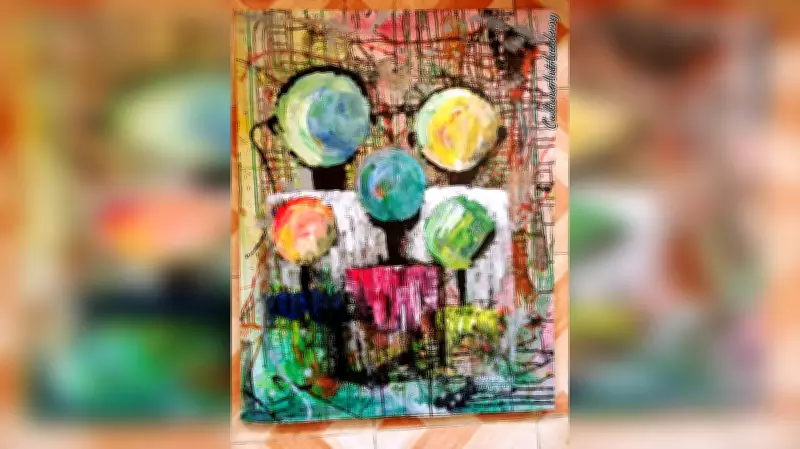
Ekhalyeme Augustine's "Urban Bloom", an acrylic painting on canvas, depicted the conviviality of urban centers through abstract, colorful spheres resembling blooming elements against a textured urban backdrop. The painting told the story of a bustling city where five unique 'blooms' emerged from concrete-like foundations, each representing different facets of creativity and expression in an urban landscape.
Official Perspectives on Art Education
At the opening ceremony, Kolawole K. Olojo-Kosoko, Chairman of the Society of Nigerian Artists (SNA) Lagos State Chapter, explained the exhibition's deeper purpose. "The aim of this exhibition is deeply rooted in the need to highlight the beauty, boldness, and diversity of creativity through visual art," he stated.

Olojo-Kosoko emphasized the interconnected value of art, education, and culture, noting that the initiative provides a platform bringing art educators, students, schools, and the wider public into meaningful networks. "It is a space for discovery, dialogue, and inspiration that strengthens our collective understanding of the role of the arts in shaping local and global communities," he added.
The exhibition aligns with broader goals of promoting art and tourism, extending Nigerian creativity to international stages, and encouraging cross-cultural exchange. Through these engagements, artists nurture generations equipped with values, open-mindedness, and critical awareness needed to challenge stereotypes and effect positive change.
"It also encourages art teachers to embrace a renewed sense of pride in their craft, fostering professional confidence and reaffirming the significance of creativity in nation-building," Olojo-Kosoko explained. "In every society, the arts serve as a powerful tool for social enlightenment, advocacy, and positive transformation."
Dr. Raphael James, Director General of CRIMMD, described the exhibition as "a platform where art, inspiration, and connections blend seamlessly." He added, "As art teachers, you are the catalysts of creativity, shaping minds and fostering expression."
The Art Teachers' Exhibition successfully demonstrated how visual arts can communicate complex social issues, preserve cultural memory, and inspire conversations that reshape attitudes and collective consciousness. By providing this platform for artistic expression, the event reinforced the essential role of art education in developing critical thinking, empathy, and community empowerment throughout Nigeria.