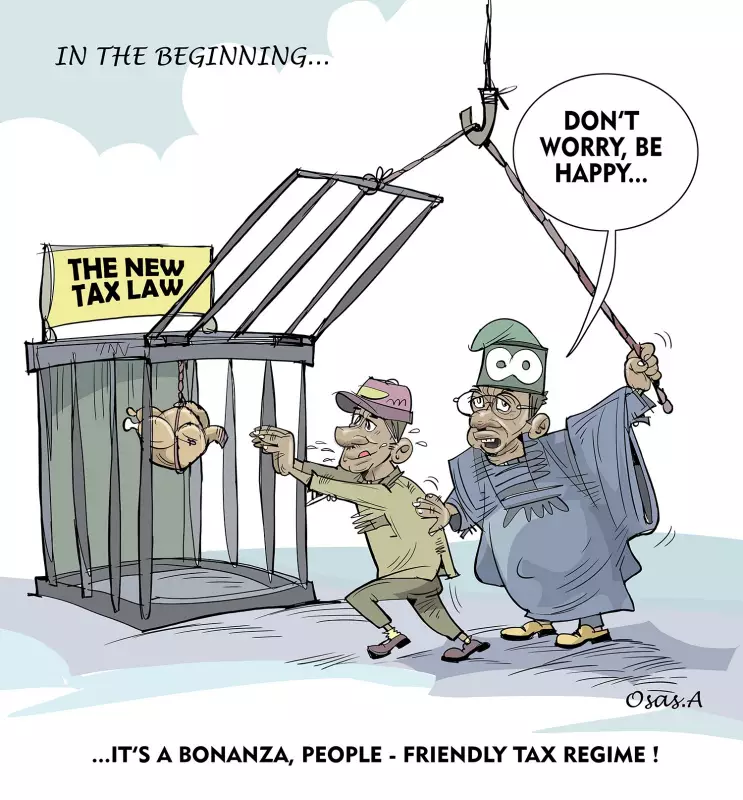
The editorial cartoon, a powerful tool of visual commentary, has once again taken center stage in Nigeria's media landscape. The latest offering, identified as Cartoon 518 from The Guardian Nigeria, serves as a poignant and satirical reflection on the nation's current socio-political and economic climate. Without using a single word, the artist encapsulates complex issues, prompting public discourse and introspection.
Decoding the Visual Narrative
While the specific visual elements of Cartoon 518 are described by its identifier, the tradition of such artwork in Nigerian journalism is well-established. These cartoons typically employ symbolic imagery to critique governance, highlight social injustices, or comment on economic hardships. Common motifs might include depictions of inflated prices, security challenges, or political figures engaged in allegorical scenarios. The artistry lies in distilling multifaceted national conversations into a single, impactful frame that resonates with the everyday Nigerian.
The power of an editorial cartoon lies in its immediacy and accessibility. It transcends literacy barriers and delivers a potent message that can be understood at a glance. For Cartoon 518, the artist likely selected symbols that are deeply familiar to the local audience—perhaps referencing the cost of living, fuel scarcity, or electoral processes. This connection is what transforms the cartoon from a simple drawing into a relevant piece of civic dialogue.

The Role of Satire in National Discourse
In a vibrant democracy like Nigeria's, satire plays a crucial role in holding power to account and giving voice to public sentiment. Publications like The Guardian Nigeria utilize this format to contribute to the Fourth Estate's watchdog function. Cartoon 518, following in this tradition, is not merely entertainment; it is a form of journalism that uses irony and exaggeration to reveal underlying truths about the state of the nation.
This form of expression allows for criticism that might be too nuanced or risky for straight news reporting. It provides a safety valve for societal frustrations and fosters a culture of critical thinking among citizens. By engaging with such content, the public participates in a non-verbal debate about the country's direction, priorities, and the performance of its leaders.
Impact and Public Engagement
The publication of an editorial cartoon such as Cartoon 518 invariably sparks reactions. It becomes a talking point on social media, in offices, and in homes. Some may find it humorously accurate, while others might deem it overly critical. This spectrum of reaction is precisely the point—it stimulates engagement with issues that matter.
Furthermore, these cartoons become part of the historical record. They offer future generations a visceral, understood-in-the-moment glimpse into the prevailing moods and challenges of a particular time. Cartoon 518, therefore, is more than today's news; it is a cultural artifact documenting the Nigerian experience.
In conclusion, Cartoon 518 from The Guardian Nigeria stands as a testament to the enduring power of visual satire. It continues a vital tradition of using art to question, critique, and reflect the complex realities of Nigerian society. In a single image, it challenges viewers to look beyond the surface and engage with the deeper narratives shaping their nation, proving that sometimes a picture is worth far more than a thousand words.