In 1977, Nigeria achieved something extraordinary. It gathered Africa and the Black diaspora in Lagos, compelling the world to reconsider the cultural power of a people often defined by conquest, slavery, colonialism, and deprivation. FESTAC '77 was more than an arts festival; it was a civilizational statement, suggesting that culture could serve as diplomacy, memory as power, and Nigeria as more than an oil-rich nation. It could be the host of Black imagination.
Nearly 50 years later, this memory is both a blessing and a burden. A blessing because FESTAC '77 remains a landmark cultural moment; a burden because Nigeria has not always honored that inheritance. This context frames Yinka Abioye's campaign for FESTAC Africa 2027. Abioye, Chairman of FESTAC Africa, is not merely advocating for an anniversary celebration but urging Nigeria to reclaim a mandate.
The Revival of a Continental Vision
At a town hall meeting at Freedom Park, Lagos, on May 19, 2026, Abioye described the planned return of FESTAC Africa to Nigeria as "not simply the return of a festival, but the revival of a continental vision." He highlighted Freedom Park's significance—a site layered with colonial memory and the potential for a greater African future. This choice underscores that cultural memory is never neutral; it can be buried, neglected, commercialized, or renewed.

Abioye's argument extends beyond nostalgia: Africa's future must be built not only with roads, ports, and technology but also with memory, identity, and cultural confidence. The location itself, Freedom Park, symbolizes this duality—a former colonial prison turned cultural hub, representing both oppression and liberation.
Beyond a Golden Anniversary
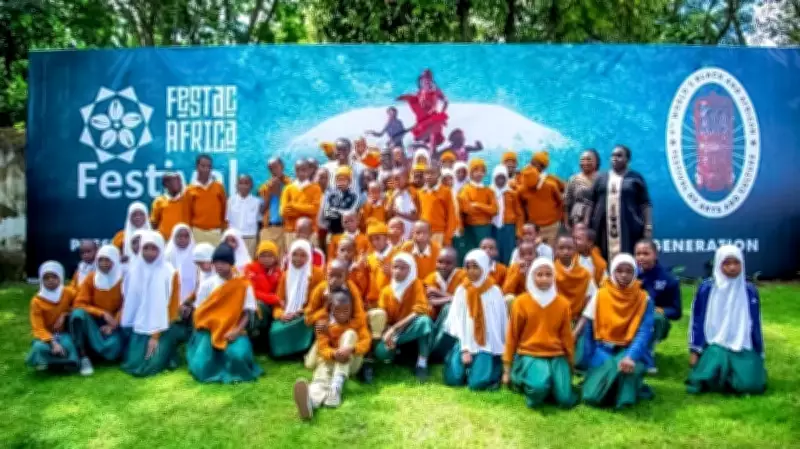
Organizing a commemorative event with dignitaries and old footage would be inadequate. FESTAC '77 deserves remembrance, but remembrance alone is not renewal. The true test of 2027 is whether Nigeria can transform one of its greatest cultural memories into a contemporary platform for African exchange. Abioye traces the FESTAC dream back to the 1966 Dakar gathering associated with Negritude and Léopold Sédar Senghor, later expressed in Nigeria in 1977 under Olusegun Obasanjo. After a long silence, FESTAC Africa was revived in 2022, held in Zanzibar, Arusha, Kisumu, and Accra, with Dakar scheduled for 2026 to mark 60 years since the original Dakar moment.
This timeline reframes the narrative: FESTAC Africa is not a sudden Nigerian anniversary idea but a revived Pan-African circuit moving across African cities, building toward a symbolic return to Nigeria. This gives Nigeria both opportunity and responsibility.
Why Nigeria Must Not Treat Culture Casually
Nigeria has often treated culture as an informal national asset without serious policy architecture. Afrobeats rises, Nollywood expands, fashion travels, literature gains global respect, and comedy crosses borders, but visibility is not strategy. Nigerian culture's success often occurs despite institutional weakness, not because of support. Artists build their own markets, filmmakers improvise around poor infrastructure, musicians scale globally through private initiative, and writers rely on fragile publishing systems. Cultural entrepreneurs often succeed by outrunning the state.
FESTAC Africa 2027 offers an opportunity to correct this habit. Abioye argues that Nigeria is not merely another possible host but the "heartbeat of African culture," with influence in music, literature, fashion, film, technology, and entrepreneurship. He frames Nigeria as a custodian of Pan-African expression, not only for hosting FESTAC '77 but for possessing the cultural memory, creative energy, and symbolic infrastructure to host again. This claim should be treated as an assignment: if Nigeria is Africa's cultural capital, then 2027 must show evidence of planning, institutional coordination, tourism readiness, creative-sector inclusion, private-sector participation, and international ambition.

Yinka Abioye's More Difficult Argument
The most significant part of Abioye's advocacy is not that FESTAC should return, but that it must return differently. He is not proposing a festival trapped in costume, nostalgia, and official speeches. He argues for a platform that brings together Nigeria, Africa, and the diaspora around practical development themes: sharing best practices, regional integration, travel and tourism, trade improvements, and disability inclusion. The purpose is to foster togetherness to drive development across the continent.
This vision refuses to separate culture from economics, inclusion, and public policy. Festivals can no longer be temporary spectacles; they must become economic engines and knowledge platforms. FESTAC Africa 2027 is being designed as a creative economy accelerator, tourism driver, cultural diplomacy platform, inclusion platform for people with disabilities, regional integration and intra-African trade booster, and Pan-African policy and innovation dialogue. The question is not whether Nigeria can host a colorful festival, but whether it can build a serious cultural institution around it.
The Economics of Memory
Cultural revival is often seen as sentiment, but properly designed cultural platforms generate tourism receipts, hotel occupancy, air travel, media value, merchandising, creative commissions, exhibitions, publishing opportunities, film markets, food fairs, fashion showcases, investment forums, and diaspora engagement. The world understands this: countries build influence around biennales, film festivals, book fairs, fashion weeks, heritage routes, museums, carnivals, and music festivals. These are soft-power machines.
Nigeria should understand this better than most, as its creative energy is a successful export. Yet the country has not built enough world-class platforms to capture the full value. FESTAC Africa 2027 could become one such platform. Abioye's corporate appeal to financial institutions, banks, telecoms, FMCGs, aviation, hospitality, media, technology, education, and tourism players is an invitation to shape a festival that resonates beyond 2027. He argues that FESTAC Africa should not be viewed merely as sponsorship but as legacy building and alignment with Africa's creative economy. For corporate Nigeria, this is a serious invitation: brands spend heavily to associate with culture after success; FESTAC Africa offers a chance to participate in building a continental platform from a defining historical foundation.
Government Must Do More Than Attend
Abioye has made a clear request for public backing, arguing that government support would encourage corporate participation. In Nigeria, private capital often waits for official signals before committing to national-scale projects. But government support must be structural: visa facilitation, airport coordination, security planning, transport management, cultural infrastructure readiness, state-level participation, tourism promotion, international media outreach, heritage programming, educational engagement, and diplomatic mobilization. The Ministry of Art, Culture, Tourism and Creative Economy, Ministry of Foreign Affairs, Ministry of Aviation and Aerospace Development, Lagos State, relevant federal agencies, museums, universities, and creative industry bodies should all have defined roles. Nigeria often fails not in producing ideas but in building execution systems. FESTAC Africa 2027 should not become another promising project weakened by poor coordination.
A Pan-Africanism That Must Be Practical
Abioye's language around Pan-Africanism is emotionally charged but useful. He insists that Pan-Africanism is no longer only a political philosophy but a living reality, describing it as self-love linked to contemporary African music, fashion, and film. When African creativity travels globally, Pan-Africanism is alive. This redefinition is valuable: Pan-Africanism has too often been trapped in ceremonial language, invoked at conferences but rarely translated into systems that enable movement, trade, collaboration, and building.
A serious FESTAC Africa must confront practical barriers: visa restrictions, poor air connectivity, weak cultural funding, limited museum infrastructure, inadequate creative-sector data, poor disability access, fragmented markets, and absence of durable continental platforms. Abioye's inclusion of disability matters, preventing the project from becoming grand rhetoric of unity that excludes people in practice. If FESTAC Africa is to speak credibly of togetherness, it must be accessible not only to presidents, sponsors, celebrities, and cultural elites but also to people with disabilities, young people, students, local artists, informal creatives, and communities outside usual centers of power. A Pan-African festival that leaves people out contradicts itself.
The National Theatre and the Question of Custodianship
Any serious conversation about FESTAC's return must confront the symbolic place of the National Theatre, now named after Wole Soyinka. Abioye refers to it as part of the infrastructure and cultural memory that make Nigeria a natural host for 2027. The National Theatre is more than a building; it is a physical reminder of Nigeria's FESTAC inheritance. Its fate over the years reflects the country's inconsistency toward culture: grand ambition, long neglect, periodic revival, and uncertain institutional purpose. If 2027 is to mean anything, the National Theatre and other cultural sites must not be used merely as backdrops but as active centers of programming, exhibitions, performances, archives, youth engagement, scholarly conversations, and diaspora encounters. A revived FESTAC should not simply borrow old symbols but reactivate them.
A Movement or Another Moment?
The danger is obvious: FESTAC Africa 2027 could become a colorful, expensive, photographed, praised, and forgotten moment. That would be a failure. The better outcome is to make it a movement. Abioye's plan to hold a symbolic FESTAC event in Nigeria every year while taking the project around the world points in that direction. It recognizes Nigeria as the emotional anchor of FESTAC memory while allowing the festival to remain mobile, diasporic, and Pan-African. This balance is important: FESTAC belongs deeply to Nigeria because of 1977, but it cannot belong only to Nigeria. Its true constituency is larger: Africa, the Caribbean, Black America, Afro-Europe, Afro-Brazil, and all communities shaped by Black civilization's history and future. The genius of FESTAC '77 was that it understood this; the test of FESTAC Africa 2027 is whether Nigeria still understands it.
The Abioye Challenge
Yinka Abioye's role is best understood not as organizing an event but as reopening a continental conversation. His campaign asks Nigeria to take culture more seriously, treat Pan-Africanism as a practical framework, draw the diaspora closer, give young people ownership, and recognize that creative power can become national power. This does not mean romanticizing the project. Big cultural visions require scrutiny: questions of funding, governance, transparency, programming quality, institutional partnerships, national coordination, and long-term sustainability will matter. The stronger the vision, the greater the need for seriousness. But the underlying argument is sound: Nigeria cannot benefit from cultural prestige while underinvesting in cultural infrastructure. It cannot celebrate Afrobeats, Nollywood, literature, fashion, and youth creativity while failing to build platforms that connect them to tourism, trade, diplomacy, and education. FESTAC Africa 2027 is one such platform.
Africa Is Now
Toward the end of his Freedom Park speech, Abioye declared that FESTAC Africa 2027 is more than a return. He described it as Africa reclaiming space, celebrating itself, and inviting the world to engage with its creativity, intellect, and humanity. He closed with the emphatic line: "Africa is not the future. Africa is now." This line rejects postponement. Africa has spent too long being described as potential, promise, possibility, and future. FESTAC '77 was powerful because, for one extraordinary moment, Africa did not ask to be predicted; it presented itself. That is the standard before Nigeria in 2027. The country can stage an anniversary or renew a mandate. It can remember FESTAC or rebuild the institutional imagination that made FESTAC possible. It can host a festival or lead a cultural movement. Abioye has placed the question on the table. Nigeria must now decide whether it is ready to answer.