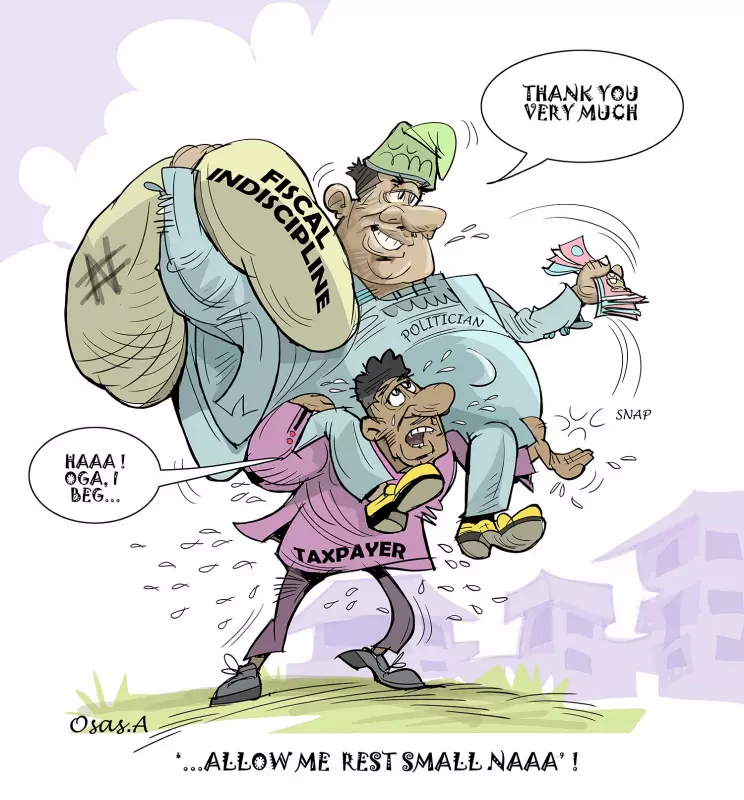
The editorial cartoon, a powerful and succinct form of journalistic commentary, has once again taken center stage with the publication of Cartoon 527 in The Guardian Nigeria. This single-frame illustration serves as a mirror to society, capturing the complexities, ironies, and challenges of the nation's current socio-political and economic climate through the lens of satire and artistic expression.
The Art of Visual Commentary in Nigerian Media
Editorial cartoons are a staple of Nigerian journalism, providing a unique blend of humor, critique, and insight that often transcends the limitations of written text. Cartoon 527 continues this rich tradition, employing symbolic imagery and caricature to communicate its message. Unlike lengthy opinion pieces, a cartoon can distill a multifaceted issue into an immediate, often visceral, visual statement that resonates with a broad audience. The role of the cartoonist is akin to that of a social commentator, using ink and wit to highlight truths, question authority, and reflect public sentiment.
In the context of Nigeria's vibrant and sometimes tumultuous public sphere, such cartoons play a crucial role in fostering civic engagement. They encourage readers to pause and critically analyze the events shaping their daily lives, from government policies and economic hardships to social injustices and international relations. The publication of Cartoon 527 is not an isolated event but part of an ongoing dialogue between the media and the populace, where art becomes a vehicle for democratic discourse.

Decoding the Themes in Cartoon 527
While the specific visual elements of Cartoon 527 are subject to interpretation, editorial cartoons in this vein typically tackle themes central to the Nigerian experience. Common subjects include the struggle with economic inflation and the rising cost of living, which places immense pressure on ordinary citizens. The cartoon may visually represent the frustration of families and businesses grappling with soaring prices for essential goods and services.
Another perennial theme is political governance and accountability. Cartoonists often depict the relationship between the governed and their leaders, sometimes highlighting a perceived disconnect or unfulfilled promises. Imagery might involve symbols of power, like the National Assembly or State Houses, juxtaposed with symbols of the common people's plight.
Furthermore, issues of security and national unity frequently find expression in these artworks. Given the challenges posed by insurgency, banditry, and communal conflicts, a cartoon might symbolize the nation's quest for peace and stability. It could also comment on the state of public infrastructure and services, such as electricity supply, road conditions, and educational quality, which are daily concerns for millions.
The Impact and Importance of Satirical Art
The publication of Cartoon 527 underscores the enduring importance of a free press and artistic freedom. In a healthy democracy, satire acts as a check on power and a voice for the voiceless. It can critique without being overtly confrontational, using irony to expose contradictions and absurdities in the system. This form of communication is particularly effective in reaching audiences across literacy levels, making socio-political commentary more accessible.
For the readership of The Guardian, such cartoons provide a moment of reflection amidst the constant stream of news reports. They synthesize complex news cycles into a single, impactful image that can be more memorable than statistics or quotes. The cartoon invites engagement—readers may laugh, nod in agreement, or feel provoked to discuss its meaning with others, thereby deepening their understanding of current affairs.
Ultimately, Cartoon 527 is more than just a drawing; it is a historical document and a cultural artifact. It captures the mood and concerns of Nigeria at a specific point in time. Future generations will look back on such works to understand the public discourse and major issues that defined this era. It stands as a testament to the cartoonist's skill and courage, and to the media house's commitment to providing diverse forms of commentary on the journey of the nation.