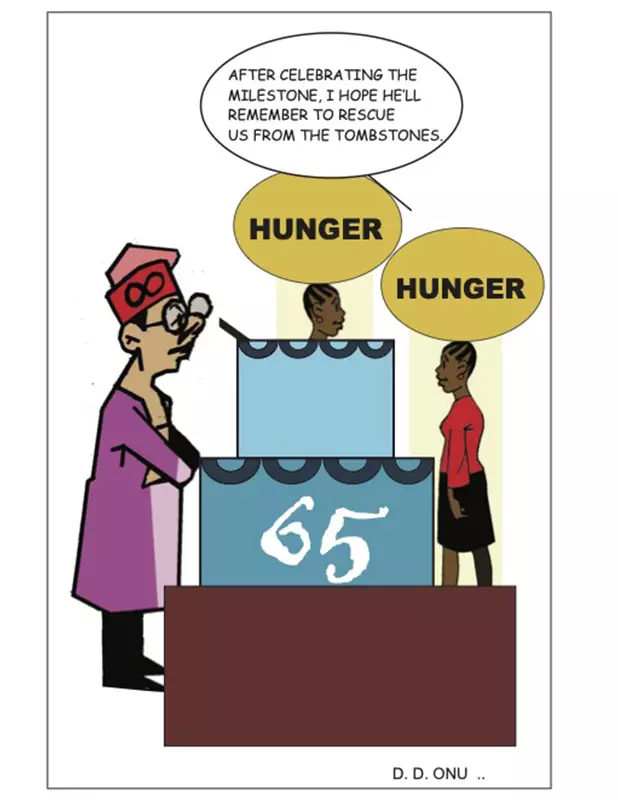
The editorial cartoon, a powerful tool of visual journalism, has once again been deployed by The Guardian Nigeria to comment on the nation's socio-political landscape. The publication's latest offering, identified as Cartoon 525, serves as a pointed satirical piece, capturing the complexities and nuances of contemporary Nigerian issues through illustrative wit.
Decoding the Visual Narrative
While the specific imagery of Cartoon 525 is described by its reference number, the tradition of such artwork in The Guardian involves distilling multifaceted national conversations into a single, impactful frame. These cartoons typically employ symbolism, caricature, and metaphor to critique governance, social challenges, economic policies, and international relations. The number "525" itself signifies its place in a long-running series of editorial commentaries, each building on a legacy of holding power to account and reflecting public sentiment through art.
Editorial cartoons in major publications like The Guardian are not mere illustrations; they are editorial opinions rendered visually. The artist, acting as a visual columnist, selects current events and translates them into accessible yet profound commentary. This form of journalism bypasses lengthy prose to deliver immediate, often provocative, insight that resonates with a wide audience, encouraging both reflection and debate.

The Role of Satire in Nigerian Media
In the Nigerian context, where public discourse can be highly charged, satire becomes a vital mechanism for critique. Cartoons like number 525 provide a socially acceptable avenue to question authority and highlight contradictions within the system. They can address sensitive topics—from inflation and security concerns to political maneuvering and corruption—with a layer of humor that both softens and sharpens the message. This artistic approach allows newspapers to fulfill their watchdog role while engaging readers who might otherwise avoid dense political analysis.
The consistent publication of these cartoons, sequentially numbered, establishes a valuable archive of the nation's political mood over time. Each entry, including 525, acts as a historical marker, capturing the predominant anxieties and talking points of its moment of publication. For researchers and the public alike, this series offers a unique, visual timeline of Nigeria's democratic journey and its ongoing challenges.
Impact and Public Engagement
The true measure of an editorial cartoon's success lies in its ability to spark conversation and become a reference point in public discourse. A potent cartoon, such as the one implied by Cartoon 525, can be shared widely on social media, discussed in offices and markets, and even referenced in broader media commentary. It condenses complex issues into a universally understandable format, making political commentary more inclusive.
Furthermore, this form of expression tests the boundaries of free speech and press freedom. The courage to regularly publish satirical art that critiques the establishment is a hallmark of a robust and independent media landscape. The Guardian's commitment to this feature underscores its editorial stance and its dedication to providing multifaceted coverage of national affairs, beyond standard news reports and op-eds.
In conclusion, The Guardian Nigeria's Cartoon 525 is more than just a drawing; it is a crystallized opinion, a cultural artifact, and a catalyst for dialogue. It represents the enduring power of visual satire to challenge, educate, and entertain, maintaining its relevance in an increasingly digital media environment. As Nigeria navigates its future, such cartoons will undoubtedly continue to serve as both a mirror and a compass for society.