Church Thanksgiving Service Descends into Chaos as Co-Wives Clash
A solemn church thanksgiving service following a man's burial transformed into a scene of dramatic confrontation when his two wives engaged in a physical altercation. The incident, which occurred during a family thanksgiving ceremony, highlighted the lingering tensions within polygamous households and left congregants stunned by the public display of family discord.
Dramatic Confrontation During Religious Ceremony
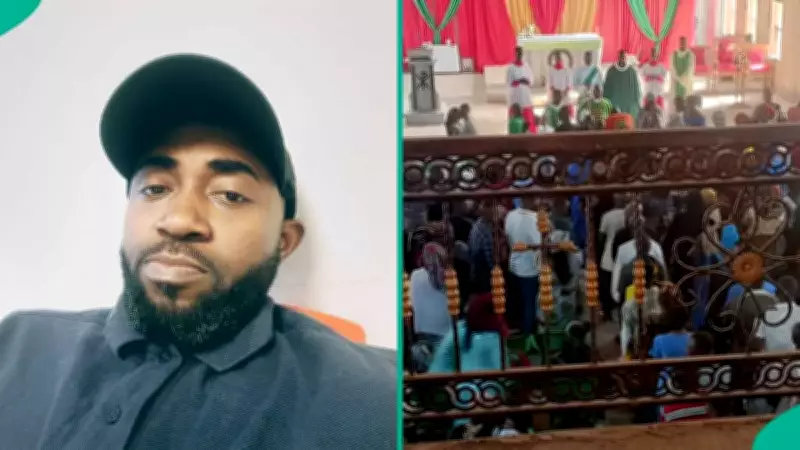
According to eyewitness accounts shared by Ndubuisi Nicholas Ifedoro on social media, the drama unfolded when the family of a recently deceased man arrived for a thanksgiving service. The man, who had been buried the previous Thursday, maintained relationships with two wives during his lifetime, though he resided exclusively with the second wife. The first wife, while legally married to the deceased, had been estranged from him due to unresolved issues that prevented them from living together.
The confrontation erupted precisely when the first wife and her children approached the altar to present their thanksgiving gifts to the officiating priest. At that moment, the second wife and her children rushed forward with their own gifts, physically blocking the first wife's procession. This sudden movement sparked immediate chaos, with noise and commotion spreading throughout the sanctuary as the two families vied for position at the front of the church.

Physical Altercation and Damaged Offerings
The situation escalated rapidly from verbal confrontation to physical violence. Witnesses reported that the women exchanged blows, creating a scene rarely witnessed within church premises. In the ensuing struggle, some of the thanksgiving gifts brought by both families were damaged, adding material loss to the emotional turmoil of the occasion.
It took the combined intervention of priests, church wardens, and family friends to eventually separate the combatants and restore some semblance of order. However, according to Ifedoro's account, the conflict appeared to continue beyond the church service, with heated exchanges persisting after the formal proceedings concluded.
Social Media Reactions and Broader Implications
The incident sparked significant discussion on social media, with many commenters expressing views on the situation's underlying causes and implications. Some respondents criticized the church leadership for inadequate preparation and management of the potentially volatile family dynamics. Others questioned why the first wife would participate in a thanksgiving for a husband with whom she had been estranged, while additional comments focused on the procedural aspects of booking and conducting such services.
Lydia Francis Ifeacho commented on the situation, noting that the second wife could have organized a separate thanksgiving rather than confronting the first wife during the service. She emphasized how children often become unintended victims in such polygamous conflicts.
Muoneke Kene Morgan placed responsibility on church leadership, suggesting that proper scriptural teaching about reconciliation before offering might have prevented the confrontation. He referenced biblical passages emphasizing the importance of resolving conflicts before presenting offerings at the altar.
John Nwamary DJ-John raised practical questions about service arrangements, wondering who had officially booked the mass and suggesting that separate thanksgiving services might have been more appropriate given the family dynamics.
Broader Context of Polygamous Family Dynamics
This incident serves as a poignant example of the complex challenges that can arise in polygamous family structures, particularly when a patriarch passes away without resolving underlying tensions between different households. The public nature of the conflict during a religious ceremony underscores how family disputes can spill into communal spaces, affecting not just immediate family members but entire congregations.

Ifedoro's observation that some children of the first wife appeared older than the second wife adds another layer to the family dynamics, suggesting significant age differences and potentially differing life experiences within the polygamous structure. His concluding remark that "the man left big problem unsolved before he died" encapsulates a common challenge in such situations, where unresolved family conflicts become inheritances passed to surviving members.
This dramatic church incident highlights the ongoing social conversations around marriage structures, family responsibilities, and religious community management of complex interpersonal relationships. While extreme in its manifestation, it reflects broader societal discussions about how traditional family structures navigate modern social and religious contexts.